Rainbow Pride Flag
Rainbow Pride Flag ·
The six-stripe rainbow flag, standardized around the 1979 San Francisco Gay Freedom Day Parade, is the third version in the Baker-Segerblom lineage. Turquoise was dropped and indigo became royal blue because Market Street's double-barred lampposts needed an even number of stripes to hang either side of the pole. Baker worked on the 1979 revision with Ken Hughes. For decades, this version was the most visible and recognizable iteration of the rainbow pride symbol.
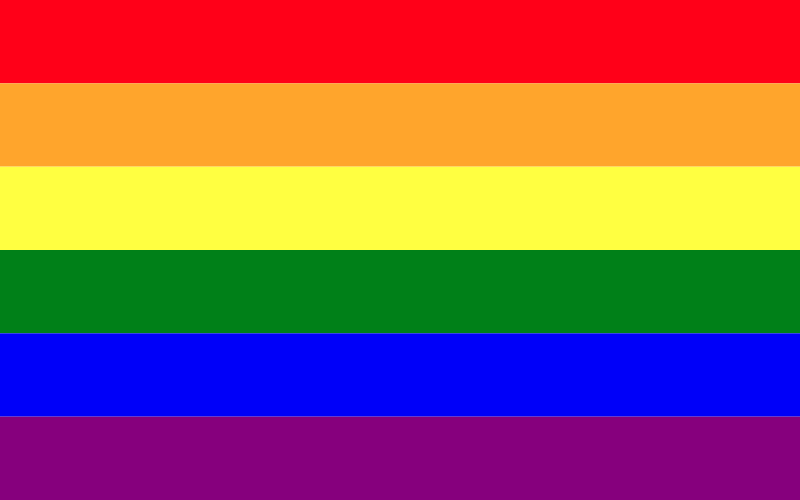

Key facts
- Designer
- Gilbert Baker
- Created
- First documented public use
- In use
- 1979–present
- Aspect Ratio
- Not standardized
- Ratio Notes
- No creator-issued aspect ratio is documented for the six-stripe design. The 3:5 rendering displayed here is a site reconstruction and display convention, not a specification issued by its makers.
- Stripes
- 6
- Origin
- San Francisco, California, United States
- Represented Identity
- LGBTQ+ community
Also known as
- Six-Stripe Rainbow Flag
- Traditional Rainbow Flag
- Standard Rainbow Flag
- Commercial Rainbow Flag
Status Canonical Variant
Archive categories Rainbow Pride Flags · Historical and Early Pride Flags
Overview
The six-stripe form resulted from manufacturing and display constraints rather than a change of meaning. Hot pink fabric was not commercially available, and hanging the flag from Market Street lampposts required an even number of stripes. [1] [2] [3]
Demand for the rainbow flag rose sharply after the assassination of Harvey Milk in November 1978. [3] Baker had gone to work at the Paramount Flag Company, where he would remain for years, producing flags for the mayoral inauguration, state receptions and the 1984 Democratic National Convention; the vexillologist James Ferrigan, who later documented the flag's early history, was also on staff. [4] [5]
Hot pink fabric was not commercially available, and the stripe was dropped for mass production. [1] [3] For the Gay Freedom Day Parade of June 24, 1979 (themed 'Our Time has Come,' attendance about 200,000) [6], organizers planned to hang the flag vertically from Market Street lampposts, which required an even number of stripes to divide evenly on either side of the poles' double bars. Baker and Paramount vice president Ken Hughes dropped turquoise and replaced indigo with royal blue, leaving six. [3] [5]
The seven-stripe phase was piecemeal and not yet standardized. The 1979 revision produced the first cohesive six-stripe standard, moving the design away from Segerblom's direct influence over the original palette while retaining most of the collaborative 1978 color structure and inherited meanings.
Identity & Context
- Represented Identity
- LGBTQ+ community
- Movement
- LGBTQ Pride Movement
- Diaspora Context
- Global use
Now widely used worldwide as a general pride emblem.
Creators
The Creators
Gilbert Baker
Designer
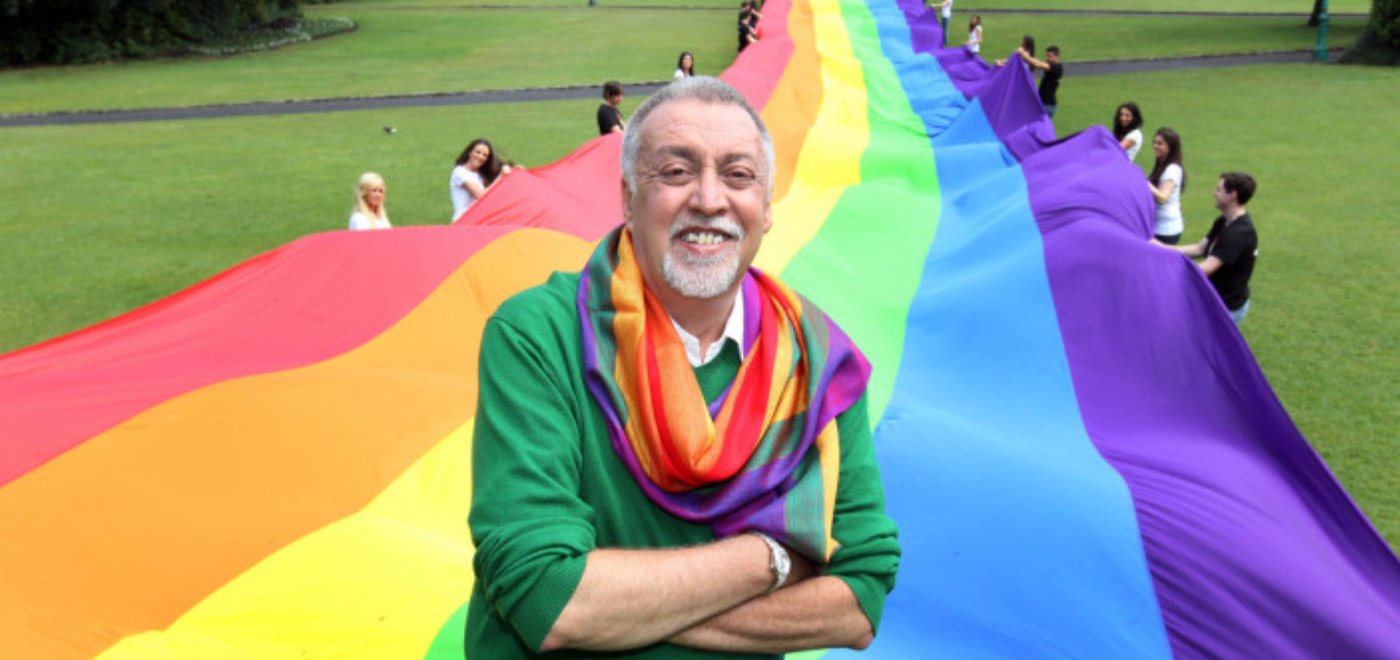
Gilbert Baker (June 2, 1951, Chanute, Kansas, to March 31, 2017, New York City) was an American artist and gay rights activist. After serving in the U.S. Army, Baker taught himself to sew and began making banners for gay rights marches. He created the original eight-stripe rainbow flag in 1978 with Lynn Segerblom, James McNamara, and a team of volunteers for the San Francisco Gay Freedom Day Parade. Baker served as a self-described 'Gay Betsy Ross' for the rest of his life, remaining an advocate for the rainbow flag as a universal symbol of LGBTQ+ pride. He lived in New York City for his final years and died on March 31, 2017, at age 65. [4]
A flag translates into everything, from tacky souvenirs to the names of organizations and the way that flags function. (2008 KU oral history) [8]
I knew instantly when I saw the reaction that it was going to be something. I didn't know what or how or — but I knew. (2008 KU oral history) [8]
I don't have a patent or a copyright, so all those dollars slid away. But it belongs to everybody. (2008 KU oral history) [8]
Ken Hughes
1979 revision and production (Paramount Flag Company)
Ken Hughes was vice president of the Paramount Flag Company in San Francisco when Baker approached the firm to produce rainbow flags for the 1979 Gay Freedom Day Parade. Paramount told Baker that fabric in his hot pink was not available for mass production, and the stripe was dropped. For the vertical banners to be split across the double bars of Market Street's lampposts, the flag needed an even number of stripes; Hughes and Baker agreed to drop turquoise as well and to replace indigo with royal blue, leaving the six stripes that became the standard. [5] No further biographical information about Hughes has been located.
Attribution
- Organization
- Paramount Flag Company
Attribution notes
Attribution for this design separates three things. The 1978 lineage it descends from was collaborative: Gilbert Baker and Lynn Segerblom, with James McNamara sewing and a production team of about thirty volunteers. [9] [10] The 1979 revision that produced this six-stripe form was Baker's with Ken Hughes, vice president of the Paramount Flag Company, who agreed with him to drop turquoise and replace indigo with royal blue so the stripes would divide evenly across Market Street's double-barred lampposts. [5] Paramount was the production organization, not a designer. Segerblom is credited here as an originator of the 1978 collaborative palette and lineage, not as a reviser of the 1979 design; no source places her in the 1979 revision.
Origin
- Country
- United States
- Region / state
- California
- City
- San Francisco
- Place Type
- parade/display standardization
Created in San Francisco, California, on the unceded ancestral homeland of the Ramaytush Ohlone people. [11][12]
Indigenous land context
Ramaytush Ohlone — unceded ancestral homeland. The Ramaytush Ohlone are the original peoples of the San Francisco Peninsula; the land now comprising San Francisco is Yelamu. [13] [14] [15]
Colonial / settler context
The six-stripe configuration was standardized in San Francisco, in Paramount Flag Company's production for the June 1979 Gay Freedom Day parade and its Market Street lamppost displays. [3] [5] That work took place on unceded Ramaytush Ohlone land; no treaty of cession exists for the San Francisco Peninsula. [16] [14] Spanish colonization and the mission system, beginning in 1769, dispossessed the Ramaytush Ohlone of this land. [13] [15]
- Land status
- Unceded (no treaty of cession exists)
- Indigenous engagement
- None documented
- Continuing presence
- The Ramaytush Ohlone remain present and active in the San Francisco Bay Area today. [13]
The six-stripe version emerged from San Francisco Pride parade display needs. The reduction from eight to six stripes was driven by manufacturing constraints and parade logistics, not a deliberate redesign. [1] [3]
Dates & Chronology
- Year Created
- First public use
- Period in Use
- 1979–present
Standardized for the Gay Freedom Day Parade of June 24, 1979 [6], the six-stripe form became the version in general use. Baker called it the 'commercial version' and continued to regard the eight-stripe design as the original. [4]
In 1989 the flag drew national attention in the United States when John Stout sued his West Hollywood landlords for prohibiting him from flying it from his balcony, and won. [5]
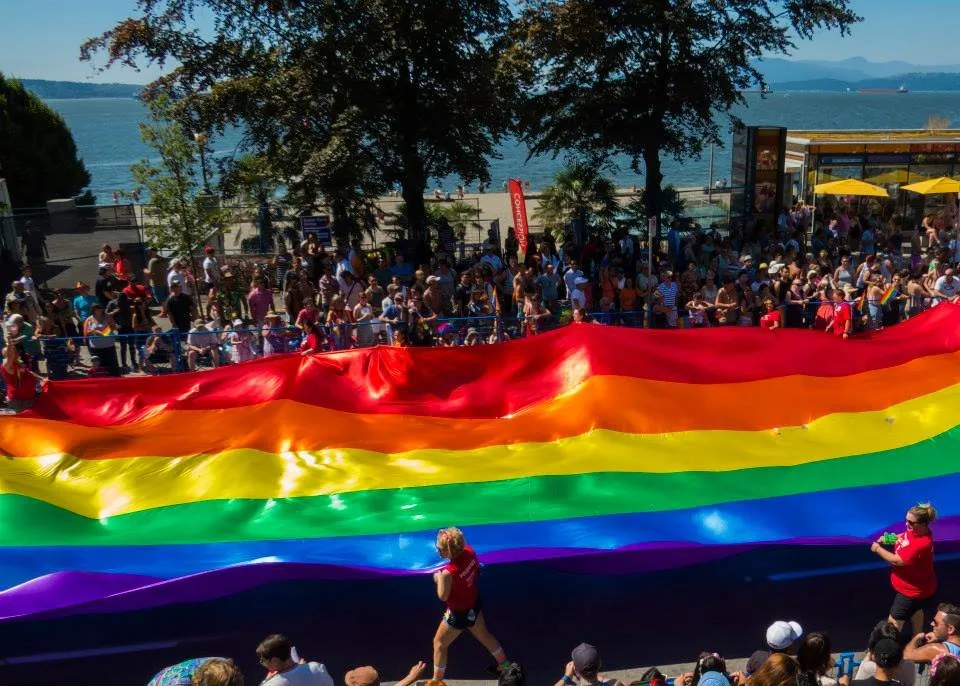
For the 25th anniversary of Stonewall in 1994, Baker produced a mile-long flag for the New York Pride March, sponsored by Stadtlanders pharmacy, which used it to promote its AIDS nutrition and meal programs. [7] Baker sewed it with a small crew in a basement workshop on West 16th Street in Chelsea, which he used from the end of 1993 until June 1994. [9] It used the six colors and measured thirty feet wide [3] and weighed about 7,000 pounds, or three and a half tons. [9] [17] About 5,000 volunteers carried it up Manhattan's First Avenue on June 26, 1994 for the International March on the United Nations, where it stretched twenty-two blocks; the Guinness Book of Records confirmed it as the world's largest flag. [18] [19] [17] [3] Baker invited James McNamara, who had taught him to sew and helped sew the 1978 originals, to work on the 1994 flag. According to Paul Langlotz's recollection, McNamara worked on it briefly and then quit, hurt by his lack of credit for the original flags. McNamara died of an AIDS-related illness in 1999. He also photographed the original flags; several surviving images are credited to him. [19]
The Giuliani administration refused a permit for the traditional Fifth Avenue route; the sponsor, which technically owned the flag, forbade taking any of it to the 'illegal' Fifth Avenue march coming up from Stonewall. After the First Avenue unfurling, Baker cut sections from the flag with shears, and a handful of confederates smuggled them crosstown in garbage bags (one section went on rollerblades through the subway) and unfurled them on Fifth Avenue, where sixty people were carrying the rainbow overhead within a minute. Four sections reached the Fifth Avenue march and were carried up it into Central Park; one hangs at the Cherry Grove Community House on Fire Island. [17] Foot-wide sections of the main flag went to sponsors afterward, and larger sections traveled with activists to prides worldwide, one of which was carried at Shanghai Pride in 2014. [3]

_-_DPLA_-_48e59367a209f750c91d683f47f3b764.jpg)
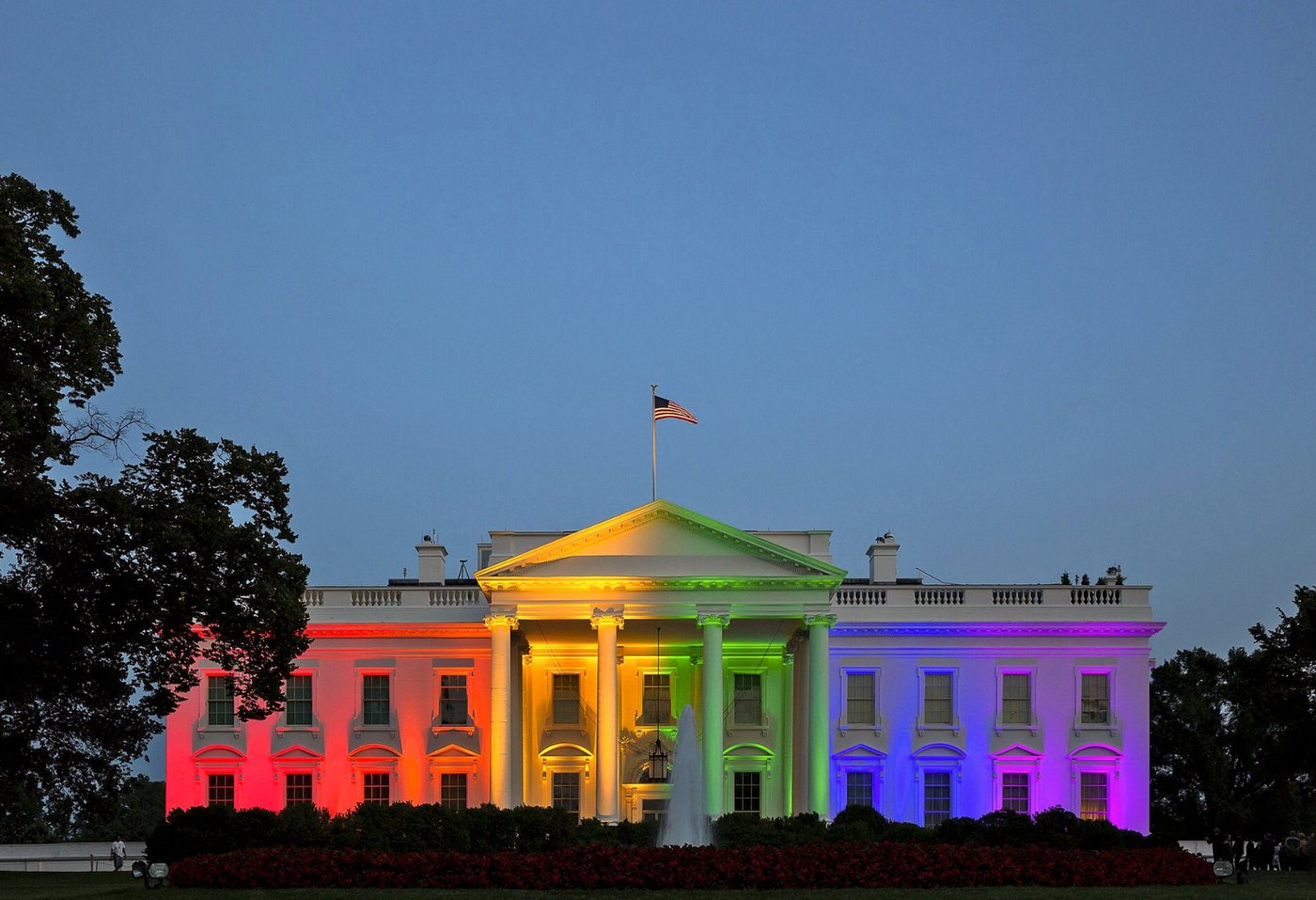
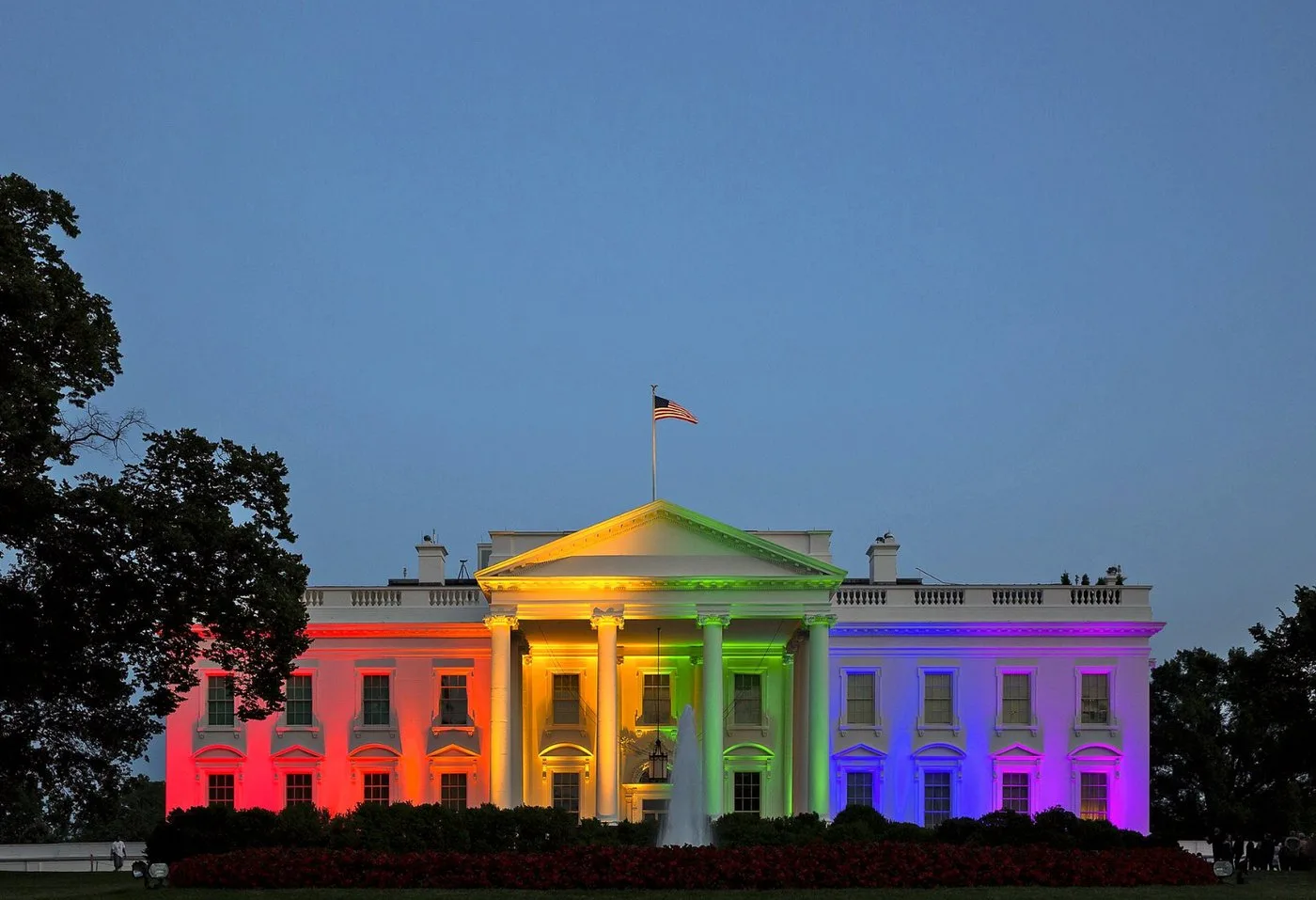
On June 26, 2015, the White House was illuminated in the six colors to mark Obergefell v. Hodges (the Supreme Court decision legalizing same-sex marriage nationwide), and more than 26 million people overlaid the flag on their Facebook profile photos. [20] [21] The emoji followed in 2016. [3]
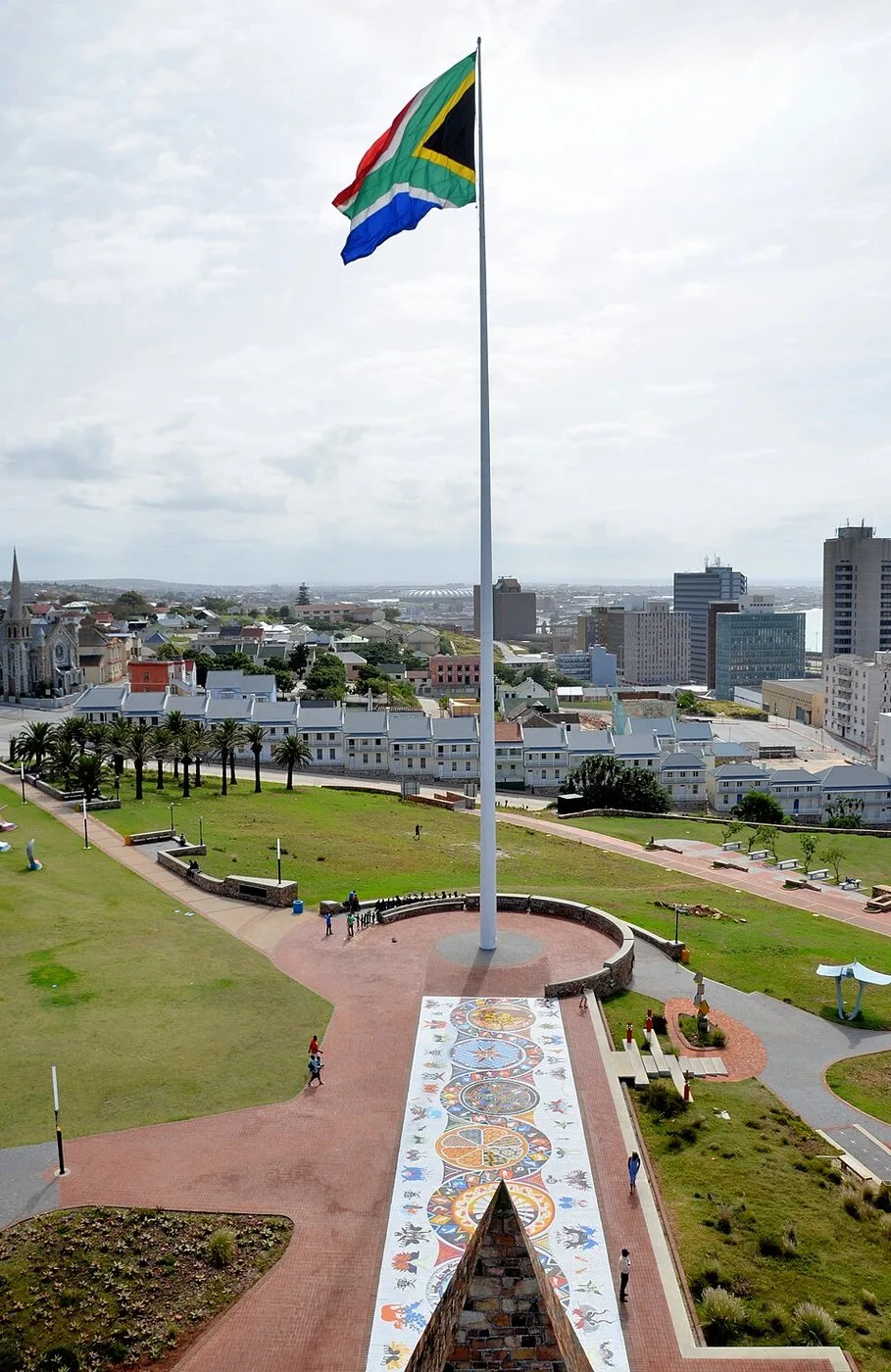
In November 2015 Nelson Mandela Bay Pride flew a 12-by-8-meter rainbow flag from the Donkin Reserve flagpole in Port Elizabeth, the tallest in South Africa, for the two days of its Pride festival, describing it as the largest of its kind on a flagpole in Africa and possibly in the world. [22] The organizer Thomas Bekker: 'It's to raise awareness for the community, to know that we are here and we have rights.' [23] In 2018 Venice Pride commissioned and flew the United We Pride flag in Baker's memory, announcing it on the first anniversary of his death and describing it as the world's largest free-flying Pride flag. It was unfurled at a ceremony in Los Angeles on June 1, 2018, presented by the AIDS Healthcare Foundation, and flew in Venice Beach for three days. Grant Turck, the organization's executive director, said the project would 'give us the opportunity to link with global Pride activities over the next couple of years.' The announcement listed one further date, New York City on June 30, 2019, for the fiftieth anniversary of Stonewall and WorldPride. [24] Wikipedia additionally records the flag traveling to Paris, London, Berlin, Vancouver, Sydney, Miami and Tokyo; the announcement names no such stops, and this entry does not treat them as completed. [3]
Some institutional sources list the ‘Gilbert Baker Pride Flag’ and the ‘Traditional rainbow Pride flag’ separately. [25] PrideFlags.org lists it as ‘Gay Pride Flag (1979).’ [26]
The six-stripe version (red, orange, yellow, green, blue, violet) became the international standard and the base from which national derivations were made. [1] [4] In South Africa, a hybrid of the six-stripe flag and the national flag was launched in Cape Town in 2010. Its designer, Eugene Brockman, said 'I truly believe we (the LGBT community) put the dazzle into our rainbow nation and this flag is a symbol of just that.' [3] In India, the Social Justice Pride Flag released at the 2018 Chennai Queer LitFest by gay activist Moulee retains the six stripes and incorporates black for the Self-Respect movement, blue for the Ambedkarite movement, and red for left politics. [3] In Poland, marchers at the 2018 Equality March in Częstochowa carried the national flag rendered in rainbow colors. They were reported to prosecutors for desecration of national symbols, and prosecutors found no crime. [3] Dozens more national-flag rainbow hybrids are documented, from Spain and Brazil to Japan and Morocco. [27]
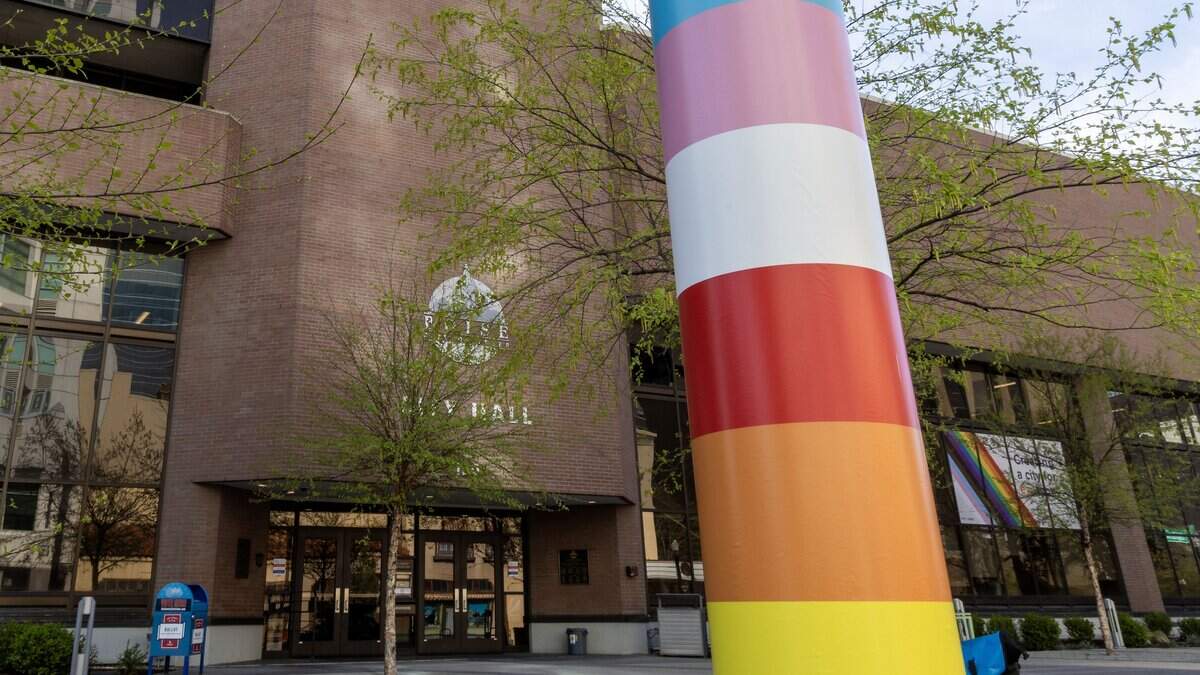
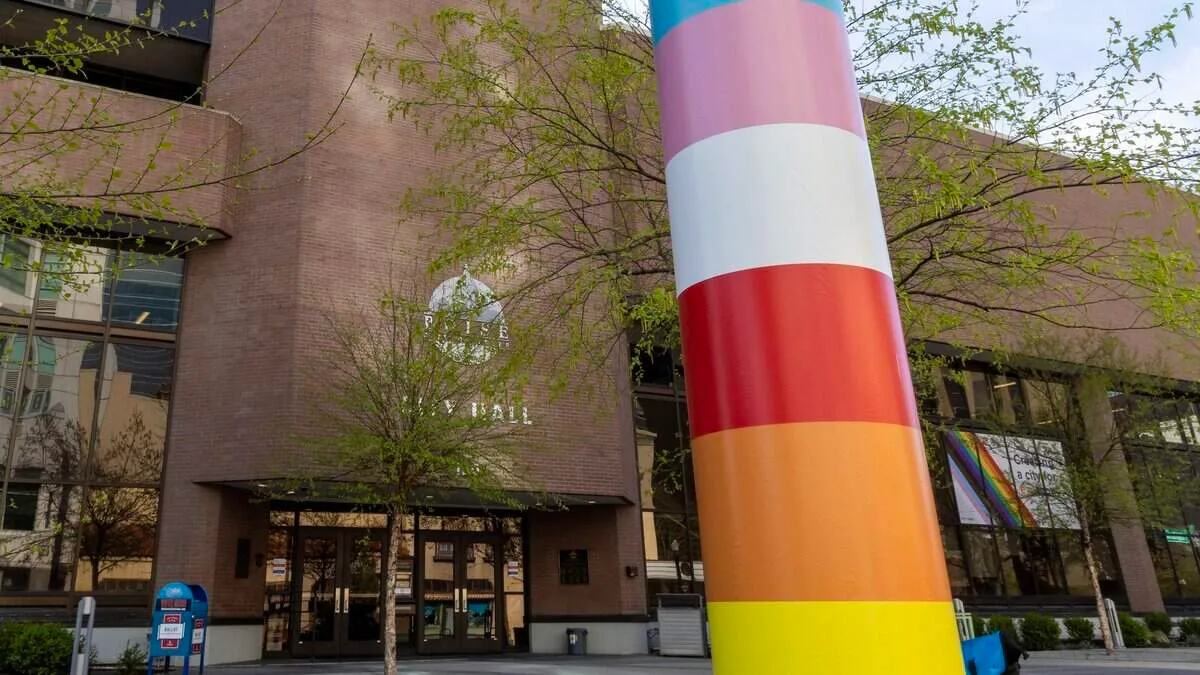
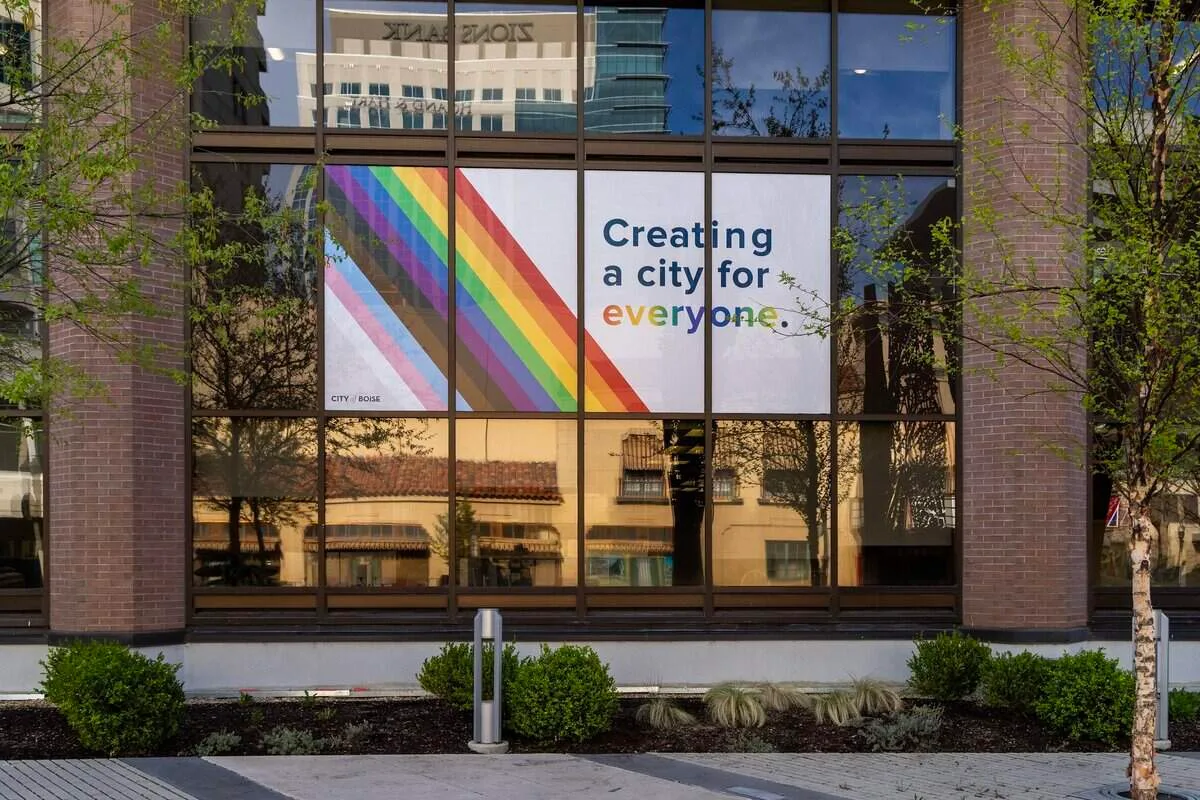
The flag's spread has also been marked by suppression and legal conflict. Westminster ordered London gay businesses to take it down in 2004, then reversed the policy the next year. [3] Activists declared the Coral Sea Islands a 'Gay and Lesbian Kingdom' under the flag in 2004 in protest of Australia's marriage ban, dissolving it when marriage equality arrived in 2017. [3] Polish nationalists have burned it at Independence Day marches, and Saudi authorities have seized rainbow-colored goods as 'indirectly promoting homosexuality.' [3] In 2023 Russia's Supreme Court designated the 'international LGBT movement' extremist, with the ruling classifying the rainbow flag as its symbol, and people have since been fined or jailed over rainbow-colored items. [3] In the United States, a 2024 spending bill barred Pride flags from embassy flagpoles, and several states banned their display on public property. [3] In May 2025 Salt Lake City adopted new city flag designs and Boise made the rainbow Pride flag one of its official city flags, both in response to state bans on flag displays at government buildings; Idaho's ban had taken effect on April 3, and Boise mayor Lauren McLean had kept the flag flying, saying she believed the law was unenforceable. [28] Idaho closed that route in 2026: on March 31 governor Brad Little signed a bill by Rep. Ted Hill barring official city flags adopted after January 1, 2023, setting a $2,000 fine per flag per day and allowing the attorney general to sue. Boise took the Pride flag down the same day. The city then wrapped three City Hall flagpoles in the colors of the Progress Pride flag and put a white sign carrying the same rainbow in a City Hall window overlooking Capitol Boulevard, reading 'Creating a city for everyone,' with the last word graded from red to purple. A city spokesperson, Maria Ortega, said the window display and the flagpoles cost just under $6,000 from the existing operating budget. Council member Colin Nash had told a council audience on the day the flag came down that 'the flag is not our only form of expression.' [29]
At the 2018 World Cup in Russia, six activists from six countries wore team jerseys in the six colors (Spain red, the Netherlands orange, Brazil yellow, Mexico green, Argentina blue, Colombia purple) and stood together so that their shirts formed the flag. Polish opposition politicians did the same with their outfits at the 2020 presidential swearing-in. [3] The University of Hawaii dropped its 'Rainbow Warriors' name and logo in 2000, its athletic director initially saying the change was to distance the program from homosexuality, before reinstating the name for all teams in 2013. [3]
Commercial use of the six stripes has its own critical vocabulary. Rainbow-washing describes the use of Pride imagery or branding without sustained support for LGBTQ+ people, especially where companies display that support only in markets where it is safe or profitable. 'Pinkwashing' overlaps with this usage but also has distinct political and geopolitical meanings, so the terms are not interchangeable in every context. [3] No mechanism exists to prevent such use. Baker described the design as belonging to everyone and never registered it for copyright or trademark, and no licensing body governs it, so no rights-holder can withhold it from any user. [8] [30] In 1978 he worked with the civil rights attorney Matt Coles to challenge an attempt to register a trademark in the flag, forgoing formal ownership. [30]
Corporate Pride sponsorship in the United States grew steeply after the 2015 marriage-equality ruling and contracted sharply in 2025, when some twenty-one national brands withdrew or reduced Pride support in a single season, among them Anheuser-Busch, Boeing, Booz Allen Hamilton, Comcast, Deloitte, Mastercard, Meta, Nissan, PepsiCo, Target and Walmart. [31] [32] San Francisco Pride lost five sponsors in one week, and New York's Heritage of Pride went from five top-tier donors to one. Anheuser-Busch declined to sponsor Pride in St. Louis, its home city, after more than thirty years. [33] [32] Companies mostly cited economic conditions, while organizers pointed to the January 2025 executive order directing federal agencies to investigate companies supporting diversity programs. [34] Some brands continued to donate on condition of not being listed, an arrangement organizers call 'silent partnership.' [33] [32]
Some Pride organizations refused sponsors as well. Twin Cities Pride declined $50,000 from Target, a sponsor of more than fifteen years, after the retailer rolled back its diversity commitments. Its executive director, Andi Otto, said 'It did not feel right for my community to accept that money,' and the group raised more than twice that amount from its community within a day. Cincinnati Pride rejected returning sponsors over their nondiscrimination policies, and San Francisco Pride ended its relationship with Meta. [34] [33] Community fundraising closed other gaps outright, including $150,000 in St. Louis and $125,000 at Stonewall Columbus. [33]
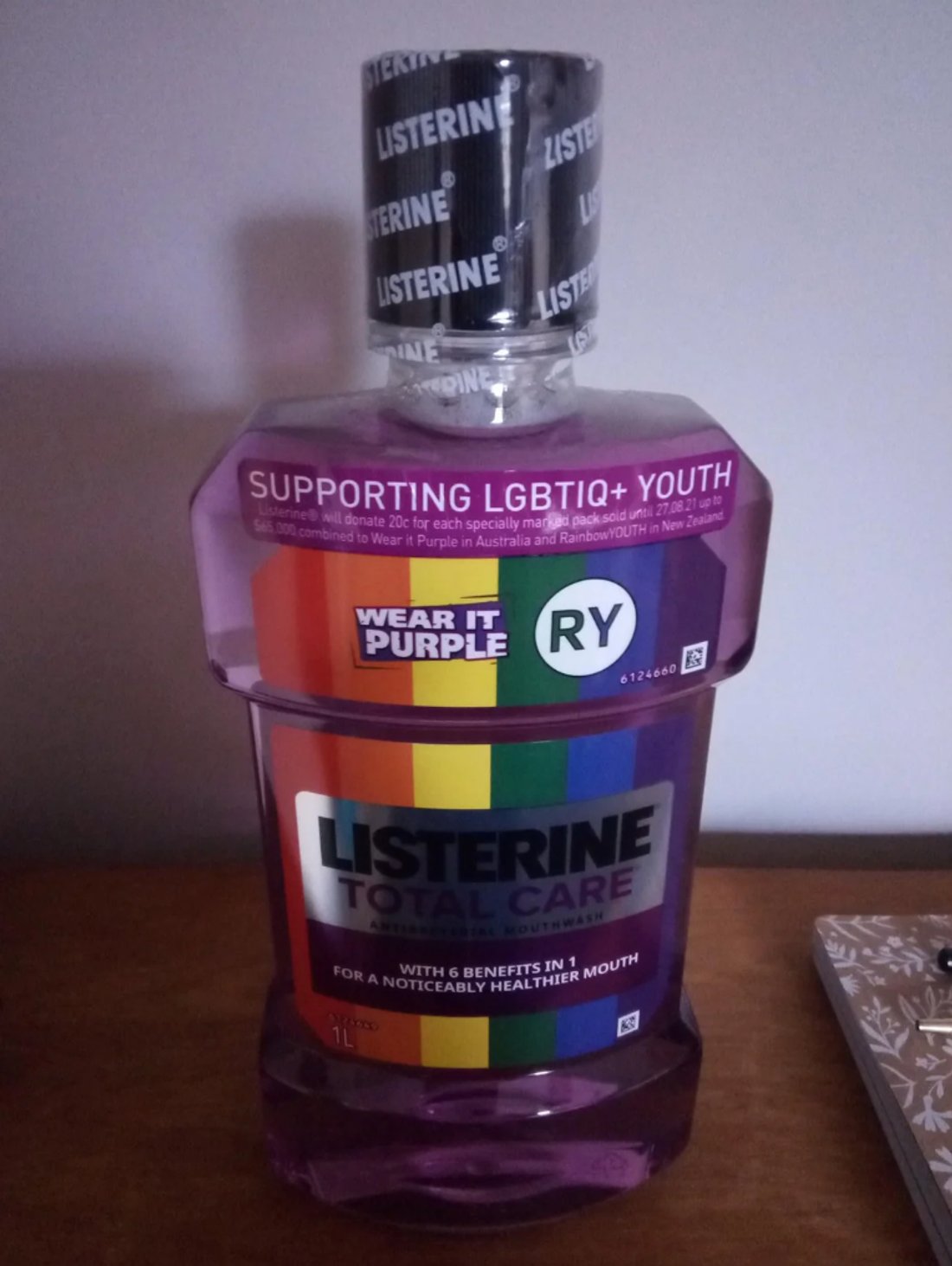
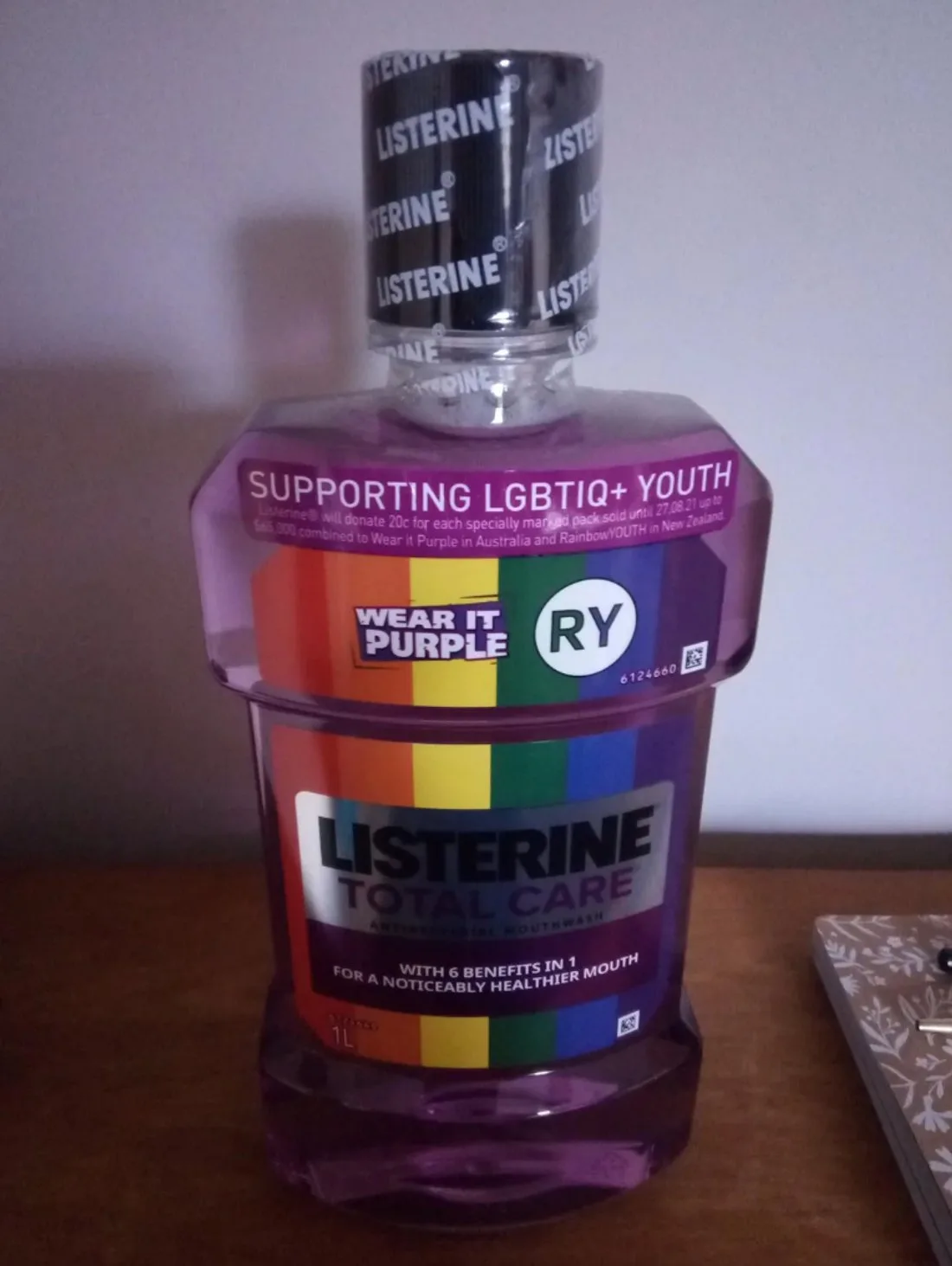
Polling in May 2025 found 68 percent of LGBTQ adults saying all or most corporations support Pride to further business interests, against 16 percent crediting a genuine desire to celebrate LGBTQ people, with respondents under thirty the most doubtful. [31] Eve Keller of USA Prides: 'Big sponsors supported Pride because they knew LGBTQ people had money in our wallets. They weren't making lasting change, they were just rainbow-washing their logos for the month of June. We had Pride before corporate sponsors paid us any attention.' [31] A 2021 rainbow-labeled Listerine bottle sold in Australia and New Zealand, pledging twenty cents per pack to two youth charities, divided commenters on r/lgbt. One set aside an intended 'rant about rainbow capitalism' after reading the donation terms, while another held that corporate normalization 'will never truly lead to queer liberation.' [35]
Lineage
- Evolved from
- Seven-Stripe Rainbow Flag (1978)
- Direct children
- Alberta Gay Flag, Straight Ally Pride Flag, Anarcha-Queer Flag (rainbow variant), Argentina Gay Flag, Australia Gay Flag, Brazil Gay Flag, British Columbia Gay Flag, Canadian Pride Flag, Chicago Pride Flag (Rainbow Stripes, Purple Stars), Chile Gay Flag, Dominican Republic Gay Flag, Egypt Gay Flag, European Union Gay Flag, France Gay Flag, Gay Pride Flag of Pakistan, Heteroflexible Pride Flag, Heterosexual / Straight Pride Flag, Homoflexible Pride Flag, India Gay Flag, Italy Gay Flag, Japan Gay Flag, Jewish Gay Pride Flag, Manitoba Gay Flag, Mexico Gay Flag, Netherlands Gay Flag, New Brunswick Gay Flag, Newfoundland Gay Flag, Northwest Territories Gay Flag, Nova Scotia Gay Flag, Nunavut Gay Flag, Ontario Gay Flag, Palestinian Gay Pride Flag, Panama Gay Flag, Philadelphia Pride Flag, Prince Edward Island Gay Flag, Quebec Gay Flag, Rainbow Flag with White Triangle (Sapporo), Rainbow Israel Flag, Rainbow Polish Flag (2014, Angela Getler), Russia Gay Flag, Saskatchewan Gay Flag, Social Justice Pride Flag, South African Gay Pride Flag, Switzerland Gay Flag, Tanzania Gay Flag, Texas Rainbow Flag, Turkish Gay Pride Flag, Two-Spirit Pride Flag (2005, Zoccole), Two-Spirit Pride Flag (2016 Tumblr documentation), Victory Over AIDS Flag (1980s, designer unknown), Yukon Territory Gay Flag
Derived from the collaborative 1978 Baker-Segerblom flag through the seven-stripe transitional version, the six-stripe standard became the structural base for an extensive and still-expanding family of Pride flags. [1] [3] Notable direct descendants documented here include the South African gay pride flag (2010), the Social Justice Pride Flag (Chennai, 2018), and the rainbow Polish flag (2018), alongside the Philadelphia, Progress, ally, national-hybrid, and protest variants mapped above. These examples are selective rather than exhaustive: many additional designs reuse, modify, or layer elements onto the six-stripe structure, and the database's mapped tree will continue to expand. The Pace peace flag is not a descendant; rainbow peace flags predate the 1978 Pride design. International peace movements had flown rainbow flags since 1961, seventeen years before Baker and Segerblom's. [3]
Lineage tree
Every record reachable from this one through documented parent and child relationships: 76 records across 7 generations.
- Ancestors -2
- Original Rainbow Flag (1978)
- Ancestor
- Seven-Stripe Rainbow Flag (1978)
- This record
- Rainbow Pride Flag
- Children
- Heterosexual / Straight Pride Flag, Alberta Gay Flag, Argentina Gay Flag, Australia Gay Flag, Brazil Gay Flag, British Columbia Gay Flag, Chile Gay Flag, Dominican Republic Gay Flag, Egypt Gay Flag, European Union Gay Flag, France Gay Flag, India Gay Flag, Italy Gay Flag, Japan Gay Flag, Manitoba Gay Flag, Mexico Gay Flag, Netherlands Gay Flag, New Brunswick Gay Flag, Newfoundland Gay Flag, Northwest Territories Gay Flag, Nova Scotia Gay Flag, Nunavut Gay Flag, Ontario Gay Flag, Panama Gay Flag, Prince Edward Island Gay Flag, Quebec Gay Flag, Russia Gay Flag, Saskatchewan Gay Flag, Switzerland Gay Flag, Tanzania Gay Flag, Texas Rainbow Flag, Yukon Territory Gay Flag, South African Gay Pride Flag, Rainbow Polish Flag (2014, Angela Getler), Heteroflexible Pride Flag, Homoflexible Pride Flag, Philadelphia Pride Flag, Social Justice Pride Flag, Anarcha-Queer Flag (rainbow variant), Canadian Pride Flag, Chicago Pride Flag (Rainbow Stripes, Purple Stars), Gay Pride Flag of Pakistan, Jewish Gay Pride Flag, Palestinian Gay Pride Flag, Rainbow Flag with White Triangle (Sapporo), Rainbow Israel Flag, Turkish Gay Pride Flag, Two-Spirit Pride Flag (2016 Tumblr documentation), Victory Over AIDS Flag (1980s, designer unknown)
- Generation 3
- Two-Spirit Pride Flag (2005, Zoccole), Orange-Pink Lesbian Precursor (2017), Progress Pride Flag, Straight Ally Pride Flag, Two-Spirit Transgender Pride Flag
- Generation 4
- Asexual Ally Flag, Bisexual Ally Flag, Indigiqueer / Two-Spirit Flag (cedar-maw), Intersex-Inclusive Pride Flag, Inclusive Diversity Pride Flag (TransIphis, 2022), Two-Spirit Progress Pride Flag, Utopian Pride Flag #6 (2040 Progress Flag), Gay Mspec Gay Ally Flag, Gay Turigirl Ally Flag, Lesbian Lesboy Ally Flag, Lesbian Mspec Lesbian Ally Flag, Sego Belonging Flag, Jewish Progress Pride Flag (Keshet), Straight Ally Flag (vaultausir), Trans Ally Flag
Colors & Symbolism
The six colors are broadly read as life, healing, sunlight, nature, harmony or serenity, and spirit, inherited from the original rainbow's meanings.
| Swatch | Hex | Foundation / original swatch | Foundation / original | Colour | Meaning | Note |
|---|---|---|---|---|---|---|
#FF0018 | #E4002BPantone 185C [36] | Red | Life | — | ||
#FFA52C | #FE5000Pantone 021C [36] | Orange | Healing | — | ||
#FFFF41 | #FFCD00Pantone 122C [36] | Yellow | Sunlight | The Foundation's yellow row gives RGB 255 255 0 alongside HEX #FFCD00, which do not match; both are recorded as published. [36] | ||
#008018 | #00843DPantone 348C [36] | Green | Nature | — | ||
#0000F9 | Turquoise #009AA6Pantone 3135C [36]Indigo #003DA5Pantone 293C [36] | Blue | Serenity / Harmony | Royal blue has no one-to-one predecessor: it replaced both the turquoise and the indigo stripe, so both are shown. [36] | ||
#86007D | #A634B2Pantone 2593C [36] | Violet | Spirit | — |
This flag has no official digital palette. Color values shown are approximate.
This version retains the rainbow-as-diversity symbolism of the 1978 flag without its explicit per-stripe system. Sources differ on whether blue represents ‘serenity’ or ‘harmony,’ and some use purple instead of violet. [37] The meanings of the six remaining stripes are less consistently cited than the Baker-Segerblom original's eight, and some sources omit per-stripe meanings entirely for this version.
Every value in the first column is the pre-2023 Wikimedia Commons community reconstruction; every value in the comparison column is the Gilbert Baker Foundation's for the 1978 eight-color flag. [27] [36]
No creator-issued digital palette is documented specifically for the six-stripe design. This entry therefore compares two different forms of evidence: the long-standing pre-2023 Wikimedia Commons community reconstruction used by this site, and the Gilbert Baker Foundation's creator-linked Pantone specification for the 1978 eight-color predecessor. The Foundation values are historical predecessor comparisons, not an official six-stripe palette. [27] [36]
In April 2023 the Commons SVG was changed to a different set of values 'per specs published in 2021.' The Commons discussion identifies that source as a Kapwing article originally published in 2021. It is therefore identifiable, but it is not a creator-issued or institutional standard. The displayed reconstruction continues to use the earlier Commons community values. [27] [38] [39]
The six-stripe royal blue has no direct one-to-one Foundation equivalent because it replaced the earlier turquoise-and-indigo pair. Both predecessor colors are shown for comparison. The Foundation's hot pink, omitted before the six-stripe stage, is noted separately. The Foundation's published hot-pink and yellow rows also contain internal inconsistencies between their stated RGB triplets and HEX values. [36]
The hot-pink stripe, omitted before the six-stripe stage, has no row above; the Foundation gives it as #D6006E, Pantone 225C, with a stated RGB triplet that does not match that hex. [36]
Design
- Aspect Ratio
- Not standardized
- Ratio Notes
- No creator-issued aspect ratio is documented for the six-stripe design. The 3:5 rendering displayed here is a site reconstruction and display convention, not a specification issued by its makers.
- Orientation
- horizontal
- Stripe Count
- 6
- Layout
- horizontal stripes
- Stripes (Top → Bottom)
- Red, Orange, Yellow, Green, Blue, Violet
The displayed 3:5 ratio is a reconstruction convention drawn from standard vexillological practice, not a creator-issued specification. Commercial six-stripe flags are manufactured in many proportions, most commonly 2:3 and 3:5, and no single official ratio exists.
Six horizontal stripes of equal width, ordered top-to-bottom: red, orange, yellow, green, blue, violet. No emblems or additional markings. Pink was removed earlier, and turquoise was dropped in the later standard form. [3] [1] Indigo was replaced with royal blue. [2]
Digital Renderings
- Character
- 🏳️🌈
- Unicode name
- Rainbow Flag
- Codepoints
- U+1F3F3 U+FE0F U+200D U+1F308
- Unicode version
- Emoji 4.0
- Year added
- Type
- ZWJ sequence
🏳️🌈 has no Unicode codepoint of its own. It is a ZWJ sequence (WAVING WHITE FLAG, variation selector, zero-width joiner, RAINBOW) fused at render time, and on fonts without the join it separates into two glyphs. The sequence was proposed in July 2016 and released that November in Emoji 4.0. [3]
Platform renderings


Usage & Adoption
- First Users
- San Francisco Gay Freedom Day Parade (1979)
- Geographic Usage
- Worldwide
- Online Usage
- Widespread
- Event Usage
- Pride events worldwide
- Current Status
- widespread
The six-stripe rainbow flag is the most widely recognized LGBTQ+ symbol in the world. It is flown at Pride events on every continent, displayed on government buildings, used commercially on products, and included in emoji sets as the rainbow flag.
Image Archive
The Flag in the World

.jpg)



Marriage Equality, June 2015
.jpg)
.jpg)
Institutional Recognition
Performance & Popular Culture
.jpg)
Commerce & Rainbow-Washing
Crosswalks

Documented use

The Designer
Discourse & Debates
- The six-stripe flag's representational inclusivity has been debated, and later variants responded to those debates.
- Scholars describe the flag as a 'floating signifier' whose meaning is supplied by its beholders, uniting queer communities transnationally while carrying different and sometimes conflicting agendas. A 2016 Swedish-Danish postal stamp and displays on government buildings across Europe and the Americas mark its institutional adoption, which some critics read as Eurocentric or de-radicalizing. [3]
Common misidentifications
- Often mistaken for the original Baker design, which had eight stripes rather than six
- The 'International Congress of Flag Makers' sometimes said to have recognized the flag never existed. Vexillologist James Ferrigan documents the phrase as Baker's conflation, in a 1987 interview, of FIAV with that year's San Francisco Flag Congress, where Ferrigan's paper on the flag's evolution was presented. [5] The phrase circulated on community reference sites: the Rainbow Icon Archive stated circa 2001 that the flag 'is even officially recognized by the International Congress of Flag Makers.' [51]
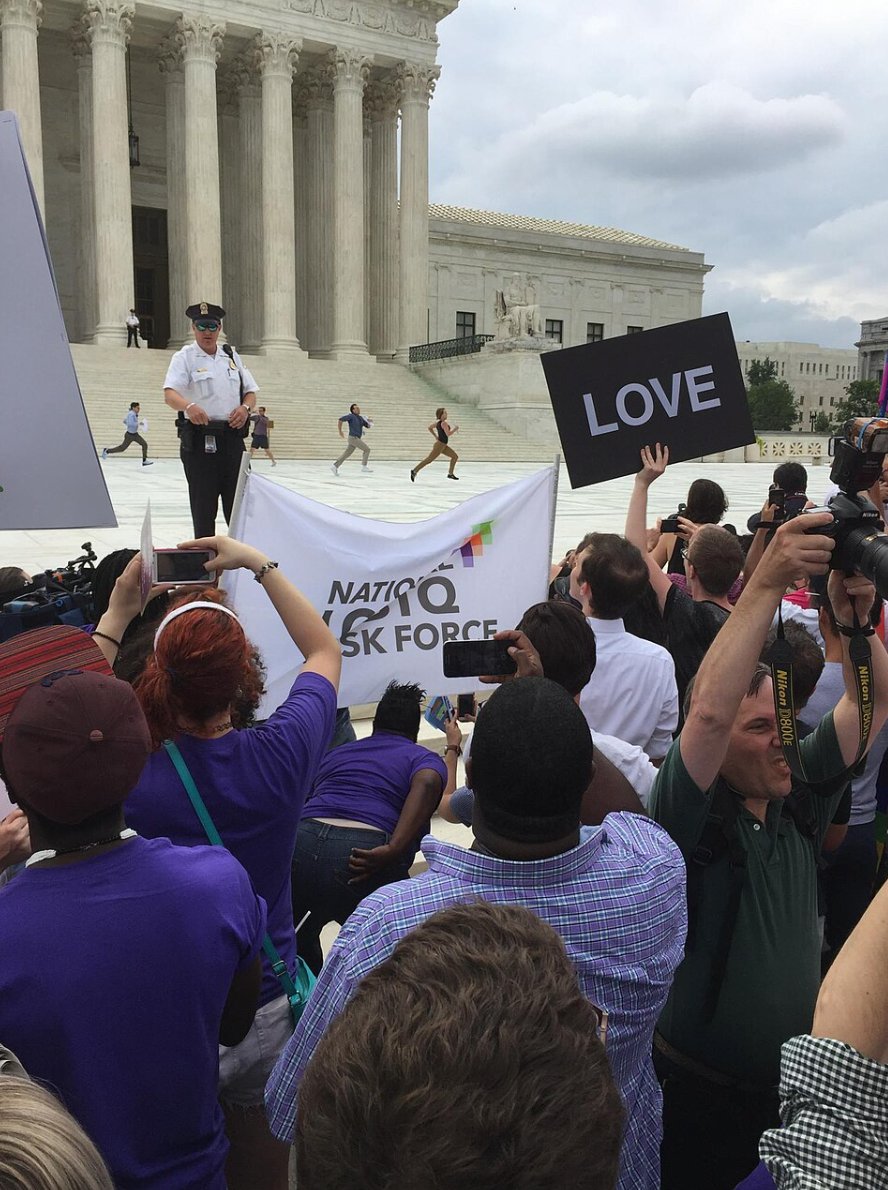
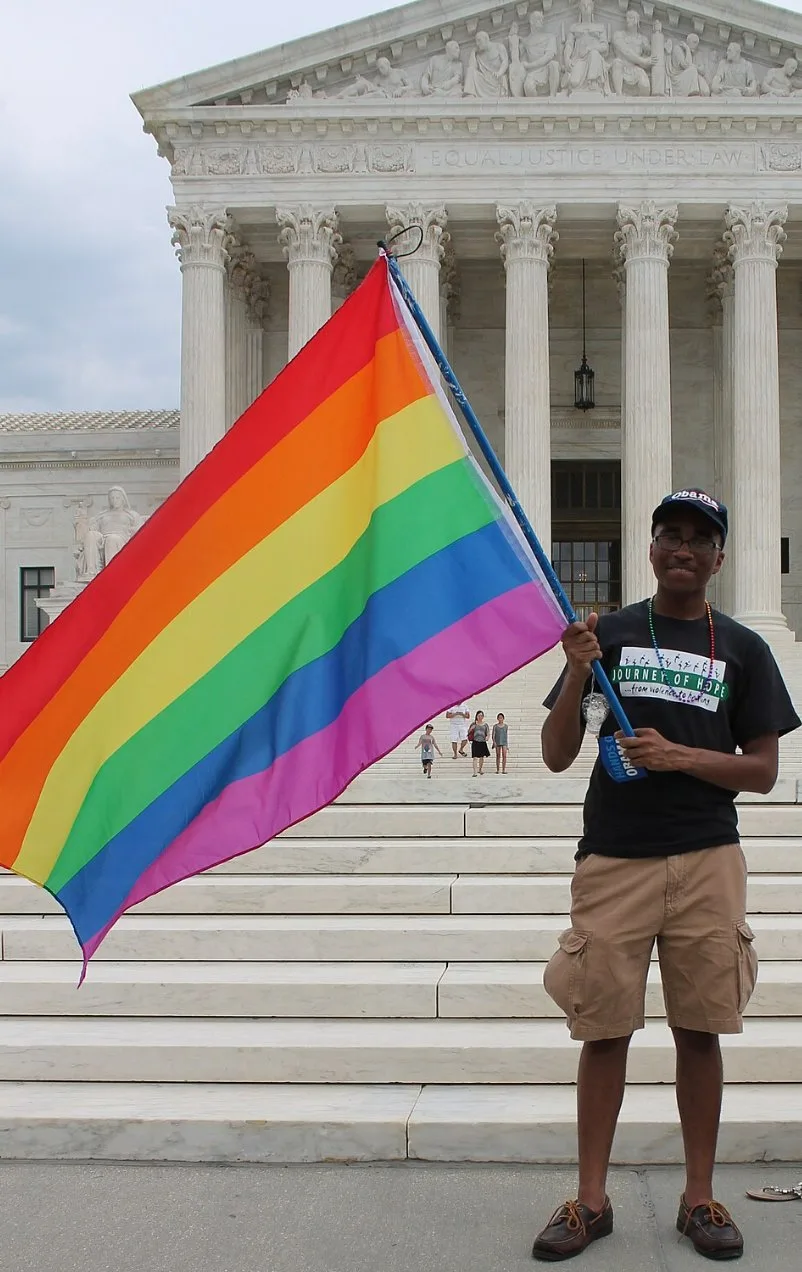
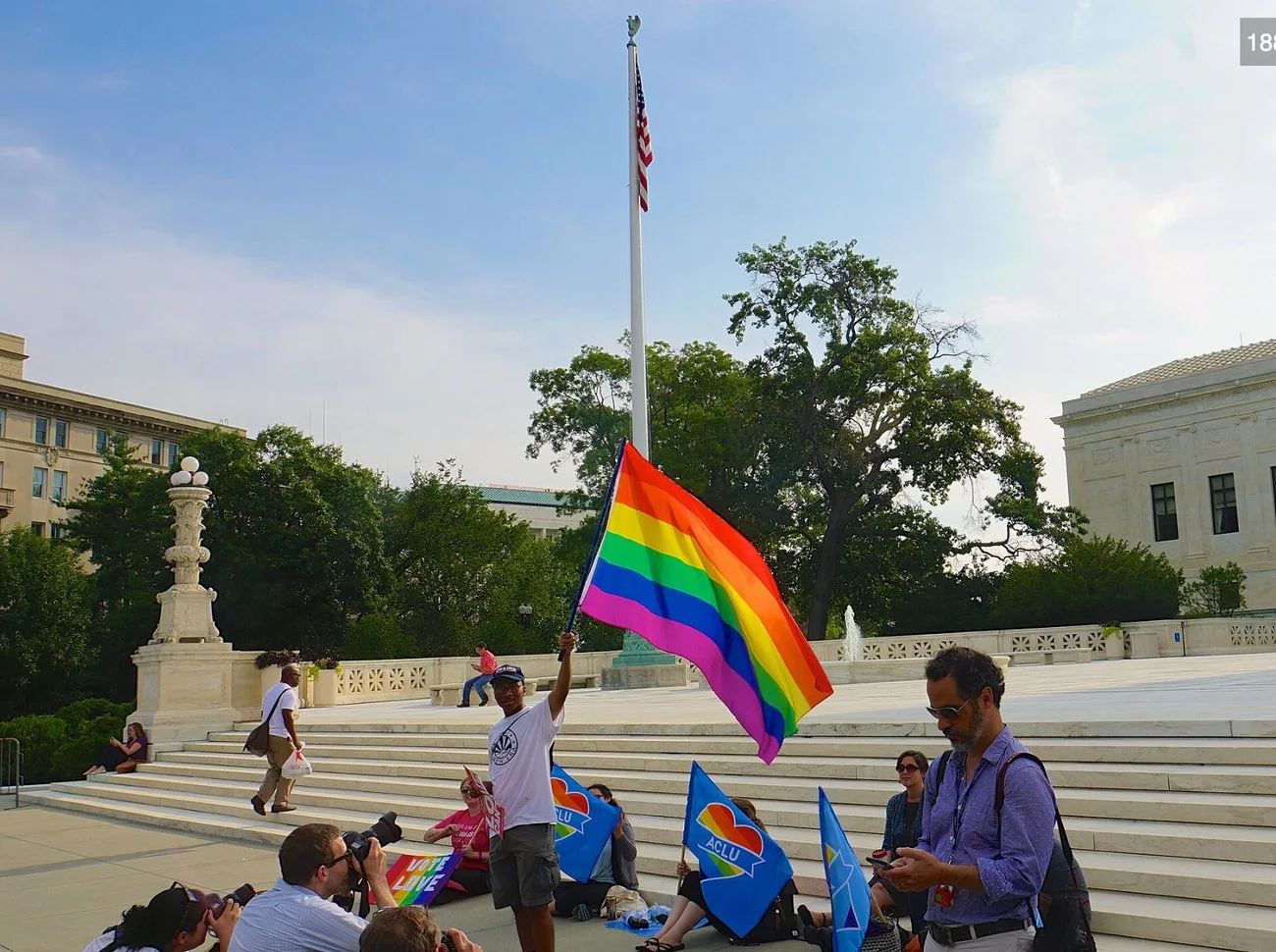
- Several photographs in the Wikimedia Commons category 'Obergefell v. Hodges celebration at the Supreme Court' were taken before the decision was announced. Elvert Barnes's photograph of a lone demonstrator is dated June 25, 2015, the day before the ruling. [45] Ted Eytan's is timed by its EXIF metadata to 8:27 a.m. on June 26, about ninety minutes before the opinion was handed down, under the title 'Supreme Court of the United States ends marriage discrimination.' [46] Both photographs therefore document anticipation of the ruling rather than its celebration.
- A 12-by-8-meter rainbow flag flew from the Donkin Reserve flagpole for two days, on November 27 and 28, 2015, during the city's annual Pride festival. It was not the permanent installation, flying since 2014, that some accounts describe, and it was presented as the largest flown from a flagpole in Africa, and possibly the world, not the largest in the Southern Hemisphere. [22] Nelson Mandela Bay Tourism called it the fifth annual festival and dated the flying to November 2015, while Algoa FM called it the fourth and carried a February 2016 date stamp. The organizer's dated announcement supports the 2015 date. [22] [23] The 60-meter mast, South Africa's tallest, was built in 2009 for the 2010 World Cup precinct and commemorates Nelson Mandela's sixty-seven years in politics. It ordinarily carries a national flag of the same dimensions, maintained at about R200,000 a year. The Pride flag matched those dimensions but flew for two days. [43]
- Original eight-stripe versus traditional six-stripe
Criticisms
- Criticized by some as insufficiently inclusive of specific identities within the LGBTQ+ spectrum, leading to the Philadelphia, Progress, and other variants [3]
- Corporate use of the flag in short-term Pride marketing without sustained support, called 'rainbow-washing,' is a standing criticism. It is directed most sharply at companies that display the flag in some markets while avoiding it where LGBTQ+ rights are restricted, and at the broad retreat from Pride campaigns among US companies in 2025 under political pressure. [3] [33] [31]
Footnotes & Citations
Sources and footnotes 56 sources
- 1. Databases Rainbow Pride Flag. Library.LGBT (2021-06-11). Accessed 2026-07-26 · Archived version
An archived capture; the site went offline in July 2026. Published by Albany Pride, Western Australia; it names no author and cites no sources.
- 2. Articles & Reports Pride Flag Guide. University of Colorado Boulder. Accessed 2026-03-08
- 3. Encyclopedias & Reference Rainbow flag (LGBTQ). Wikipedia. Accessed 2026-08-10
- 4. Gilbert Baker (artist). Wikipedia. Accessed 2026-07-24
- 5. Community History of the Gay Pride / Rainbow Flag. Flags of the World contributors (Steve Kramer, Jim Ferrigan, Christopher Pinette, Tomislav Todorović, et al.). Flags of the World (FOTW) / CRW Flags (last modified 2025-01-11). Accessed 2026-07-25
- 6. Encyclopedias & Reference San Francisco Pride. Wikipedia. Accessed 2026-07-25
- 7. Articles & Reports Stonewall, ACT UP, Pride Marches and a Mile-Long Rainbow Flag!. Trent Straube. POZ (2019-06-27). Accessed 2026-07-25
- 8. Oral history Gilbert Baker Oral History (Under the Rainbow: Oral Histories of GLBTIQ People in Kansas). Gilbert Baker, interviewed by Tami Albin. University of Kansas Libraries / KU ScholarWorks (2008-06-19). Accessed 2026-07-25
A nineteen-page transcript of an interview conducted on 19 June 2008 by Tami Albin, for Under the Rainbow: Oral Histories of GLBTIQ People in Kansas. Baker in his own words.
- 9. Organizations Gilbert Baker & “Raise the Rainbow” Workshop. NYC LGBTQ Historic Sites Project. NYC LGBTQ Historic Sites Project. Accessed 2026-08-10
Site record for the Chelsea basement workshop Baker used from the end of 1993 to June 1994, with captioned photographs by Mick Hicks and Charley Beal.
- 10. News On the 40th anniversary of the LGBTQ pride symbol, artist wants her rainbow flag story told. Hailey Branson-Potts. Los Angeles Times (2018-06-08). Accessed 2026-08-10
- 11. Academic UCSF Land Acknowledgment. University of California, San Francisco. Accessed 2026-03-30
- 12. Academic Ohlone Land. University of California, Berkeley, Centers for Educational Justice and Community Engagement. Accessed 2026-03-30
- 13. Tribal nation The Ramaytush Ohlone — Original Peoples of the San Francisco Peninsula. Association of Ramaytush Ohlone. Association of Ramaytush Ohlone. Accessed 2026-07-26
- 14. Government Resolution on Ramaytush Ohlone Land Acknowledgement. San Francisco Commission on the Environment. San Francisco Environment Department (2021-02-01). Accessed 2026-07-26
- 15. Organizations Ramaytush Ohlone Land Acknowledgment. American Indian Cultural District (with AICD board member Gregg Castro, Ramaytush Ohlone). American Indian Cultural District, San Francisco. Accessed 2026-07-26
- 16. Government Ramaytush Ohlone Land Acknowledgment (Resolution 2021-01). San Francisco Public Library Commission. San Francisco Public Library (2021-04-15). Accessed 2026-07-26
- 17. Articles & Reports The Mile-Long Rainbow Flag. Warren Boyd Wexler. Fire Island News (2023-06-09). Accessed 2026-07-25
- 18. Museums & Exhibitions Legacy of Pride: Gilbert Baker and the 40th Anniversary of the Rainbow Flag (exhibition gallery). SFO Museum. Accessed 2026-08-10
Exhibition captions for the mile-long flag, including the number of people who carried it on First Avenue.
- 19. Oral history Rainbow Flag. August Bernadicou (ed.). LGBTQ History Project (2024-06-10 (updated 2025-02-17)). Accessed 2026-07-25
An oral history assembling several participants’ accounts, which conflict with one another and with Baker’s memoir on the 1978 flags’ fate. The page was updated in 2025.
- 20. Government Love Wins. Chuck Kennedy (Official White House Photo). The White House (Obama administration archive) (2015-06-26). Accessed 2026-08-10
- 21. Organizations 72 hours to launch Celebrate Pride. Engineering at Meta (2015-07-02). Accessed 2026-08-10
- 22. Organizations Nelson Mandela Bay Pride Flag. Nelson Mandela Bay Tourism. Nelson Mandela Bay Tourism (2015-11-25). Accessed 2026-07-26
- 23. News Nelson Mandela Bay Pride PE unveil biggest Rainbow Flag in Africa. Algoa FM (Admin Author). Algoa FM (stated as 2016-02-01; see notes). Accessed 2026-07-26
- 24. Press release “United We Pride” World's Largest Free-Flying Pride Flag to Be Unveiled in Los Angeles For Venice Pride. Venice Pride. Venice Pride (2018-03-31). Accessed 2026-08-10
The commissioning organization's own announcement, issued on the first anniversary of Gilbert Baker's death. It states that Venice Pride commissioned the flag and lists two dates: Los Angeles, June 1-3 2018, and New York City, June 30 2019.
- 25. Organizations Pride Flags. Human Rights Campaign. Accessed 2026-03-08
The page has since gone offline and no archived capture has been located, so the claims it carried here are corroborated elsewhere or stated as unverified.
- 26. Databases Gay Pride Flag (1979). PrideFlags.org. Accessed 2026-03-08 [no stable URL]
- 27. Databases File:Gay Pride Flag.svg. Guanaco and subsequent editors. Wikimedia Commons. Accessed 2026-07-25
The Wikimedia Commons file the six-stripe reconstruction derives from. Its fills were changed in April 2023; the values recorded here are the file’s earlier community values, which most reproductions since the 2000s use.
- 28. News Utah and Idaho capitals adopt new pride flags to sidestep bans. Hannah Schoenbaum. Associated Press (2025-05-08). Accessed 2026-08-10
- 29. News Boise took its Pride flag down. But new art has popped up at City Hall. What it cost. Carolyn Komatsoulis. Idaho Statesman (2026-04-07). Accessed 2026-08-10
- 30. Organizations Copyright, Pride, & Progress. Copyright Alliance. Accessed 2026-08-10
- 31. News Pride Month 2025 Organizers Face Uncertain Future As Some Corporate Sponsors Pull Back. Pamela N. Danziger. Forbes (2025-06-02). Accessed 2026-07-26
- 32. News 2025 Pride celebrations go ahead despite corporate exodus. But organizers say it won't be easy.. Emily Mae Czachor. CBS News (2025-06-06). Accessed 2026-07-26
- 33. News These 14 corporations have stopped or scaled back sponsorship of LGBTQ+ Pride events. Ryan Adamczeski. The Advocate (2025-06-02). Accessed 2026-07-26
- 34. News Corporate sponsors are backing away from LGBTQ+ Pride organizations. Russell Leung. CNBC (2025-04-27). Accessed 2026-07-26
- 35. Community A rare sight for a business to support LGBTQ people after pride month. u/NielleHasIt (r/lgbt). Reddit (2021-07). Accessed 2026-07-25
- 36. Organizations Colors of the Rainbow Flag / Rainbow Flag: Color Meanings. Gilbert Baker Foundation. gilbertbaker.com. Accessed 2026-08-10
The Gilbert Baker Foundation's published colour page for the 1978 eight-color flag, giving Pantone, RGB, CMYK and HEX for each stripe. Its hot-pink and yellow rows state RGB triplets that do not match their own hex values; this entry records both as published.
- 37. Databases Six-color LGBTQ pride flag. Wikidata. Accessed 2026-03-08 [no stable URL]
- 38. Databases File talk:Gay Pride Flag.svg. Wikimedia Commons. Accessed 2026-08-10
The “Colors 2021” discussion section that the April 2023 file change cites, naming the site the values were taken from.
- 39. Articles & Reports Official Pride Colors: Exact Color Codes for 15 Pride Flags. Kapwing (2021-06-04). Accessed 2026-08-10
The commercial article the Commons discussion took its 2021 values from. The live page has since been revised and no longer shows them; the Commons discussion preserves the figures it cited.
- 40. Image file page File:VancouerPride2014Flag.jpg. Jeremy Chisholm (uploaded by VPSJHaney). Wikimedia Commons (2015-12-12). Accessed 2026-07-26
- 41. Image file page File:São Paulo LGBT Pride Parade 2014 (14108541924).jpg. Ben Tavener (Curitiba, Brazil). Wikimedia Commons (2014-05-04). Accessed 2026-07-26
- 42. Image file page File:Donkin Reserve Giant Flagpole.jpg. Ossewa (uploader, own work); EXIF names I. Grewar as author. Wikimedia Commons (2015-04-06). Accessed 2026-07-26
- 43. News PICS | SA's tallest existing flag costs R200 000 a year to maintain. Malibongwe Dayimani. News24 (2022-05-21). Accessed 2026-07-26
- 44. Image file page File:CDMX Pride 2019 16.jpg. Omar David Sandoval Sida. Wikimedia Commons (2019-06-29). Accessed 2026-07-26
- 45. Image file page File:10a.SupremeCourt.WDC.25June2015 (18536970404).jpg. Elvert Barnes. Wikimedia Commons (2015-06-25). Accessed 2026-07-26
- 46. Image file page File:SCOTUS Marriage Equality 2015 58049 (19013281988).jpg. Ted Eytan. Wikimedia Commons (2015-06-26). Accessed 2026-07-26
- 47. Image file page File:Prime Minister Trudeau delivers remarks at the Flag Raising Ceremony for Pride Month.webm. Justin Trudeau – Prime Minister of Canada. Wikimedia Commons (imported from YouTube) (2018-06-20). Accessed 2026-07-26
- 48. Image file page File:Lady Gaga with Rainbow Flag - Tacoma, WA (36261716351).jpg. evil robot 6 (Portland, OR); file page compiled by Wikimedia Commons contributors. Wikimedia Commons (2017-08-05). Accessed 2026-07-26
- 49. Retail listing Kamala Harris Gay Pride Flag Jacket (image attachment page). USA Jacket. usajacket.com (2021-01-22). Accessed 2026-07-26
- 50. Image file page File:Rainbow crossings, Somerset Rd, De Waterkant.jpg. Axxter99. Wikimedia Commons (2026-03-27). Accessed 2026-08-10
- 51. Community Gay Symbols — Rainbow Pride and Related Symbols (the Rainbow Icon Archive). Jase Wells. jasewells.com (Rainbow Icon Archive) (quoted by FOTW August 2001; capture read circa 2007). Accessed 2026-07-26 · Archived version
- Articles & Reports Pride Flags and What They Mean. Outright International. Accessed 2026-03-08
- Articles & Reports Gilbert Baker, Gay Activist Who Created the Rainbow Flag, Dies at 65. Matthew Haag. The New York Times (2017-03-31). Accessed 2026-07-25
- Image file page File:(Running of the Interns at the U.S. Supreme Court on Marriage Equality Day) - DPLA - 48e59367a209f750c91d683f47f3b764.jpg. Dreanna L. Belden; contributed by University of North Texas Libraries via the Digital Public Library of America. Wikimedia Commons / The Portal to Texas History (2015-06-26). Accessed 2026-07-26 · Archived version
- File:Spbpride2014 - 2.jpg. Alek Naza. Wikimedia Commons (2014-07-26). Accessed 2026-07-30
- Articles & Reports O'er the Castro. Joel Engardio. San Francisco Weekly (2000-05-03). Accessed 2026-08-10
Originally published in San Francisco Weekly on 3 May 2000 and reposted by the author. Reports Baker's replacement of the six-color flag in Harvey Milk Plaza with a new eight-color one, and is the source of the 'Old Glory Red'/'Canadian Red' wording sometimes misdated to 1979.

Image Sources
- Rendering
- traditional rainbow pride flag
- The standard six-stripe rainbow pride flag in widespread use since 1979. · Credit: Wikimedia Commons contributors · Wikimedia Commons · reconstructionSVG rendering using widely accepted hex values. Not based on any specific physical flag specimen.
- A giant rainbow flag carried along the waterfront at the Vancouver Pride Parade, 2014. [40] · Credit: Jeremy Chisholm / VPSJHaney, CC BY-SA 4.0, via Wikimedia Commons · Wikimedia Commons
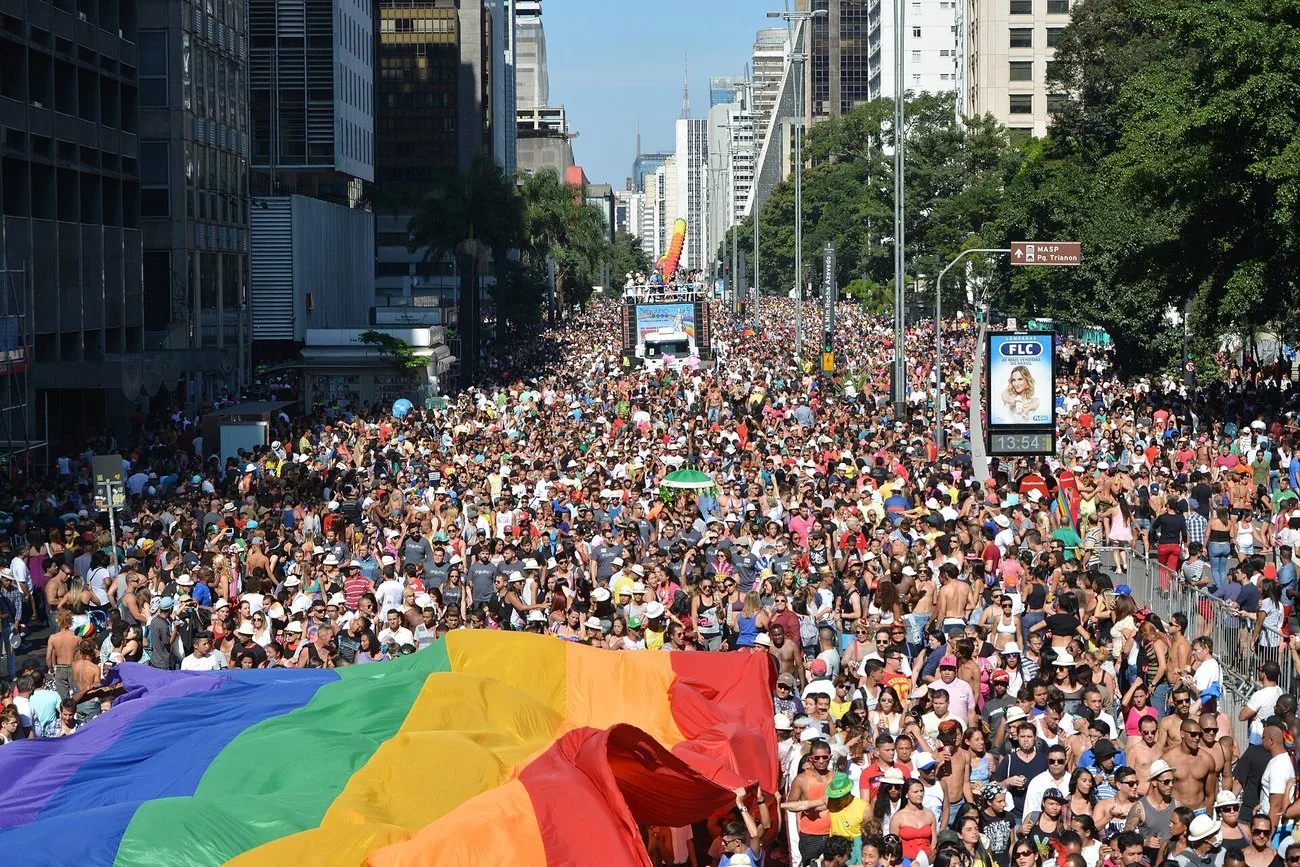
- An oversized rainbow flag carried down Avenida Paulista at São Paulo's eighteenth annual LGBT Pride Parade, May 4, 2014. [41] · Credit: Ben Tavener, CC BY 2.0, via Wikimedia Commons · Wikimedia Commons
- The 60-meter Donkin Reserve flagpole in Port Elizabeth, South Africa's tallest, photographed April 6, 2015 with the national flag flying. [42] Nelson Mandela Bay Pride flew a 12-by-8-meter rainbow flag from this mast that November. [22] This flagpole photograph is freely licensed. The photographs of the Pride flag itself are rights-reserved press images, one of which appears in News24's report on the flagpole. [43] · Credit: Ossewa / I. Grewar, CC BY-SA 4.0, via Wikimedia Commons · Wikimedia Commons
- A lone demonstrator outside the U.S. Supreme Court, June 25, 2015, the day before the Obergefell ruling, with the outcome still unknown. [45] · Credit: Elvert Barnes, CC BY-SA 2.0, via Wikimedia Commons · Wikimedia Commons
- The White House lit in the flag's six colors on the evening of June 26, 2015, the day of the Obergefell v. Hodges ruling. [3] · Credit: White House photograph — work of the Executive Office of the President, public domain · Wikimedia Commons
- The Supreme Court plaza at 8:27 on the morning of June 26, 2015, an hour and a half before the Obergefell opinion came down. The demonstrator appears to be the same man photographed alone the previous afternoon. [46] · Credit: Ted Eytan, CC BY-SA 2.0, via Wikimedia Commons · Wikimedia Commons
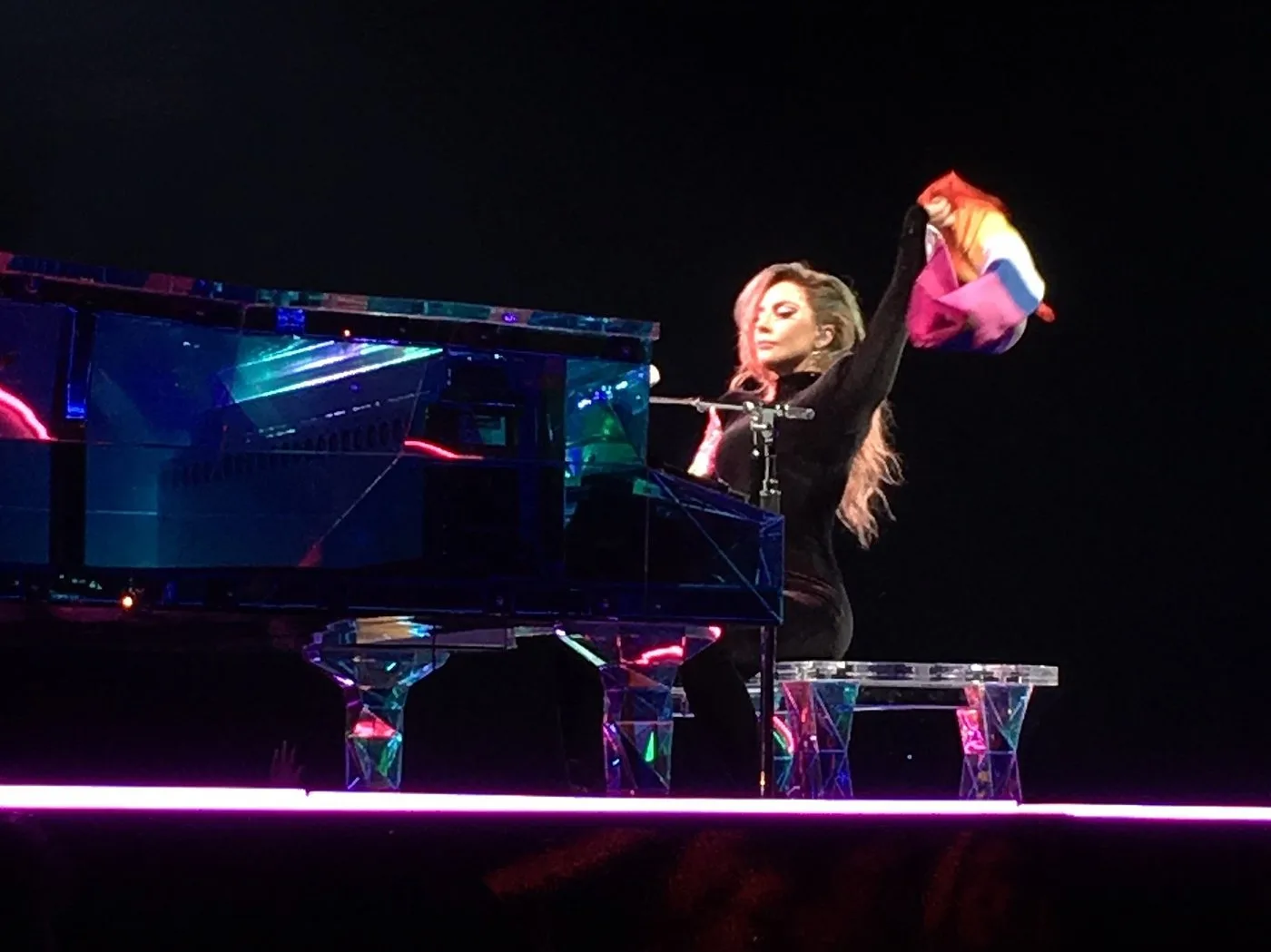
- Lady Gaga raises a rainbow flag at the Tacoma Dome, August 5, 2017, on the Joanne World Tour. Bunched in her hand, its stripe count cannot be read. [48] · Credit: evil robot 6, CC BY 2.0, via Wikimedia Commons · Wikimedia Commons
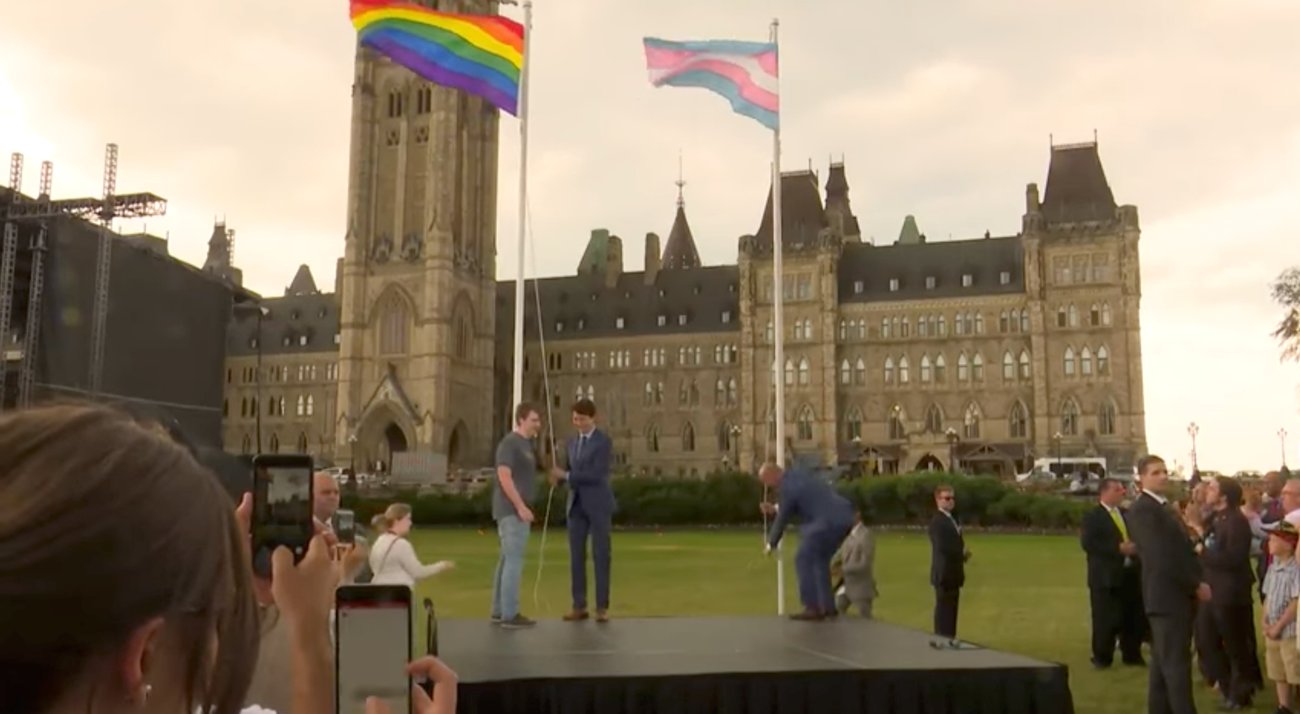
- The rainbow flag and the transgender flag raised together on Parliament Hill, Ottawa, June 20, 2018, with Prime Minister Justin Trudeau at the mast. Still frame from the ceremony video. [47] · Credit: Justin Trudeau – Prime Minister of Canada, CC BY 3.0, via Wikimedia Commons — still frame extracted from the source video · Wikimedia Commons
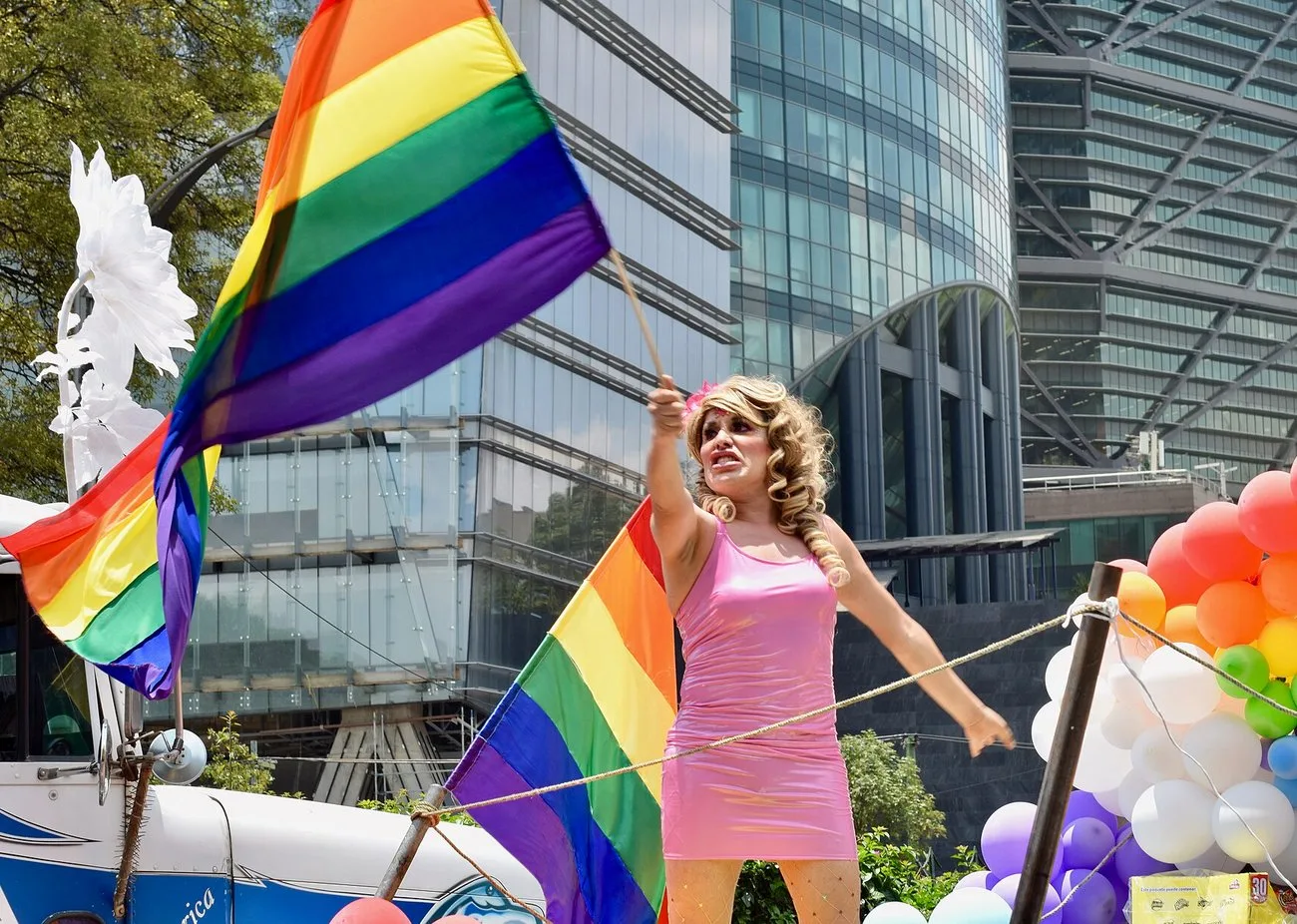
- Mexico City Pride, June 29, 2019. [44] · Credit: Omar David Sandoval Sida, CC BY-SA 4.0, via Wikimedia Commons · Wikimedia Commons
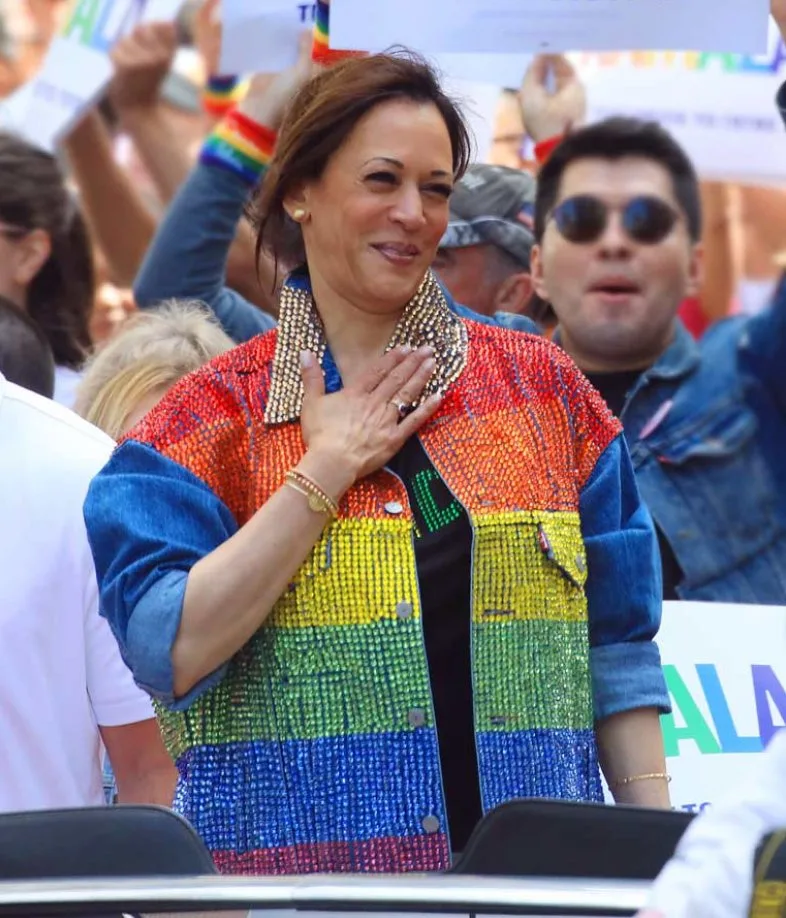
- Kamala Harris in a sequined six-stripe jacket, in the photograph a replica retailer used to sell a 'Kamala Harris Gay Pride Flag Jacket' two days after her 2021 inauguration as Vice President. The jacket is widely associated with San Francisco Pride 2019, though the listing does not say so. [49] · Credit: Photographer unrecorded on the listing; via usajacket.com · USA Jacket (retail listing)
- A 2021 rainbow-labeled Listerine bottle sold in Australian and New Zealand supermarkets, pledging twenty cents per pack to Wear It Purple and RainbowYOUTH. [35] · Credit: u/NielleHasIt, via r/lgbt · Reddit
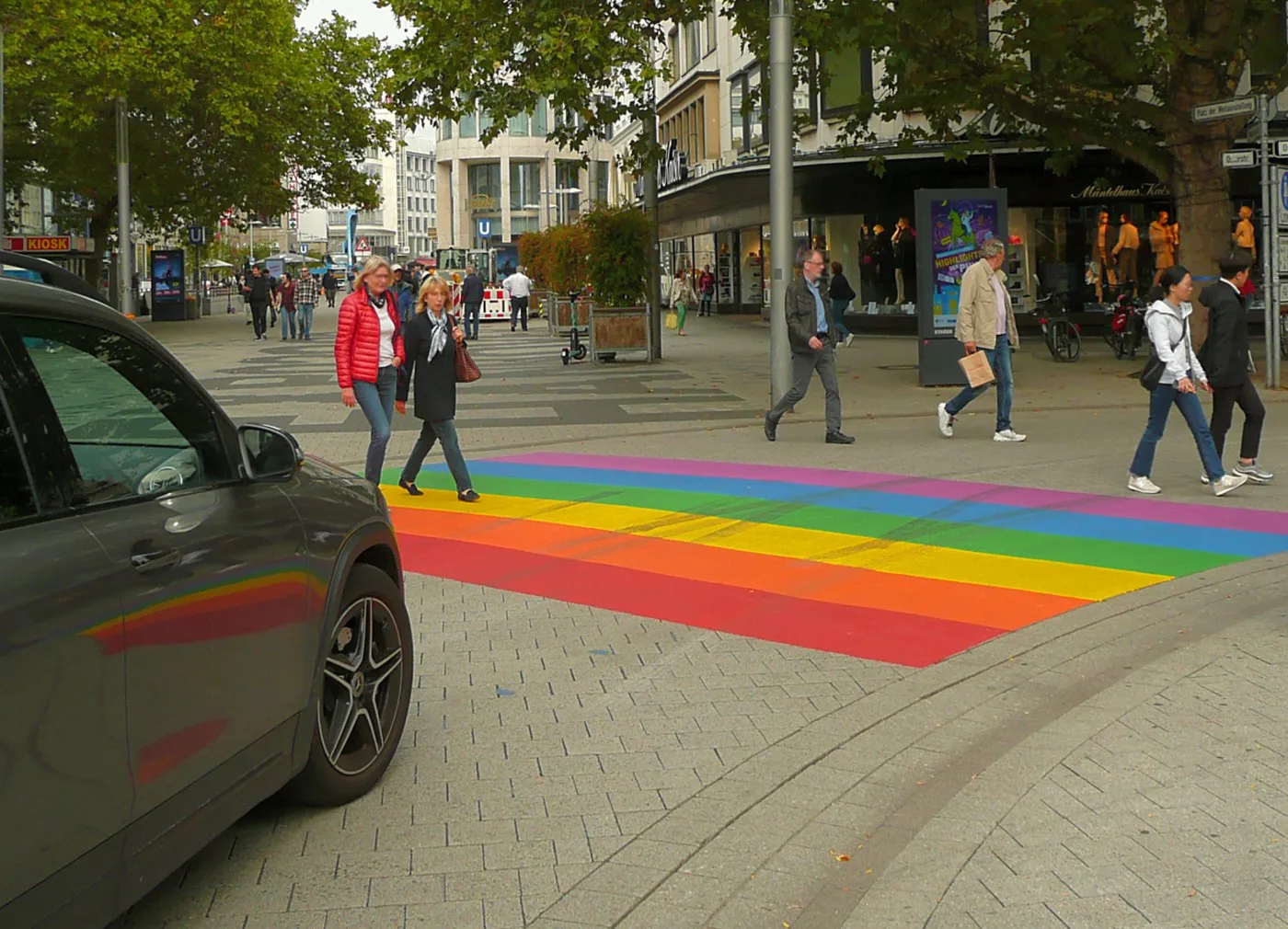
- Rainbow crosswalk on Karmarschstraße, Hannover, September 2024, one of many permanent street installations of the design. [3] · Credit: Foto: Axel Hindemith / Lizenz: Creative Commons CC-by-sa-3.0 de · Wikimedia Commons
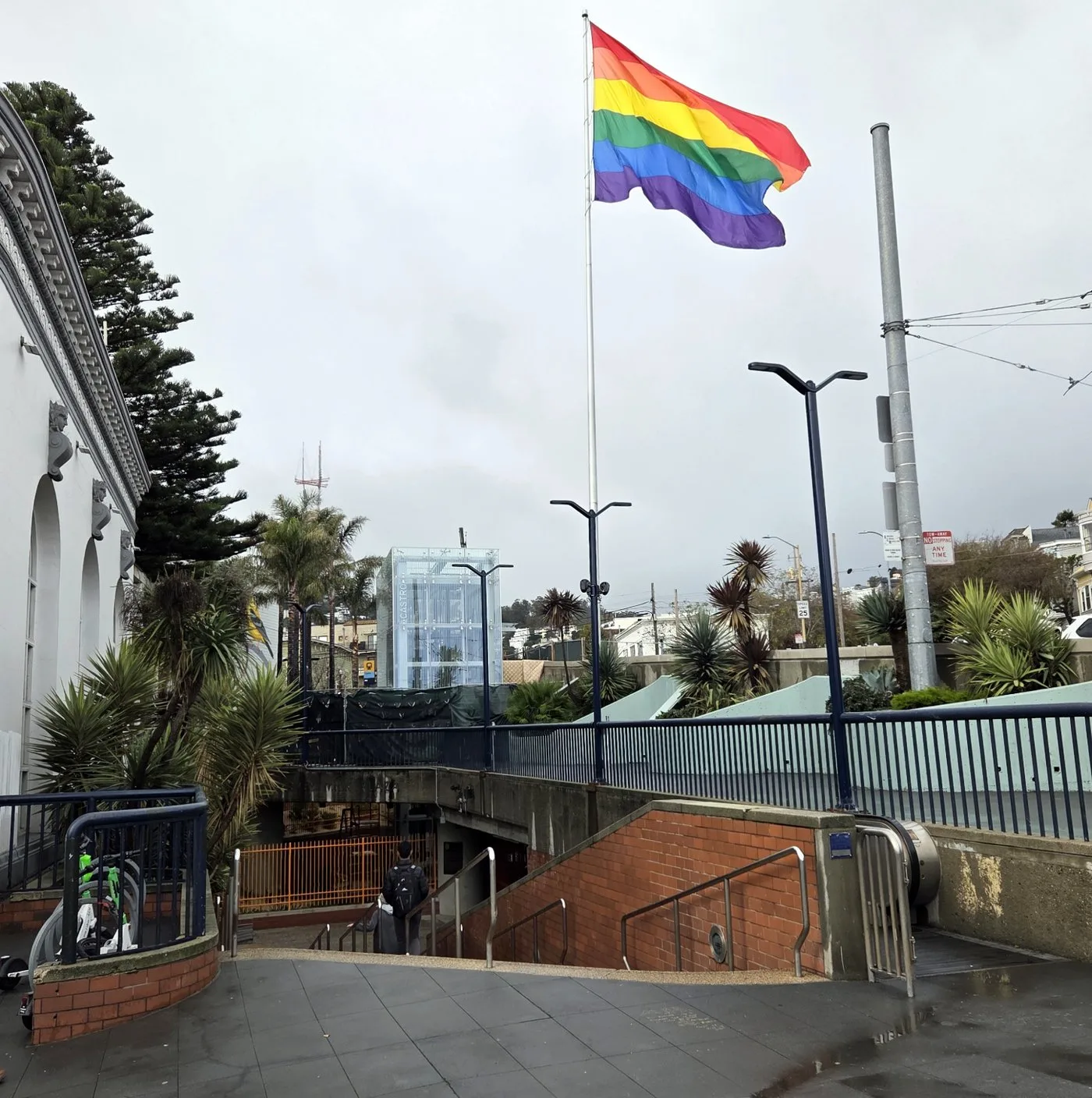
- The permanent six-stripe flag at Harvey Milk Plaza, above the Castro Muni entrance in San Francisco, February 18, 2026. · Credit: Pi.1415926535, CC BY-SA 4.0, via Wikimedia Commons · Wikimedia Commons (Category: Harvey Milk Plaza)
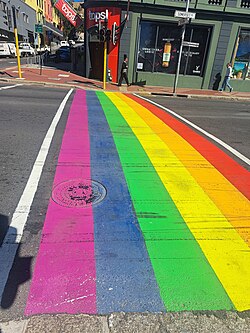
- The six-stripe flag laid into the road surface: a rainbow pedestrian crossing on Somerset Road in De Waterkant, Cape Town, photographed on 27 March 2026. The uploader describes Green Point as a district dedicated to the LGBTQIA+ community. [50] · Credit: Axxter99 · Wikimedia Commons · CC BY-SA 4.0
- Boise City Hall on 7 April 2026, six days after a new Idaho law forced the city to take down its Pride flag. Three flagpoles were wrapped in the colors of the Progress Pride flag; the window sign is visible at right. The wraps and the sign together cost just under $6,000 from the city's existing operating budget. · Credit: Darin Oswald / Idaho Statesman · Idaho Statesman · archival · All rights reserved
- The sign installed in a Boise City Hall window overlooking Capitol Boulevard after the Pride flag came down, reading 'Creating a city for everyone' with the final word graded from red to purple. · Credit: Darin Oswald / Idaho Statesman · Idaho Statesman · archival · All rights reserved
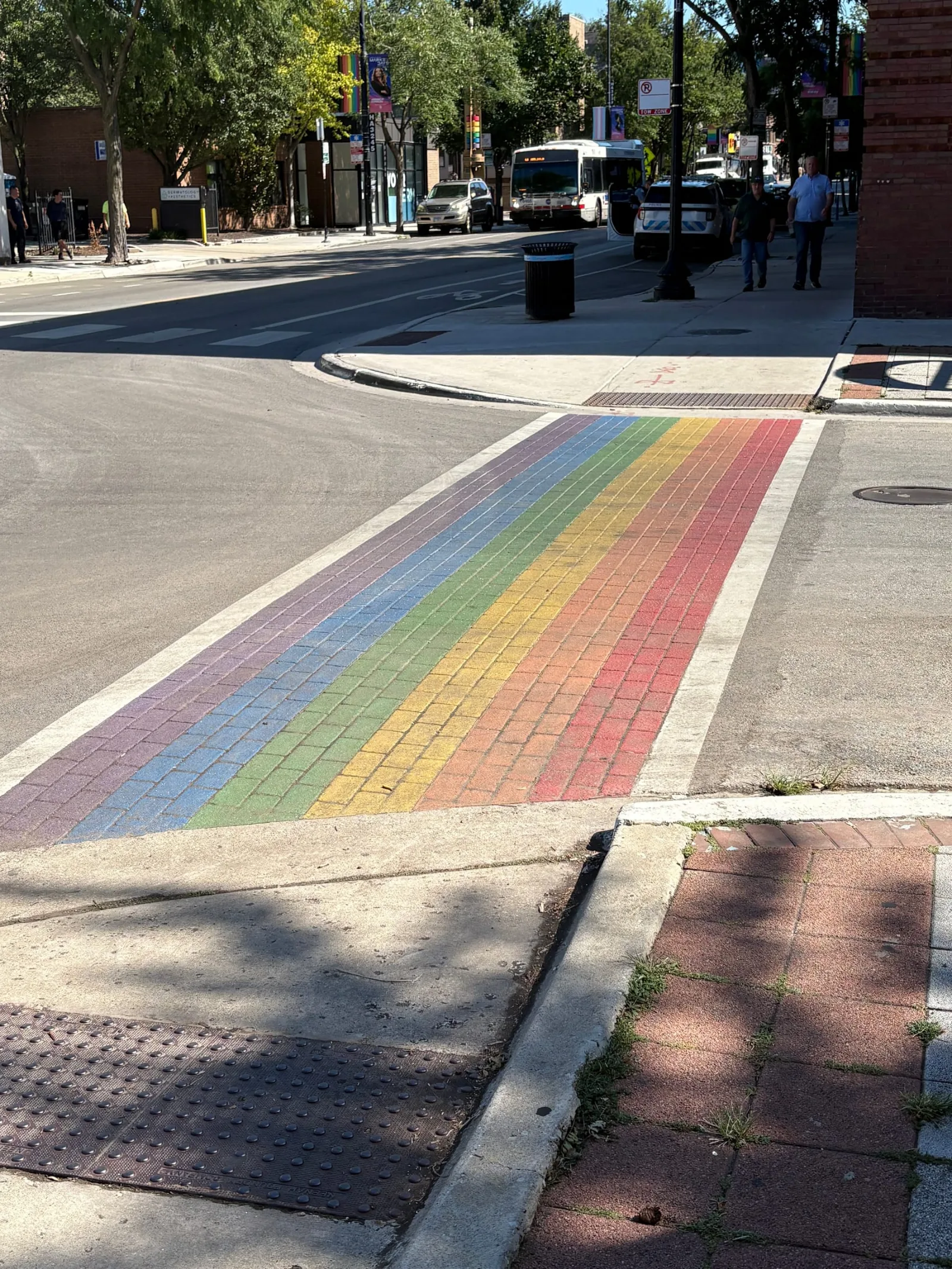
- Rainbow crosswalk on North Halsted Street in Northalsted, the Chicago district long known as Boystown, July 29, 2026. The six-stripe design is laid into the brick paving of the intersection rather than painted on asphalt. · Credit: Will Montgomery · Photograph by Will Montgomery
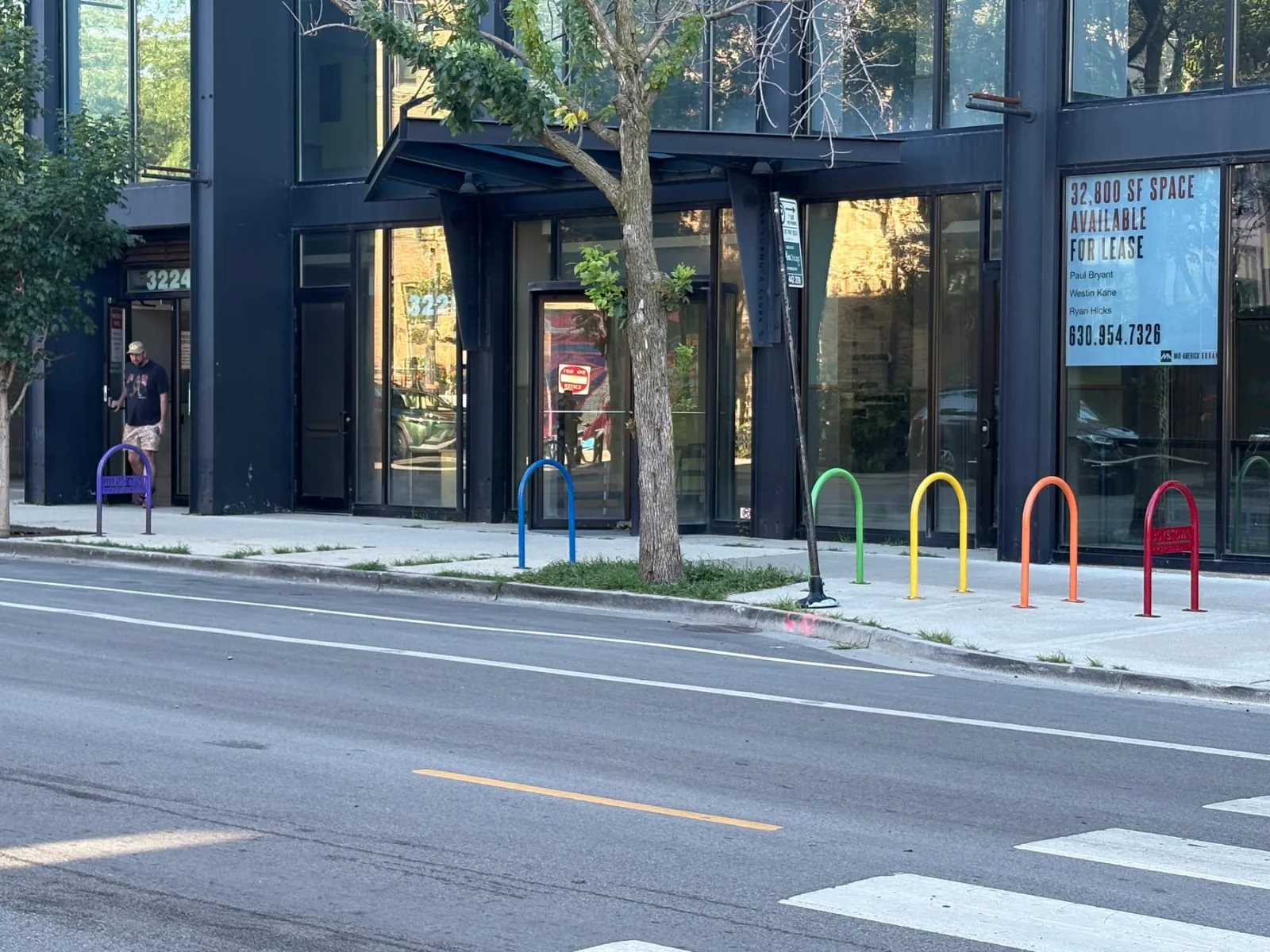
- Bike racks outside 3224 North Halsted Street, Chicago, July 29, 2026, each painted one color of the six-stripe flag so that the row reads as the flag across the sidewalk. · Credit: Will Montgomery · Photograph by Will Montgomery
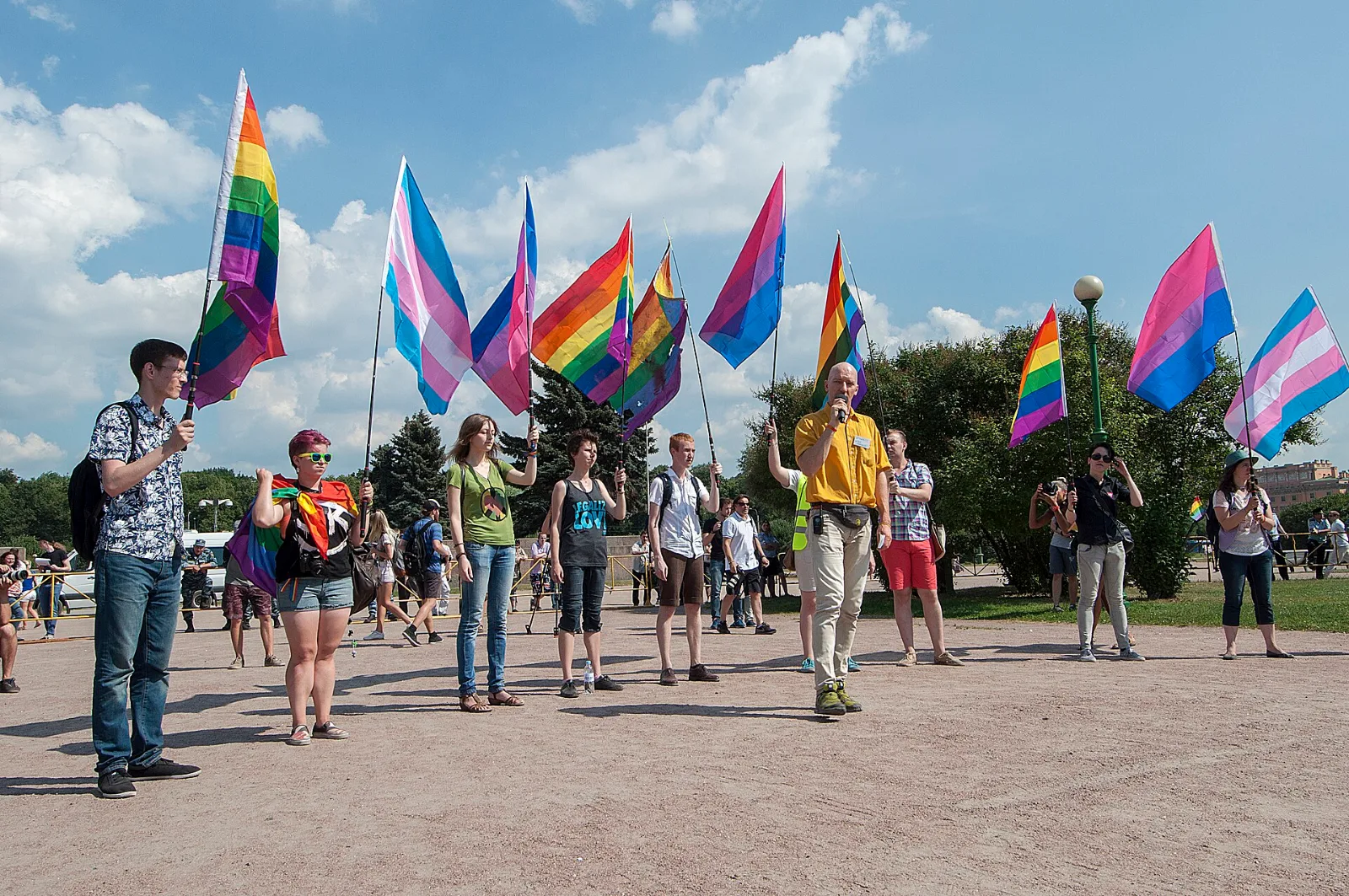
- Six-stripe rainbow flags carried with bisexual and transgender flags at a public action during the Fifth Saint Petersburg Pride, at the Field of Mars, 26 July 2014. · Credit: Alek Naza, CC BY-SA 4.0 · Wikimedia Commons
- Gilbert Baker with a giant six-stripe flag and its volunteer handlers. · Credit: Courtesy of Maxwell Photography · POZ
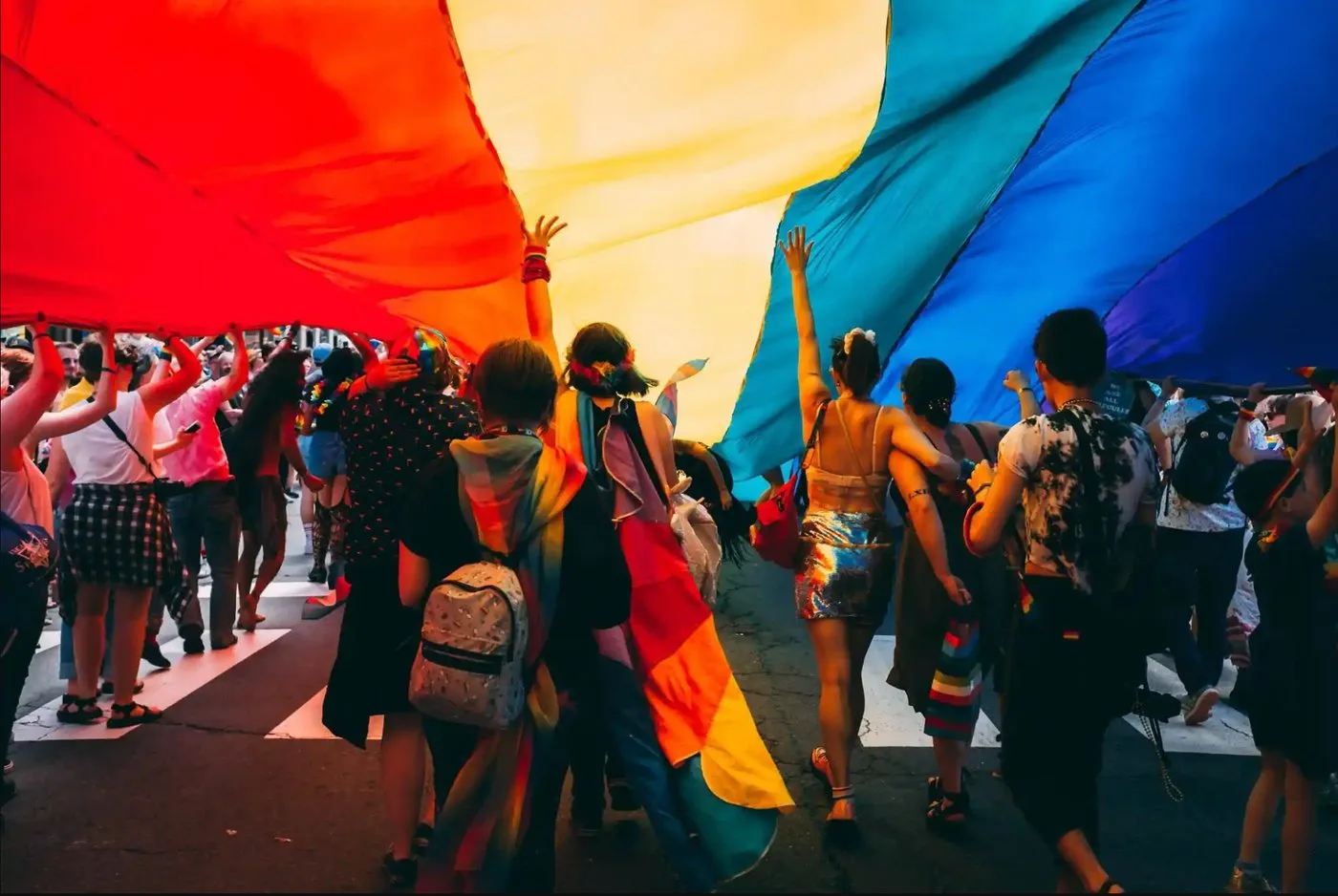
- A giant six-stripe flag carried overhead at a pride march, seen from underneath. · Credit: Mercedes Mehling, via Unsplash · Unsplash (@mrs80z)