Progress Pride Flag
Inclusive Pride Flag ·
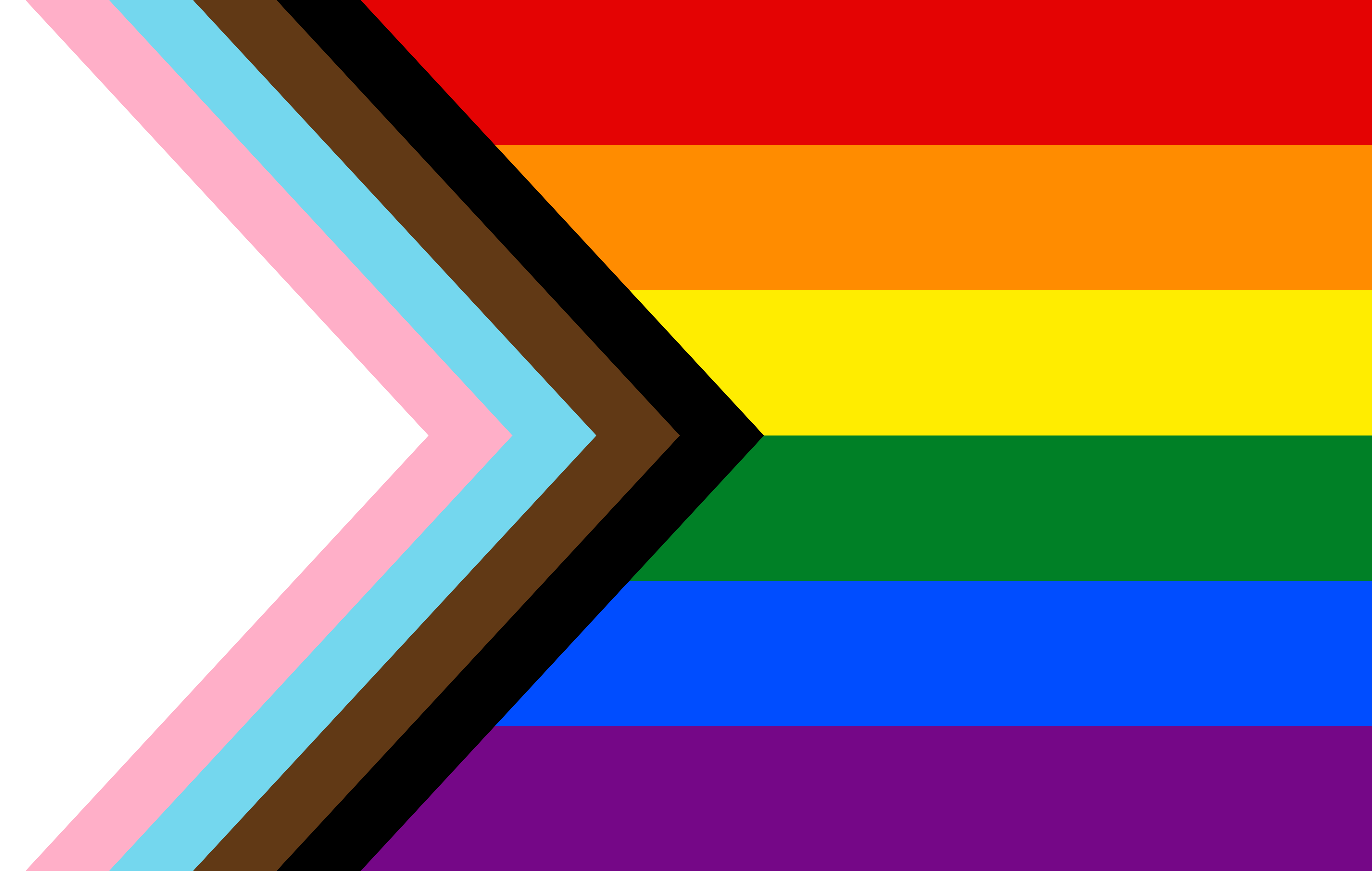
A 2018 redesign of the rainbow pride flag by Daniel Quasar (xe/xyr) that overlays a five-color hoist-side chevron onto the traditional six-stripe rainbow field. The chevron's black and brown stripes represent marginalized LGBTQ communities of color and, in some readings, people living with or lost to HIV/AIDS, while its light blue, pink, and white stripes are drawn from the transgender pride flag. The arrow shape points toward the fly end of the flag to signify forward movement and the ongoing need for progress. [1]
Key facts
- Designer
- Daniel Quasar
- Created
- First documented public use
- In use
- 2018–present
- Aspect Ratio
- 3:5 · standard
- Ratio Notes
- No proportion is published by the designer; progress.gay sets out the design's colours and construction without stating a ratio. The archive's own rendering is 6000 by 3810, and the archive's standard production ratio is shown instead.
- Stripes
- 6
- Origin
- United States
- Represented Identity
- LGBTQ community
Also known as
- Progress Pride Flag
- 2018 Progress Pride Flag
- Progress Flag
Status Variant
Archive categories Inclusive and Progress Pride Flags
Overview
To foreground current community needs and increase visibility for transgender people, people of color, and those affected by HIV/AIDS. [1]
In 2017, Philadelphia's Office of LGBT Affairs commissioned a new version of the rainbow flag, the Philadelphia Pride Flag, which added black and brown stripes to the existing six to address documented racism within the city's Gayborhood district. [2] That intervention established a precedent: the rainbow was no longer untouchable, and its palette could be expanded to name communities it had failed to represent. Daniel Quasar built on this precedent in June 2018 by combining the Philadelphia flag's black and brown stripes with the light blue, pink, and white of Monica Helms's 1999 transgender pride flag, relocating all five colors from the horizontal stripe field into a hoist-side chevron. The arrow shape was intended to convey forward momentum, signaling that progress remained incomplete. [1]
Identity & Context
- Represented Identity
- LGBTQ community
- Subcommunity
- Transgender community, non-binary people, marginalized people of color
- Movement
- Inclusive pride, intersectionality, anti-racism, trans visibility, HIV/AIDS remembrance
- Diaspora Context
- Global circulation
- Racial / Ethnic Context
- Marginalized communities of color
Less tied to one city than the Philadelphia flag and more connected to digital-era circulation and international adoption. [3]
Creators
The Creator
Daniel Quasar
Designer
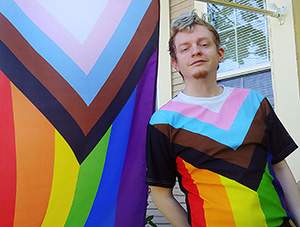
Daniel Quasar (xe/xyr) is a Queer non-binary demiguy and self-described ‘accidental designer,’ artist, and musician born in the mid-1980s in Kentucky, who relocated to Portland, Oregon during childhood. [4] Xe holds a BFA in Communication Design from Pacific Northwest College of Art (PNCA) and worked as a freelance designer before and after formal schooling, with professional credits including stage animations for the 2016 RuPaul’s Drag Race ‘Battle of the Seasons’ tour and Jinkx Monsoon’s 2017 ‘Ginger Snapped’ tour, alongside client work for Target, DC Comics, Nike, Reebok, Adobe, Lyft, and Spotify. Quasar now runs quasar.digital and oversees the Progress Initiative, which as of December 2024 has donated over $23,500 to LGBTQ organizations including Trans Lifeline, The Trevor Project, the LGBTQ Freedom Fund, and the Black AIDS Institute; in 2023 the Initiative switched to a ‘Shop For Good’ model with Rainbow Railroad as its primary beneficiary. [4][5][1]
It was never my intention for my flag to be a replacement for the original Pride flag.
It's acknowledging that there are things in our community that we need to progress on.
I'm an accidental designer. [4]
Motivations
- To foreground trans people, marginalized people of color, and people affected by HIV/AIDS within the pride flag [1]
- To place greater emphasis on these meanings by giving them a distinct visual element [1]
Stated inspirations
- The Philadelphia Pride Flag’s addition of black and brown stripes[1][2]
- The transgender pride flag’s light blue, pink, and white elements[1][3]
Attribution
- Organization
- quasar.digital / Progress Initiative
Origin
- Country
- United States
- Place Type
- digitally disseminated redesign
- Digital Origin
- Yes
Digital-origin flag. Creator or earliest documentation associated with the United States, but no specific physical site of creation has been verified. Without a confirmed location, Indigenous land context cannot be responsibly attributed.
The design originated as a digital publication shared on social media on June 6, 2018, and spread through online circulation before Quasar launched a Kickstarter campaign the following day to fund physical production. The flag's rapid transition from a viral image to a manufactured object and, eventually, a museum acquisition illustrates the compressed lifecycle of digitally native symbols. [5]
Dates & Chronology
- Year Created
- First public use
- Period in Use
- 2018–present
Quasar sketched the chevron arrangement during a night of insomnia-driven art-making on June 5, 2018, and posted the finished design publicly the following day. [4] The image went viral immediately, Quasar's phone ran out of battery three times that day from notifications. [4] A Kickstarter campaign launched on June 7 with a $14,000 goal; Dezeen reported $17,386 from 322 backers during its early coverage, [6] and the campaign ultimately closed at $25,802 from 508 backers, funding an initial production run of flags, stickers, and enamel pins. [5] Institutional adoption followed quickly: the flag was flown above official buildings in cities including New York, London, Boston, and Sydney. [6]
In 2020, the Victoria and Albert Museum in London acquired a bespoke appliqué version (museum number CD.14-2020, manufactured by Art Schaller for Custom Flag Company, Westminster, Colorado) for its permanent collection through the Rapid Response Collecting program; curators Livia Turnbull and Maude Willaerts commissioned it directly from Quasar after finding existing stock sold out. [7] The flag is displayed in the Design 1900-Now gallery (Room 74a) in the 'Conflict' section alongside Better Shelter's flat-pack refugee shelter and Chris Ofili's print about the murder of Stephen Lawrence.
On June 10, 2023, the Biden administration hung a Progress Pride Flag on the South Portico balcony of the White House, centered between two American flags, at what the administration called the largest Pride event ever held there (postponed from the original date due to hazardous air from Canadian wildfires). Senator Roger Marshall called the display 'a disgrace' and alleged a breach of U.S. Flag Code; multiple fact-checkers debunked the claim, noting a U.S. flag flew at a higher point from a rooftop flagpole and that Flag Code provisions are 'declaratory and advisory only.' The episode occurred as state lawmakers had introduced at least 525 anti-LGBTQ bills that year.
In 2025, after Utah and Idaho passed laws banning non-governmental flags on public buildings, Salt Lake City and Boise adopted modified versions of the Progress flag as official city flags, incorporating the state flower to qualify under the new restrictions. [3][4][8]
Major revisions
Valentino Vecchietti created the Intersex-Inclusive Progress Pride Flag, adding an intersex symbol at the chevron’s center. [2]
The Progress Pride Flag occupies a central position in the lineage of rainbow-flag redesigns. It descends from both the 2017 Philadelphia Pride Flag and the 1999 transgender pride flag, combining the racial-inclusion and trans-visibility stripes into a single widely adopted composition.
In 2021, Valentino Vecchietti extended the design by adding a purple circle on a yellow triangle to the chevron, producing the Intersex-Inclusive Progress Pride Flag. The Philadelphia-to-Progress-to-Intersex-Inclusive sequence shows each successive revision adding stripes to name groups the previous design was said to leave insufficiently visible. [2]
Lineage
- Direct predecessors
- Philadelphia Pride Flag, Transgender Pride Flag
- Indirect influences
- Victory Over AIDS Flag (1980s, designer unknown)
- Direct children
- Indigiqueer / Two-Spirit Flag (cedar-maw), Intersex-Inclusive Pride Flag, Jewish Progress Pride Flag (Keshet), Sego Belonging Flag, Two-Spirit Progress Pride Flag, Inclusive Diversity Pride Flag (TransIphis, 2022), Utopian Pride Flag #6 (2040 Progress Flag)
- Related flags
- Chicago Stars Pride Flag, Disability-Inclusive Pride Flag, Intersex Pride Flag, Queer Pride Flag, Gilbert Baker Nine-Stripe Rainbow Flag, Original Rainbow Flag (1978)
Follows the Philadelphia Pride Flag in the Baker-Segerblom-rainbow lineage. The transgender pride flag is a significant related influence, contributing the light blue, pink, and white elements to the chevron. The Philadelphia (2017) to Progress (2018) to Intersex-Inclusive (2021) sequence documents a chain in which each revision added stripes to name groups the previous design was said to leave insufficiently visible. [2]
Lineage tree
Every record reachable from this one through documented parent and child relationships: 17 records across 7 generations.
- Ancestors -4
- Original Rainbow Flag (1978)
- Ancestors -3
- Seven-Stripe Rainbow Flag (1978)
- Ancestors -2
- Rainbow Pride Flag
- This record
- Progress Pride Flag
Colors & Symbolism
The flag combines three existing sets of stripes (the six-stripe rainbow, the Philadelphia Pride Flag's black and brown, and the transgender pride flag's light blue, pink, and white) into a single composition. Quasar's own account of the chevron: the marginalized community stripes "were shifted to the Hoist of the flag and given a new chevron shape. The arrow points away from the hoist to show forward movement, and to show that Progress still needs to be made." The design does not replace the rainbow but layers additional stripes onto it. [1][3]
| Colour | Hex | Meaning |
|---|---|---|
| Red | #E40303 | Life (inherited from the six-stripe rainbow flag) |
| Orange | #FF8C00 | Healing (inherited from the six-stripe rainbow flag) |
| Yellow | #FFED00 | Sunlight (inherited from the six-stripe rainbow flag) |
| Green | #008026 | Nature (inherited from the six-stripe rainbow flag) |
| Blue | #004DFF | Serenity (inherited from the six-stripe rainbow flag) |
| Purple | #750787 | Spirit (inherited from the six-stripe rainbow flag) |
| Black | #000000 | Marginalized LGBTQ communities of color; in some readings, also people living with or lost to HIV/AIDS. Inherited from the Philadelphia Pride Flag. [1][3] |
| Brown | #613915 | Marginalized LGBTQ communities of color. Inherited from the Philadelphia Pride Flag. [1][2] |
| Light Blue | #74D7EE | Trans community. Inherited from the transgender pride flag. [1] |
| Pink | #FFAFC8 | Trans community. Inherited from the transgender pride flag. [1] |
| White | #FFFFFF | Trans community; also those who are transitioning, intersex, or identify outside the gender binary. Inherited from the transgender pride flag. [1] |
flagcolorcodes.com
This flag has no official digital palette. Color values shown are approximate.
The black stripe’s meaning is the most substantively contested element. Quasar’s own account and the V&A both treat the HIV/AIDS reading as integral to the design’s intent, alongside racial inclusion. [1][3] Institutional sources such as HRC include the HIV/AIDS reading as supplementary context, while some summary sources omit it in favor of a race-only interpretation. [2] Library.LGBT is the only located source that frames the dual meaning as a controversy. The HIV/AIDS reading is now reported in most long-form sources but is frequently absent from short-form summaries. [1]
Quasar’s official files or style guide should be consulted before treating exact digital values as canonical. [1] Provisional values only.
Design
- Aspect Ratio
- 3:5 · standard
- Ratio Notes
- No proportion is published by the designer; progress.gay sets out the design's colours and construction without stating a ratio. The archive's own rendering is 6000 by 3810, and the archive's standard production ratio is shown instead.
- Orientation
- horizontal field with hoist chevron
- Stripe Count
- 6
- Layout
- horizontal stripes with chevron
- Stripes (Top → Bottom)
- Red, Orange, Yellow, Green, Blue, Purple
- Additional Symbols
- Five-color hoist-side chevron (black, brown, light blue, pink, white)
The chevron layers five nested V-shapes at the hoist (left) edge, ordered from outermost to innermost: white, pink, light blue, brown, black. The rainbow field behind retains the standard six-stripe sequence. [1]
Usage & Adoption
- Geographic Usage
- International
- Online Usage
- Extensive
- Event Usage
- Pride events worldwide, Institutional displays, Municipal and community use
- Current Status
- active and globally widespread
In institutional contexts, the Progress flag has largely supplanted the six-stripe rainbow. The V&A acquired a bespoke appliqué version for its permanent collection in 2020 through its Rapid Response Collecting program. Government buildings, corporate offices, and universities increasingly default to the Progress variant during Pride Month. The traditional rainbow flag remains dominant in street-level Pride celebrations and personal use, so the two flags are commonly seen in parallel rather than as replacements for each other. [3][9]
Image Archive
Drag March LA protest
Brookfield Place, New York City
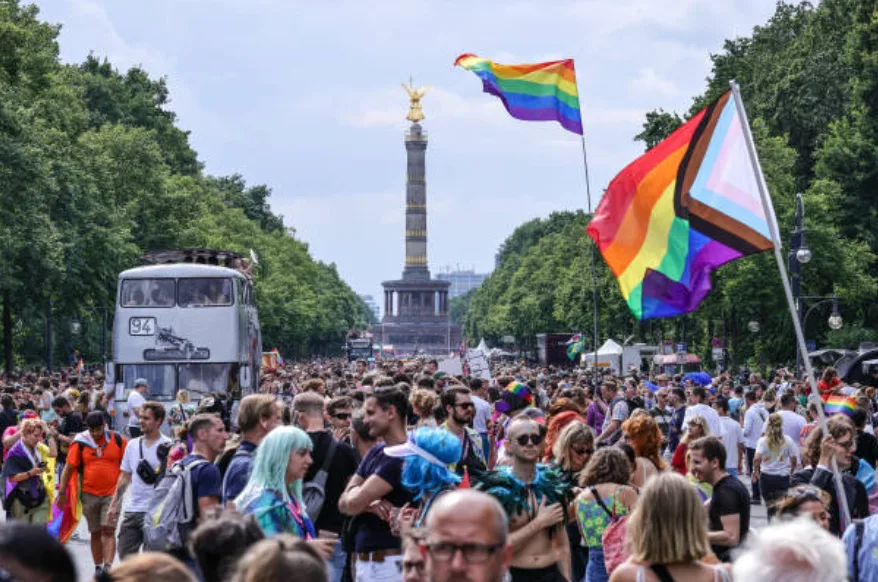
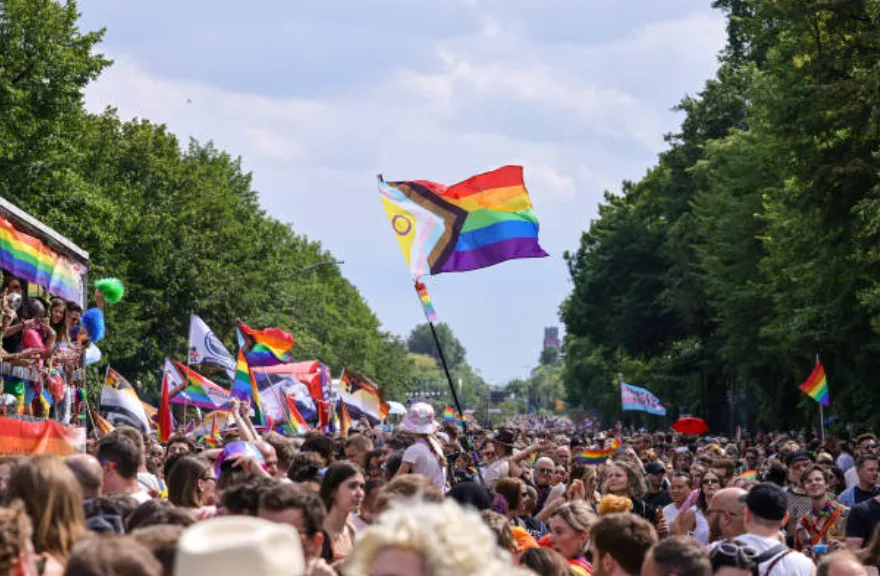
Christopher Street Day, Berlin
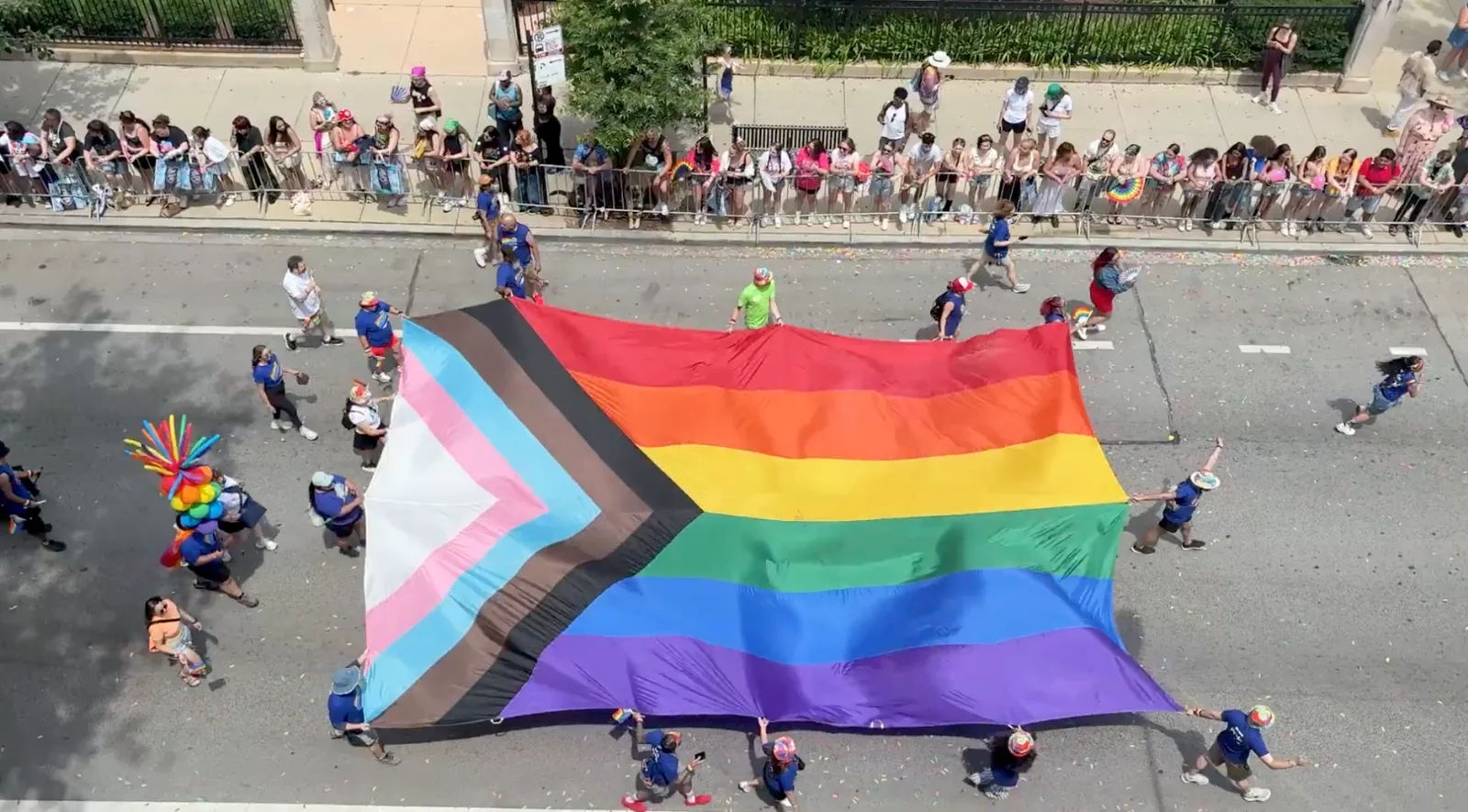
Chicago Pride Parade
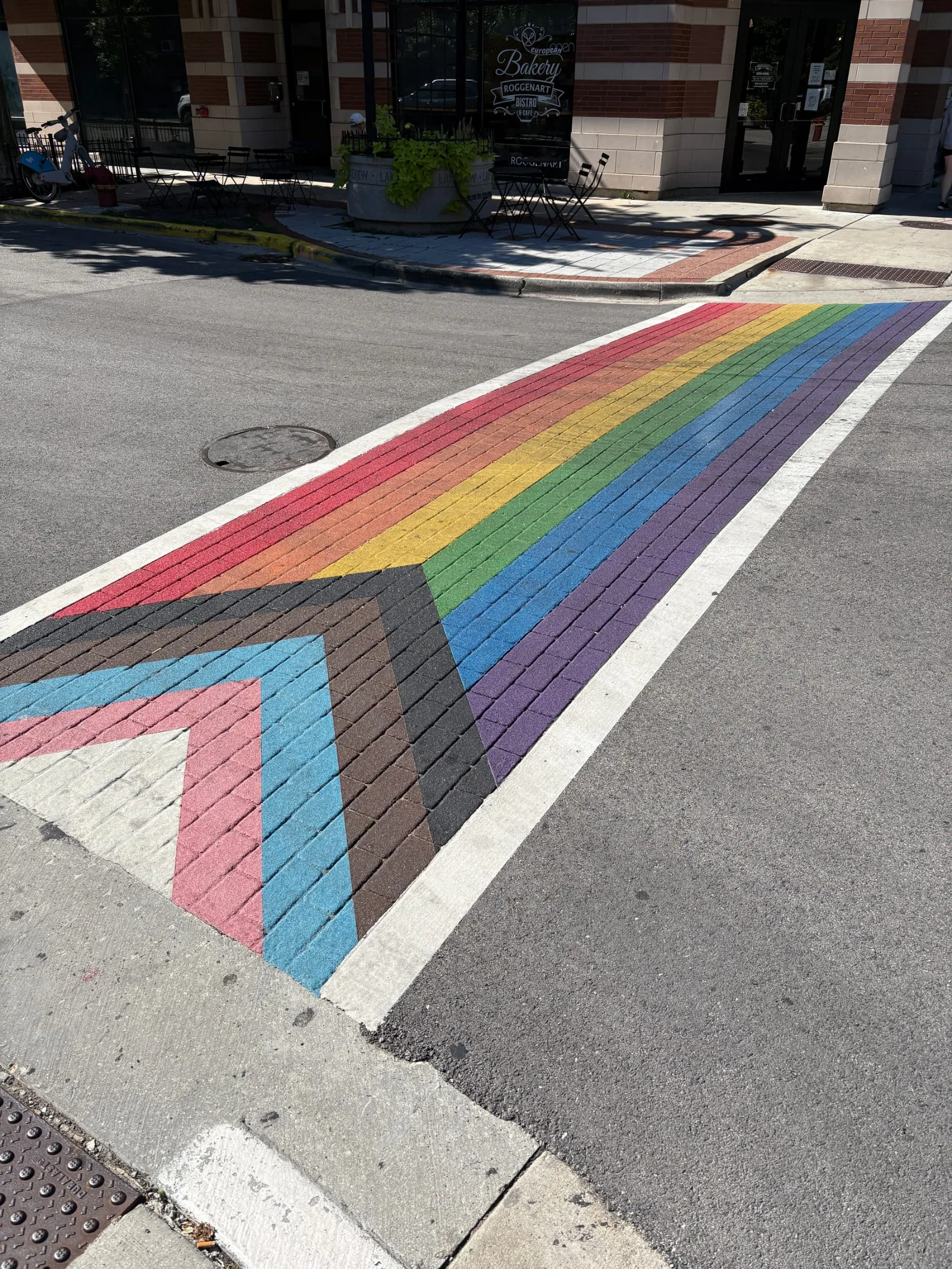
Crosswalks
The flag in use

Discourse & Debates
- Whether the design productively foregrounds marginalized groups or narrows a previously universal symbol [3]
- Whether the black stripe should be read only as racial inclusion or also as HIV/AIDS remembrance [1]
- Whether redesigning the rainbow flag to foreground specific groups represents inclusion or fragmentation. Some older LGBTQ people feel the rainbow flag they fought under is being devalued or replaced; defenders counter that universal symbols often default to the most privileged members of a community, and that explicit naming is needed to name who has been left out. The same tension recurs across the Philadelphia, Progress, and Intersex-Inclusive revisions. [3][9]
Common misidentifications
- Often confused with the later intersex-inclusive redesign by Valentino Vecchietti [10]
- Sometimes conflated with other people-of-color- or trans-inclusive redesigns that are not Quasar’s [10]
- Progress Pride Flag versus Philadelphia Pride Flag [11]
- Progress Pride Flag versus Intersex-Inclusive Progress Pride Flag [2]
Criticisms
- Some argue the original rainbow was already inclusive enough and that each revision implicitly indicts the previous version as insufficient, creating a cycle where no symbol can be final. [3]
- The CC BY-NC-SA license sets the Progress flag apart from other major pride flags on licensing terms: Baker did not assert copyright over the rainbow, Helms has stated the trans flag cannot be copyrighted, and Page declared the bisexual flag free for public and commercial use. The Progress flag is widely reproduced commercially by vendors worldwide, and Quasar has not been publicly known to pursue legal action. [12]
- Critics argue that the cycle of redesign benefits flag manufacturers and corporate Pride departments more than the communities being named, since each new variant creates new merchandise opportunities. The 'flag fatigue' debate asks whether frequent symbolic revision distracts from material change. [9]
- Quartz characterized the flag as 'a design disaster but a triumph for inclusiveness,' arguing that the chevron's visual complexity weakened the design's graphic coherence even as it succeeded as a political statement about whose visibility the rainbow had historically centered. [13]
The unmodified name ‘Progress Pride Flag’ refers specifically to Quasar’s 2018 design without the intersex addition. [1]
Footnotes & Citations
Sources and footnotes 14 sources
- 1. Official What’s The Story Behind The “Progress” Pride Flag?. Progress Initiative / quasar.digital. Accessed 2026-03-08
- 2. Organizations LGBTQ+ Pride Flags. Human Rights Campaign. Accessed 2026-03-08
- 3. Articles & Reports The Progress Pride flag. Victoria and Albert Museum. Accessed 2026-03-08
- 4. Interview A Conversation With Daniel Quasar on Pride Flags, LGBTQ+ History, and Mental Health. The Trevor Project (2023-11). Accessed 2026-03-15
- 5. Crowdfunding "Progress" A PRIDE Flag Reboot. Daniel Quasar. Kickstarter (2018-06-07). Accessed 2026-03-11
- 6. Articles & Reports Daniel Quasar redesigns LGBT Rainbow Flag to be more inclusive. Dezeen (2018-06-12). Accessed 2026-03-11
- 7. Museums & Exhibitions Progress Pride Flag (pride flag) | Daniel Quasar. Victoria and Albert Museum. Accessed 2026-03-18
- 8. Articles & Reports Copyright in Pride Flags. Plagiarism Today (2023-06-26). Accessed 2026-03-15
- 9. Articles & Reports Daniel Quasar's redesigned Pride flag is a beautiful step towards inclusivity. It's Nice That (2018-06-12). Accessed 2026-03-15
- 10. Databases Pride Flag Identification Guide. PrideFlags.org. Accessed 2026-03-08
- 11. Databases Rainbow (Philadelphia Variant). Library.LGBT. Accessed 2026-03-08
- 12. Official Terms Of Use. Progress Initiative / quasar.digital. Accessed 2026-03-08
- 13. Articles & Reports The new rainbow pride flag is a design disaster but a triumph for LGBTQ inclusiveness. Quartz (2018-06). Accessed 2026-03-18
- Progress flag. Wikipedia contributors. Wikipedia (2026-06-01). Accessed 2026-07-24
Image Sources
- Rendering
- progress-2018
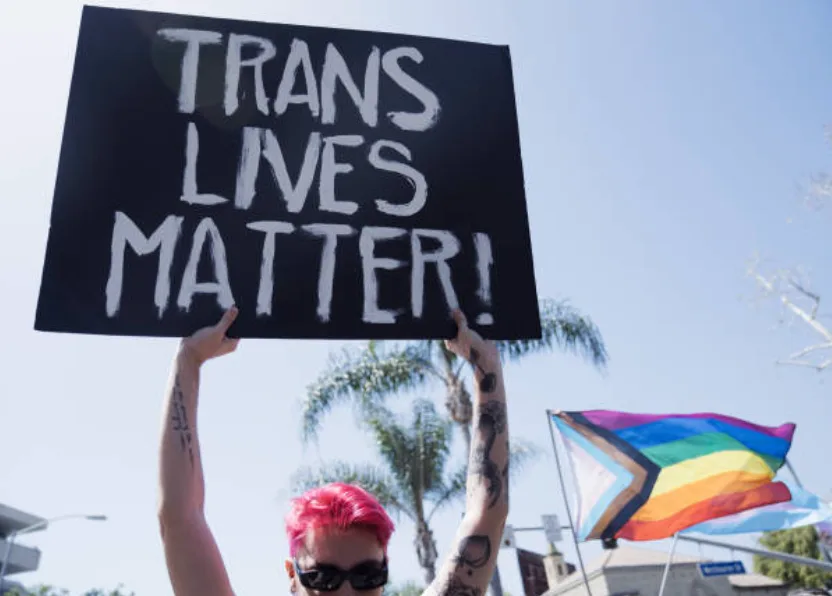
- Progress Pride Flag during Drag March LA, West Hollywood, California, April 9, 2023. This image places the flag in active protest against anti-LGBTQ legislation rather than decorative festival use alone. · Credit: Sarah Morris / Getty Images · Getty Images
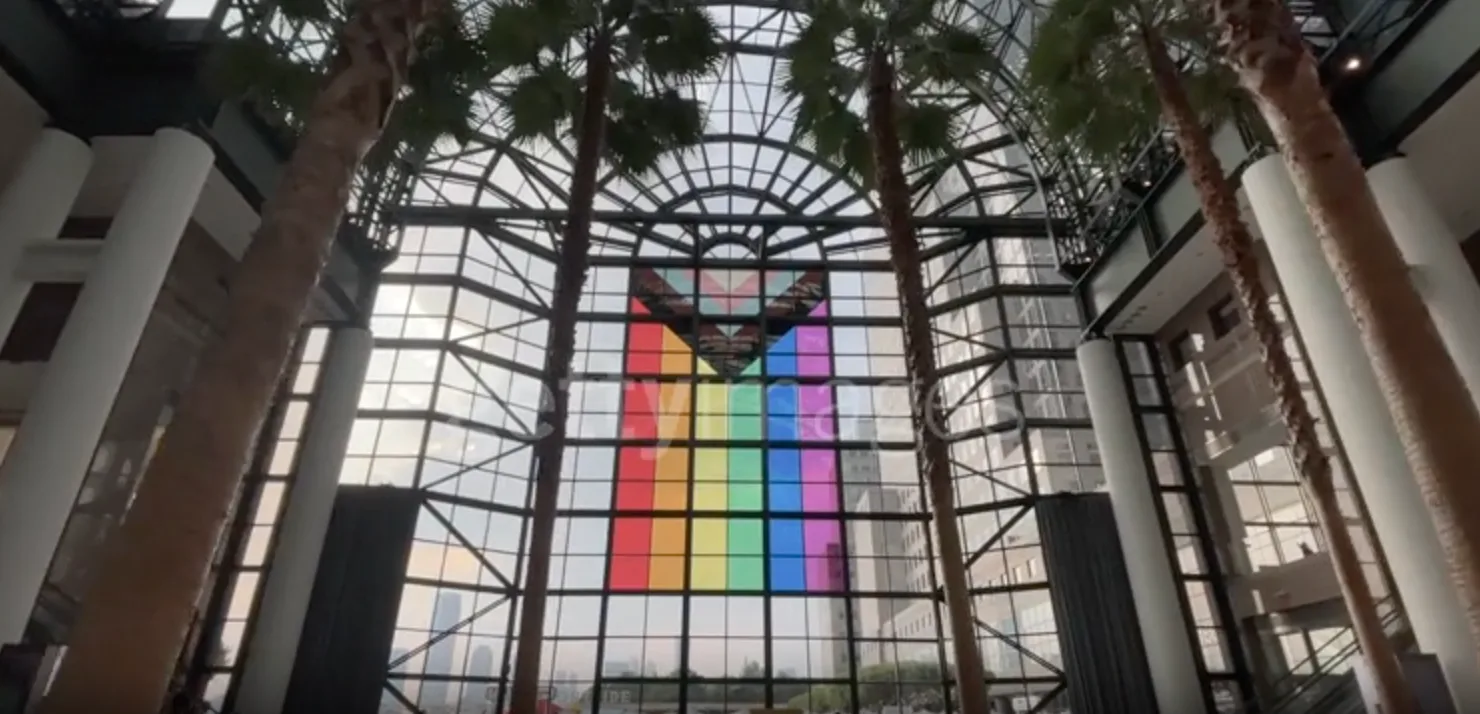
- Progress Pride Flag at Brookfield Place, New York City, June 17, 2023. Installed across a major Lower Manhattan public-commercial facade, the flag appears here as part of a large-scale urban Pride display rather than only parade use. · Credit: ThomPics - SK / Getty Images · Getty Images
- Progress Pride Flag at Christopher Street Day, Berlin, July 22, 2023. The flag appears here within one of Europe's major annual Pride demonstrations, showing its international circulation in large-scale public procession. · Credit: Sean Gallup / Getty Images · Getty Images
- Christopher Street Day march, Berlin, July 22, 2023. A second view of the procession showing the flag's presence across the crowd. · Credit: Sean Gallup / Getty Images · Getty Images
- Aerial view of this massive Progress Pride flag at the Chicago Pride Parade, 2026, courtesy of admin · Credit: admin · YouTube
- Progress Pride crosswalk on North Halsted Street in Northalsted, Chicago, July 29, 2026, outside the Roggenart bakery. The chevron runs in from the curb, in the flag's arrangement turned onto the street. · Credit: Will Montgomery · Photograph by Will Montgomery
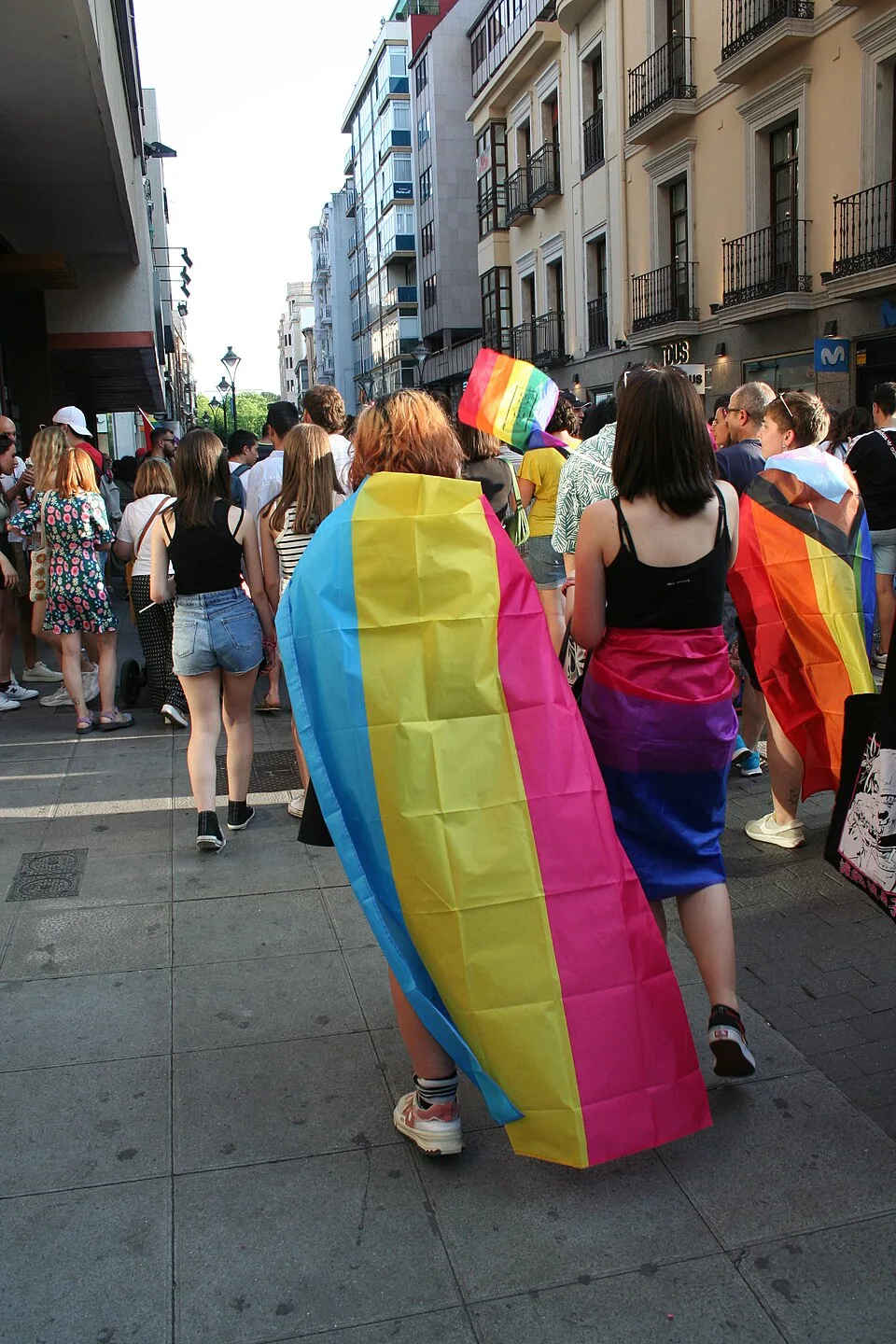
- Marcha del Orgullo LGBT+, Valladolid, 28 June 2023. A Progress flag worn as a cape, beside bisexual and pansexual flags. · Credit: MiguelAlanCS, CC BY-SA 4.0 · Wikimedia Commons