Twink Pride Flag (2009, Kaisuteknon)
Subcultural Pride Flag ·
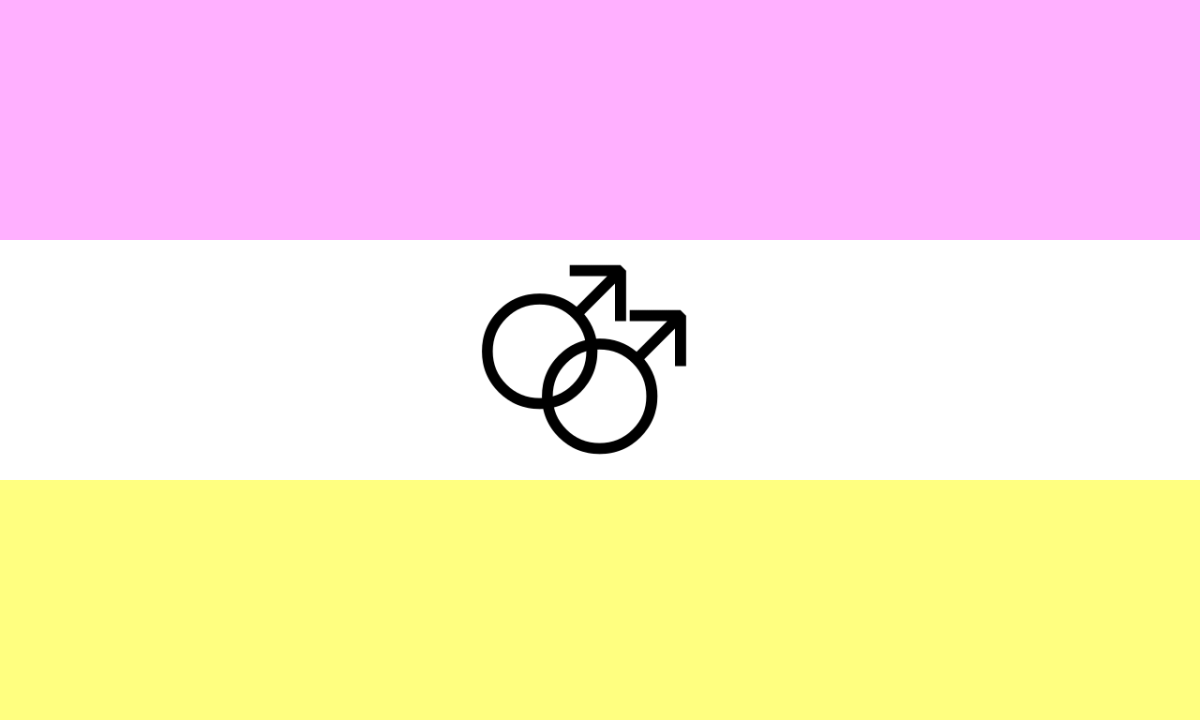
Created and uploaded to the English Wikipedia by the user Kaisuteknon on 5 June 2009, the Twink Pride Flag has pale pink, white and pale yellow horizontal stripes with a black interlocking double-Mars symbol. Kaisuteknon replaced an earlier corner-emblem layout eight minutes after posting it; Keymap9 drew the SVG version in 2018. [1][2]
Key facts
- Designer
- Kaisuteknon
- Created
- In use
- Documented in online circulation from 2009 to the present
- Aspect Ratio
- 3:5
- Ratio Notes
- Displayed ratio taken from the 2018 vector, whose canvas is exactly 800 by 480, that is 5:3 width to height. The 2009 raster is 794 by 476, approximately the same proportion. Not a construction specification published by the creator. [1][2]
- Stripes
- 3
- Represented Identity
- twink (a Queer male subcultural label)
Also known as
- Twink Flag
Archive categories Subculture Pride Flags
Overview
No statement of purpose accompanied either 2009 upload. [1]
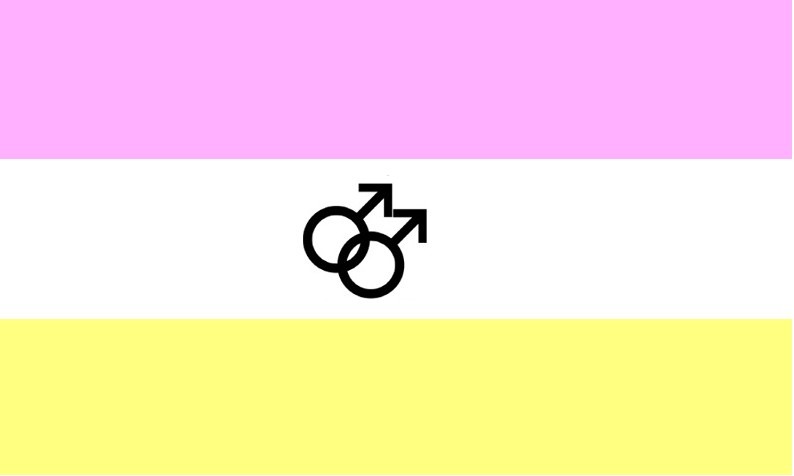
The Twink Pride Flag is a digital flag published under a username. Kaisuteknon uploaded it to the English Wikipedia at 13:13 UTC on 5 June 2009 as Twinkprideflag.jpg, describing it as "A twink pride flag" and as entirely their own work. That first file carried a small red-pink double-Mars emblem in the upper left of the pink stripe. At 13:21, eight minutes later, Kaisuteknon replaced it with a file of the same size, commented "Better design, cleaned up," and moved a larger black emblem to the centre of the white stripe. Both rasters survive in the file history; the revision is the form ordinarily reproduced. [1]
Keymap9 drew a vector derivative in 2018; it is a later rendition of the revised layout, not a second origin. [2] No creator-stated colour meanings accompanied either upload, and none have been located. The flag represents a subcultural identity rather than an organization, and its documented life runs through Wikimedia pages, flag guides and commercial reproduction.
Identity & Context
- Represented Identity
- twink (a Queer male subcultural label)
- Subcommunity
- men-loving-men communities
- Language Context
- The word predates its subcultural sense. Twink is recorded from about 1400 for a wink or blink of the eye. The sense "young sexually attractive person" is recorded from 1963 and is connected by the Online Etymology Dictionary to Twinkie, the snack cake named around 1930, with the 1920s and 1930s British slang twank noted alongside it as a comparison rather than a derivation. [3] Oxford instead dates the sense to the 1950s and relates it to twinkle, defining it as "(among gay men) a gay or bisexual young man with a slim build and youthful appearance." [4] The origin is unsettled, and these are competing proposals rather than a single established derivation.
- Racial / Ethnic Context
- The twink category has been criticized for defaulting to thin, white, young men. The criticism is set out in Discourse and concerns the social category rather than this flag.
Twink is a subcultural, body-type and presentation label historically associated with gay male culture and also used by some bisexual men and others in adjacent men-loving-men communities. The creator's own archived self-description, as a bisexual man and a twink, is one illustration that the label is not exclusively a gay-male one. [5] Recurring associations include youth or a youthful appearance, a slim or lean build, little or no visible body hair and, in some usages, femininity or a looser conformity to conventional masculinity. These are cultural associations rather than criteria: no single age range, race, sexual role, gender expression or agreed definition applies. [6][7]
Creators
The Creators
Kaisuteknon
Designer
Kaisuteknon created the flag and uploaded both 2009 versions to the English Wikipedia, describing the work as entirely their own. [1] Their user page as it stood that same day calls the image "My twink pride flag design" and describes the editor as a bisexual male, a teenager and a twink, with Northern Irish and Irish biographical context. [8] The design therefore comes from someone who at the time identified with the subculture it names. That context is biographical, not geographical evidence: where the flag was physically made is undocumented. A 2010 revision of the same page repeats the bisexual and twink self-description before the page was later blanked. [5] These are dated self-descriptions from 2009 and 2010 rather than statements about anyone's present identity, and nothing further about the account is published.
My twink pride flag design. [8]
A twink pride flag. [1]
Better design, cleaned up. [1]
Keymap9
Vector derivative (2018)
Keymap9 drew the SVG version of the revised 2009 layout on 9 April 2018 and revised it twice that year. The vector's filename introduced the word "proposed," which does not describe Kaisuteknon's design or its status. [2]
Attribution notes
Kaisuteknon is a pseudonymous but attributed creator: the upload is signed by a named account with a timestamped history, not posted anonymously. Keymap9 is credited separately for the 2018 vector and is not the designer. [1][2]
Origin
- Digital Origin
- Yes
No verified physical origin location. Without a confirmed location, Indigenous land context cannot be attributed.
Published on the English Wikipedia on 5 June 2009. Where the design was physically made is not documented, and the creator's stated national context is not evidence of it. [1]
Dates & Chronology
- Year Created
- Exact date
- Period in Use
- Documented in online circulation from 2009 to the present
Published on the English Wikipedia in 2009 and transferred to Wikimedia Commons in 2014, the flag is carried on Wikimedia pages in several languages, listed in pride-flag guides, and reproduced commercially as flags and printed goods. [1][2][9][10]
Major revisions
Initial upload at 13:13 UTC: a 794 by 476 pixel JPEG, three equal horizontal stripes in pale pink, white and pale yellow, with a comparatively small interlocking double-Mars emblem in a red-pink tone set in the upper left of the pink stripe. Kaisuteknon's description read "A twink pride flag." [1]
Revised upload at 13:21 UTC, eight minutes later: the same pixel dimensions and the same three stripes, with a larger emblem in black moved to the centre of the white stripe. Kaisuteknon's comment read "Better design, cleaned up." This is the layout later vectorized and most often reproduced. No reason for the change beyond that comment is recorded. [1]
A Wikimedia Commons file page was created by Asarelah; OgreBot imported the earlier English Wikipedia file history on 17 August 2014. [1]
Keymap9 created an SVG derivative of the revised layout. Its history records a code simplification on 9 May 2018 and a revision commented "Correct order" on 25 June 2018. [2]
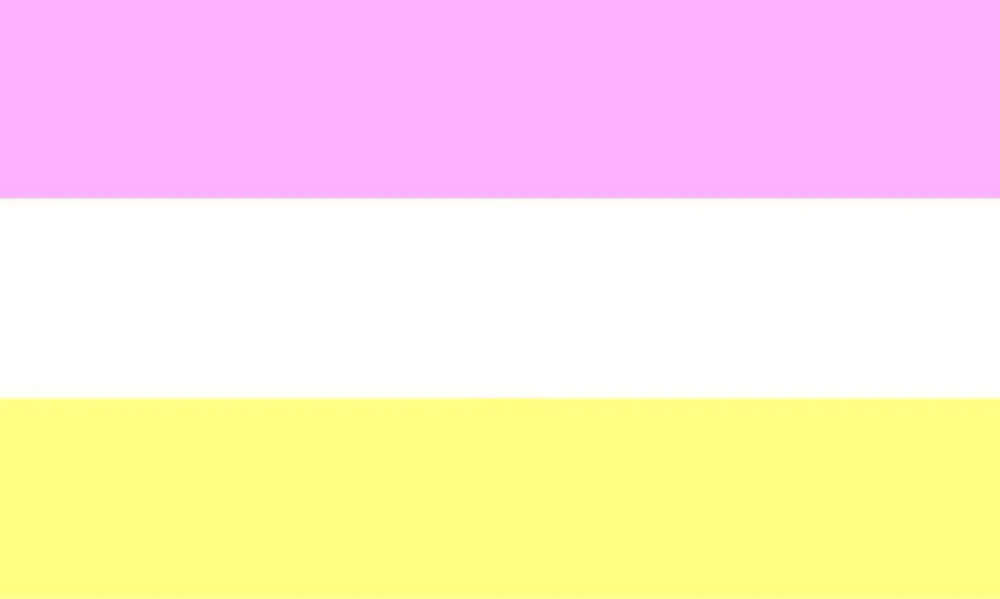
A version without the emblem is documented in online circulation by this date, when Beyond MOGAI Pride Flags describes the design as circulating with or without the symbol. Who removed it, when, and whether Kaisuteknon knew of it are not recorded. [11]
The word "proposed" entered the record in 2018, in the filename Keymap9 gave the vector. Kaisuteknon's own file was named Twinkprideflag.jpg and described simply as "A twink pride flag"; no proposal process, rejection or pending approval is documented. [1][2]
Lineage
- Indirect influences
- International Bear Brotherhood Flag, Rainbow Pride Flag
No design parent is documented. Nothing records what Kaisuteknon drew on, and neither the six-stripe rainbow flag nor the International Bear Brotherhood Flag is a documented source for it; the bear flag is kept here as a comparator, being the other well-known flag for a gay male subculture, rather than as an ancestor. With no parent established there are no siblings, since siblings share one.
Two later designs derive from it explicitly. A redesign posted in August 2020 by neopronouns keeps the double-Mars sign from this flag and takes its structure from the bear flag. [12] isobug's Twunk Flag combines this flag with isobug's own Hunk Flag. [13] Both derivations are stated by the people who made them, and both now have entries here.
Lineage tree
Every record reachable from this one through documented parent and child relationships: 5 records across 2 generations.
- This record
- Twink Pride Flag (2009, Kaisuteknon)
Colors & Symbolism
The flag stands for the twink subcultural identity. The interlocking double-Mars symbol is a conventional sign for male same-sex attraction and predates this flag; no statement from Kaisuteknon explaining its use here has been located. [1]
| Colour | Hex | Meaning | Note |
|---|---|---|---|
| Pale pink | #FFB0FF | No creator-stated meaning. Later writers have read the pink as femininity or effeminacy. [14] | Top stripe. Exact value in the 2018 vector and the dominant value in the revised raster; no separate creator specification exists. [1][2] |
| White | #FFFFFF | No creator-stated meaning, and no later reading located. Carries the emblem in the revised layout. | Middle stripe, carrying the symbol in the revised layout. [1][2] |
| Pale yellow | #FFFF80 | No creator-stated meaning. Later sellers and guides have variously described it as independence, youth or brightness. [10][15][16] | Bottom stripe. [1][2] |
| Black | #000000 | — | The emblem in the revised layout. The first upload's emblem is a red-pink tone, described visually rather than sampled: JPEG compression makes a precise value unreliable. [1][2] |
No creator-stated colour meanings accompanied the upload, and none have been located. The readings that circulate are later and they conflict. PinkNews reports that "there is no concrete definition of the flag," adding that "many see the pink as a celebration of the effeminate nature of many twinks"; the Pride Flag Wiki says plainly that the meanings are unknown; LGBTI News offers only that "the pastel shades may indicate a youthful, bright aura." [14][17][16] A fuller scheme, pink for femininity and yellow for independence, appears in Flags For Good's product listing and is repeated almost word for word by Queer In The World. [10][15] Sellers document how they market the flag; repetition between them does not make a later reading the creator's.
These are exact values from the 2018 vector, which is the standardised digital rendition of the revised 2009 layout, and they are the dominant values in that raster. Kaisuteknon published no separate colour specification, so there is no creator-authored palette to compare them against. Flag Color Codes publishes the same hex values together with its own suggested Pantone and RAL equivalents; those are that site's later approximations, useful only as production references. [18]
Design
- Aspect Ratio
- 3:5
- Ratio Notes
- Displayed ratio taken from the 2018 vector, whose canvas is exactly 800 by 480, that is 5:3 width to height. The 2009 raster is 794 by 476, approximately the same proportion. Not a construction specification published by the creator. [1][2]
- Orientation
- horizontal
- Stripe Count
- 3
- Layout
- horizontal_stripes_with_symbol
- Stripes (Top → Bottom)
- Pale pink, White, Pale yellow
- Center Symbol
- Interlocking double-Mars symbol in black, centred on the white stripe (revised 2009 layout)
Three horizontal stripes of equal depth in pale pink, white and pale yellow. In the revised layout of 13:21 on 5 June 2009, an interlocking double-Mars symbol in black sits centred on the white stripe. In the first layout, uploaded eight minutes earlier, a smaller emblem in a red-pink tone sat in the upper left of the pink stripe instead. [1]
The vector's file page credits the Symbola font as the source of the male-symbol form; in the file as it now stands the symbols are encoded as SVG path data rather than live font glyphs. [2]
Three equal horizontal stripes, pale pink over white over pale yellow, with an interlocking double-Mars symbol in black centred on the white stripe in the revised 2009 layout. [1]
Usage & Adoption
- Online Usage
- Carried on Wikimedia pages in several languages. The 2009 raster has been used on the English Wikipedia's Pride flag, LGBTQ symbols and Twink articles and on the Bengali and Hebrew Wikipedias; the 2018 vector is used on the Spanish, Galician, Portuguese, Central Kurdish and English Wikipedias, on Wikidata, and on the Commons overview pages for LGBT flags, sexual identity symbols and subculture flags. File-usage record as read on 5 August 2026. [1][2], Listed in pride-flag guides including Library.LGBT's Pride Flag Guide, the Pride Flag Wiki, Queer In The World and LGBTI News. [9][17][15][16], A version without the emblem is documented in circulation by 4 February 2019. [11]
- Current Status
- active
Documented circulation is digital and commercial. PinkNews's guide introduces the flag with "this might not be a flag that you see on the streets of Pride events in London or New York, but the twink Pride flag is used online." [14] Flags For Good sells it as a 3 by 5 foot flag and it is printed on other goods. [10] Commercial listings evidence reproduction for sale, not community adoption; no formal adoption by a named organization is documented, and no photograph of the flag at a named event has been located.
Image Archive
The two 2009 uploads

Later renditions
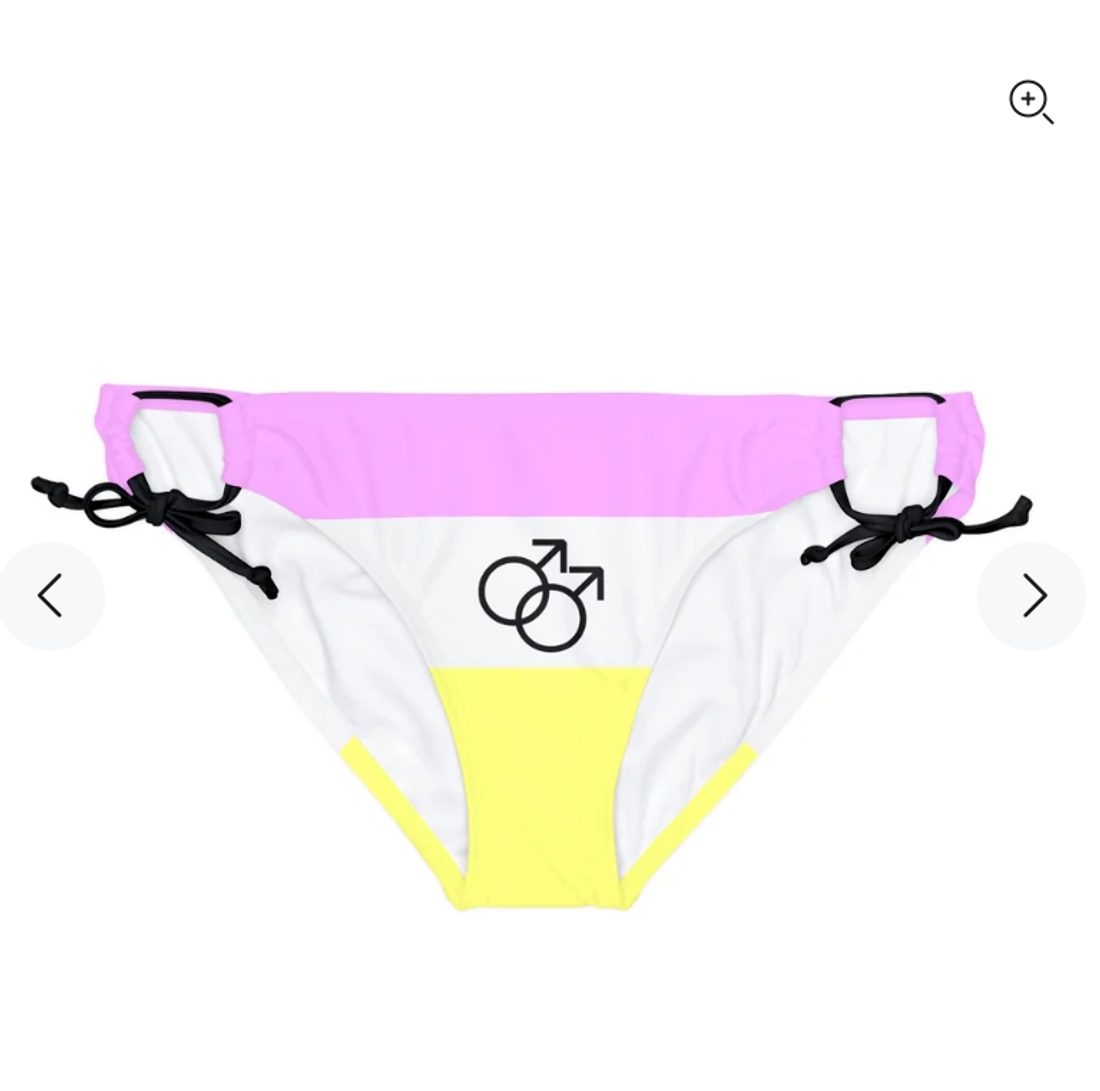
Commercial reproduction
In-text images
Discourse & Debates
- How widely the flag is flown. PinkNews describes it as used online rather than on the streets of Pride in London or New York; Queer In The World tells readers they "may have seen [it] flying at any number of pride celebrations throughout the world, from Singapore to Fort Lauderdale and Adelaide." Neither cites an instance. [14][15]
Common misidentifications
- Guides describe the designer as unknown. Library.LGBT states that "the origin and designer of the flag are unknown" and the Pride Flag Wiki captions the design "Designed by Unknown." [9][17] The upload is attributed: the English Wikipedia log names Kaisuteknon and timestamps both 2009 files to the minute. [1]
- The word "proposed" is often read as the flag's own name or status. It comes from the filename Keymap9 gave the 2018 vector, not from Kaisuteknon. [2]
Criticisms
- The twink category has been criticized as narrow. PinkNews's explainer records that twinks are "often presented in porn as white/caucasian" and given an age range of "about 16 to 25," that such a definition "leaves out people of colour, bigger guys and anyone over 25," and that "some have called the whole twink 'genre' racist and ageist, and they have good cause." [6] The criticism is of how the category is drawn in gay male culture, not of this three-stripe design, and no source has been located that criticizes the flag itself on those grounds.
- The same explainer describes twinks as among the most desired and most derided of the gay "tribes," hypersexualised in porn and advertising while "problematically presented as play-things and sexual objects which are not taken seriously." [6]
The label's boundaries are contested and it carries different weight self-applied than applied by others. PinkNews's explainer records people who self-define as twinks well outside the age range usually given, calling that bracket "daft," and rejects the stereotypes of camp, insecurity and sexual inexperience often attached to it. [6]
Footnotes & Citations
Sources and footnotes 18 sources
- 1. Image file page File:Twinkprideflag.jpg (original raster and upload history). Kaisuteknon (uploader). Wikimedia Commons (2009-06-05). Accessed 2026-08-05
- 2. Image file page File:Twink Pride Flag (proposed).svg (2018 vector derivative). Original: Kaisuteknon; vector: Keymap9. Wikimedia Commons (2018-04-09). Accessed 2026-08-05
- 3. Reference twink (n.), origin and history. Douglas Harper. Online Etymology Dictionary. Accessed 2026-08-05
- 4. Reference twink (definition). Oxford University Press. Lexico. Accessed 2026-08-05 · Archived version
- 5. Primary statement User:Kaisuteknon (revision of 2010). Kaisuteknon. English Wikipedia (2010). Accessed 2026-08-05
- 6. News What is a twink? The most hyper-sexualised gay 'tribe'. Danny Polaris. PinkNews (2018-04-27). Accessed 2026-08-05
- 7. Community Twink (LGBTQIA+ Wiki). LGBTQIA+ Wiki contributors. LGBTQIA+ Wiki (Fandom). Accessed 2026-08-05
Cited for the definition of the term, not for the reference works it quotes.
- 8. Primary statement User:Kaisuteknon (revision of 5 June 2009, the day of the upload). Kaisuteknon. English Wikipedia (2009-06-05). Accessed 2026-08-07
- 9. Reference Twink (Pride Flag Guide). Library.LGBT (an initiative of Albany Pride, Albany/Kinjarling, Western Australia). Library.LGBT Pride Flag Guide (2021-06-21). Accessed 2026-08-05 · Archived version
- 10. Retail listing Twink Pride Flag (product listing). Flags For Good. Accessed 2026-08-05
- 11. Social media Twink flag, described as circulating with or without the symbol. Beyond MOGAI Pride Flags. Tumblr (2019-02-04). Accessed 2026-08-05
- 12. Social media Twink Pride Flag redesign. neopronouns. Tumblr (2020-08-07). Accessed 2026-08-07
- 13. Social media Twunk flag, a combination of the Twink flag and the Hunk flag. isobug. Tumblr. Accessed 2026-08-07
- 14. News Pride flags: all of the flags you might see at Pride and what they mean (archived 2021 capture of the 1 June 2020 version). Jess Glass. PinkNews (2020-06-01). Accessed 2026-08-05 · Archived version
Cited from the archived 2020 version; the article has since been rewritten and republished under a 2026 date.
- 15. Articles & Reports What Is The Twink Pride Flag, And What Does It Stand For?. Cecilia Miller. Queer In The World (2023-10-14). Accessed 2026-08-05
- 16. News Twink Pride Flag & Twink Flag Meaning. Selin; the flag text credited on the page to Tris Reid-Smith/GSN. LGBTI News (2024-12-23). Accessed 2026-08-05
- 17. Community Twink Flag (Pride Flag Wiki). Pride Flag Wiki contributors. Pride Flag Wiki (Fandom). Accessed 2026-08-05
- 18. Reference Twink Flag Color Codes. Flag Color Codes. Accessed 2026-08-05
.svg)
Image Sources
- Rendering
- The revised 2009 raster, shown here in Keymap9's 2018 vector rendition (CC0 1.0)
- Both 2009 files. Released into the public domain by their author. [1]
- 2018 SVG derivative, CC0 1.0. [2]
- The revised file Kaisuteknon uploaded at 13:21 UTC on 5 June 2009, eight minutes after the first, with the larger black emblem moved to the centre of the white stripe. Comment: "Better design, cleaned up." This is the layout ordinarily reproduced. [1] · Credit: Kaisuteknon · Wikimedia Commons
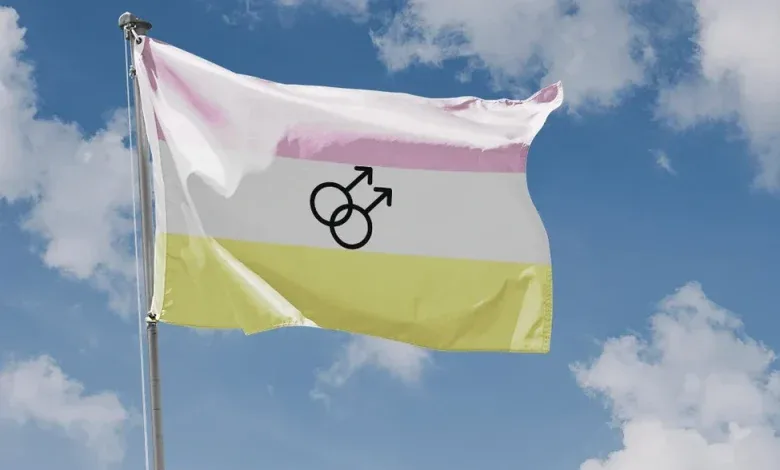
- A digital mockup, not a photograph of a physical flag: the design composited onto a pole and sky, as LGBTI News illustrates its article. [16] · Credit: LGBTI News · LGBTI News
- The design printed on swimwear, from a print-on-demand listing captured 5 August 2026. Evidence that the flag is reproduced on goods for sale. · Credit: Printify (print-on-demand listing) · Print-on-demand retail listing
- The design without its emblem, documented in online circulation by 4 February 2019, when Beyond MOGAI Pride Flags described the flag as circulating with or without the symbol. Who removed it and when are not recorded. [11] · Unattributed online variant