Polyamorous Pride Flag
Identity Pride Flag ·
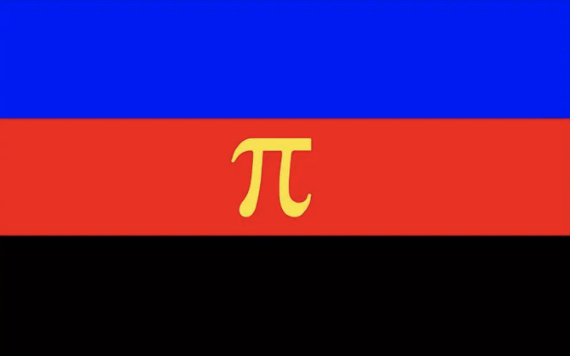
The earliest documented pride flag for polyamorous identity: three equal horizontal stripes, blue over red over black, with a gold lowercase Greek pi at the centre. Jim Evans designed it in Microsoft Paint on Windows 3.1 and released it into the public domain in the late summer or early fall of 1995. Blue stands for openness and honesty among partners, red for love and passion, black for solidarity with those who must hide their relationships, and the gold pi for the value placed on emotional attachment over merely physical connection. Evans kept the symbol deliberately obscure so that closeted people could use it discreetly. The design drew sustained criticism for its palette and its legibility; in November 2022 a public vote organised by PolyamProud selected Red Howell's design as a successor, though the Evans flag remained in use.
Key facts
- Designer
- Jim Evans
- Created
- In use
- 1995–present
- Aspect Ratio
- 3:5 · standard
- Stripes
- 3
- Origin
- Pacific Northwest, United States
- Represented Identity
- polyamorous
Also known as
- Original Polyamory Flag
- Pi Polyamory Flag
- Evans Polyamory Flag
Status Historical Contested
Archive categories Sexual & Romantic Orientation Pride Flags · Historical and Early Pride Flags
Overview
To give polyamorous people a pride symbol, with particular regard for those who were closeted. Evans wrote that he "was more concerned with 'in the closet' polyfolk, and was far more in the closet myself than I am these days," and wanted "a symbol that could be used relatively anonymously, that could let people who were in on the symbology connect, without it being too specific." [1]

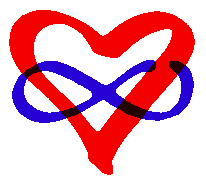
Jim Evans, polyamorous for most of his adult life and living in the Pacific Northwest, designed the flag because, in his words, "the poly community didn't really have similar symbols to use, so I took it upon myself to create one." His tools "were literally limited to Microsoft Paint, running on Windows 3.1." He released the design into the public domain in the late summer or early fall of 1995. [1] His own page for it, archived from 1999, put the terms plainly: "This design is in the public domain. If you decide to use it, credit to Jim Evans would be nice, but is not required." [2] The community he made it for had no settled emblem. The infinity heart, which Alan M. records displacing the parrot as the common poly symbol by about 2010, was in Evans's account "not yet as widely accepted a symbol for polyamory" and beyond what he could draw in Paint. [1][3]
Identity & Context
- Represented Identity
- polyamorous
- Subcommunity
- non-monogamous / relationship style
- Movement
- polyamory visibility and pride
Evans described polyamory as being "comfortable being in simultaneous romantic relationships with multiple partners at once" where "participation in those relationships is openly known by all people involved." [1]
Creators
The Creator
Jim Evans
Designer

Jim Evans is a software tester and contributor to the Selenium web testing framework (his blog is titled "Rantings of a Selenium Contributor") who has been polyamorous for most of his adult life. Living in the Pacific Northwest in the mid-1990s, he created the polyamorous pride flag using Microsoft Paint on Windows 3.1 and released it into the public domain in the late summer or early fall of 1995. By his own account, he is not a visual artist, and the tools available to him were extremely limited.
At the time of the flag's creation, Evans was more focused on closeted polyamorous people and was himself less publicly out than he later became. [1]
I took it upon myself to create one. Here's what I made up, and released into the public domain in the late summer or early fall of 1995.
Clearly, I'm not a visual artist. My tools for creation at the time were literally limited to Microsoft Paint, running on Windows 3.1.
I specifically avoided imagery that included a heart. The leather pride flag, which predates the design of mine, includes a heart, and I was trying to avoid confusion.
I was more concerned with 'in the closet' polyfolk, and was far more in the closet myself than I am these days.
The flag has been called vile, no good, hideous, disappointing, ugly, and many other negative things.
In retrospect, perhaps a lemniscate ('infinity symbol') would've been a better choice, but nobody spoke up then.
The flag has been in the public domain for decades, and I no longer have any claim to how it's used or by whom.
Motivations
- To create a visible symbol for polyamorous identity, which by his own account the community then lacked
- Particular concern for closeted polyamorous people who needed a symbol of solidarity [1]
Stated inspirations
- Evans chose the Greek letter pi as the central symbol because there was already a rich history of Greek letters as pride symbols, citing the use of lambda as an LGBT symbol as a concrete example.[1]
- He deliberately avoided using a heart symbol to prevent confusion with the Leather Pride Flag, which predates his design and uses a heart in its canton.[1]
- Evans later reflected that a lemniscate (infinity symbol) might have been a better choice, but no one suggested it at the time. [1][1]
Origin
- Country
- United States
- Region / state
- Pacific Northwest
- Place Type
- personal digital creation
- Digital Origin
- Created digitally using Microsoft Paint on Windows 3.1
Created digitally in the Pacific Northwest, United States. Evans's specific city is not documented, so Indigenous land context cannot be attributed with precision.
Evans was living in the Pacific Northwest in the mid-1990s and created the design digitally, in Microsoft Paint on Windows 3.1. He first shared it with a mailing list, which he does not name, and released it into the public domain in the late summer or early fall of 1995. His specific city and the exact date are not documented. [1]
Dates & Chronology
- Year Created
- Period in Use
- 1995–present
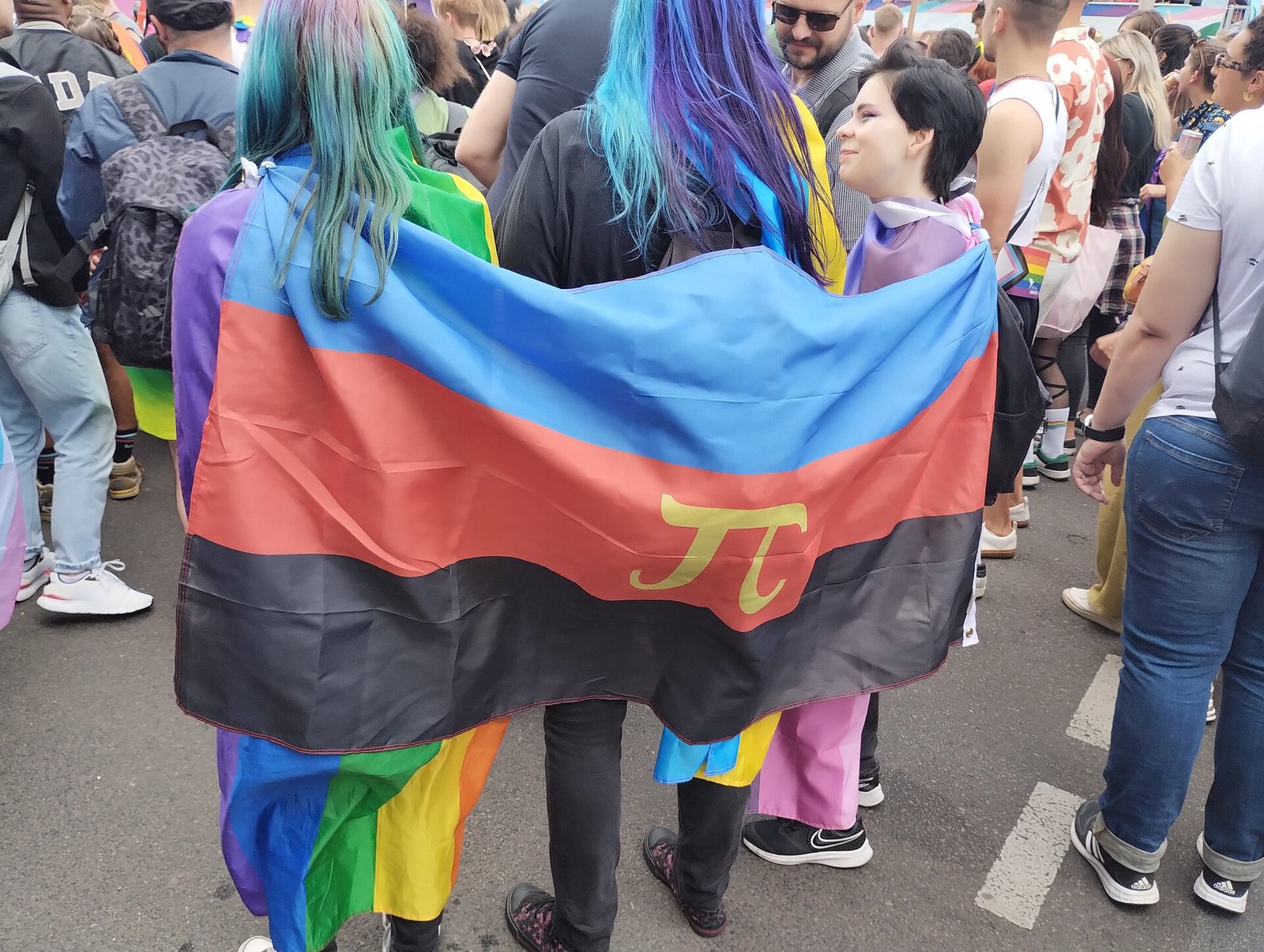

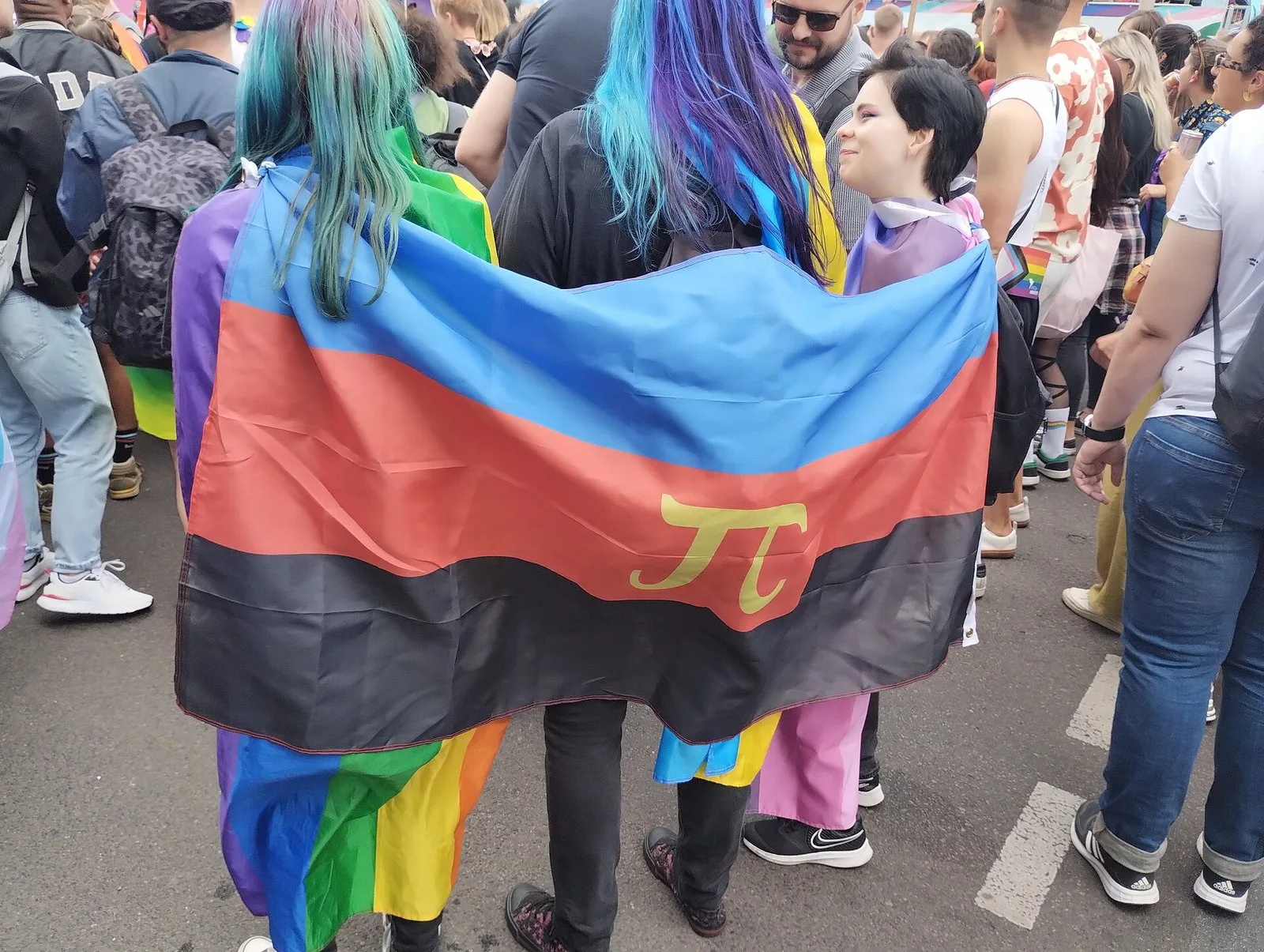
The flag served as the polyamorous pride symbol for more than two decades, in Alan M.'s phrase "ever since Jim Evans proposed it in 1995 against no competition." [3] It is documented worn at Christopher Street Day in Berlin in 2023, eight months after the PolyamProud vote selected a successor. [4] Sustained criticism of the design produced a succession of alternatives and, in 2022, an organised effort to choose a new one. PolyamProud put four candidate designs to a public vote and reported that 30,827 non-monogamous people took part. [5][6] Accounts of when the result was announced differ: PolyamProud gives 23 November 2022, Polyamory Day, while the Bay Area Reporter puts the voting window at 1 to 22 November and the announcement on 12 December. This entry uses the organisers’ date. [5]
Kristian Einstman, director and co-founder of PolyamProud, described Evans’s design as "initially designed to be a furtive shibboleth, recognizable only to those who were familiar with the community," and said that in the mid-1990s "that was clearly what was needed." [5]
Evans responded to the criticism in 2016. He recorded that the flag "has been called vile, no good, hideous, disappointing, ugly, and many other negative things," conceded the palette ("I still think there's value in the color symbology, if not the actual RGB values I used when creating it"), and wrote that in retrospect "perhaps a lemniscate ('infinity symbol') would've been a better choice, but nobody spoke up then." [1]
Lineage
- Indirect influences
- Leather Pride Flag, Rainbow Pride Flag
When Evans made the flag in 1995 the polyamory community had no settled symbol, by his own account. The parrot that Ray Dillinger made for alt.polyamory is documented as the most common proposed symbol by 1997, Dillinger dating it to "sometime during the first half of 1997"; the infinity heart arose in the mid-1990s and had displaced the parrot by about 2010. [7][8]
Evans designed around the Leather Pride Flag rather than after it: he deliberately avoided a heart to prevent confusion with that flag's red heart canton, "given that community was there first." [1] He has also said the rainbow flag "made a huge impression" on him, an influence on the idea of a community flag rather than on this design. [9]
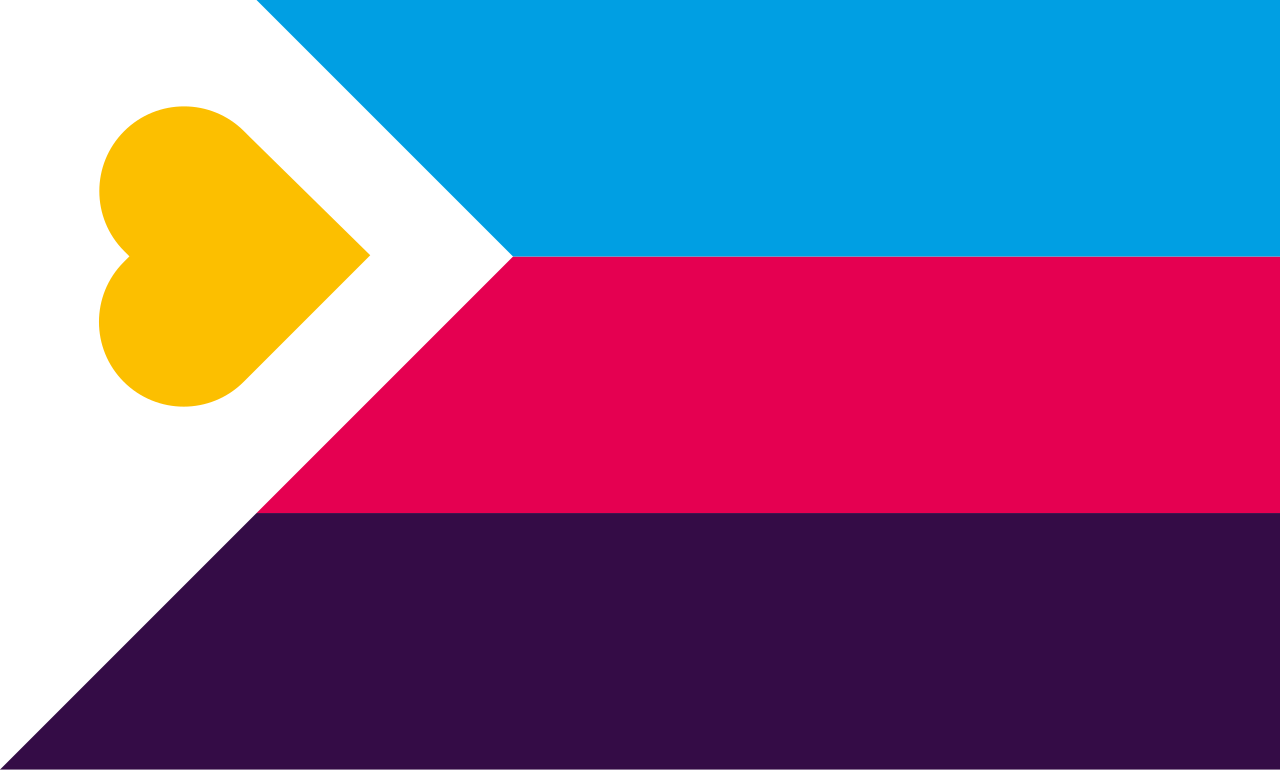
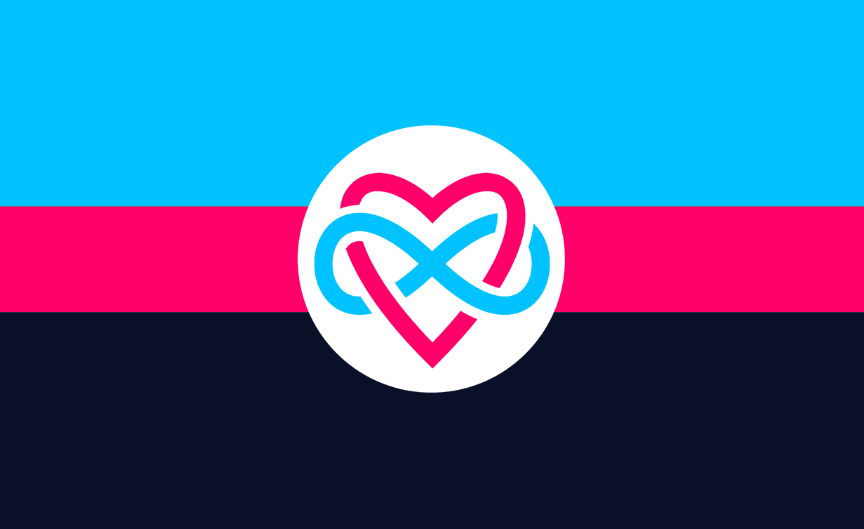
The persistent criticism of the flag's aesthetics led to the PolyamProud effort and, in 2022, to Red Howell's tricolor. [5][6] Howell said he took "a contemporary approach to traditional vexillological elements from the original 'Pi' flag," keeping Evans's red for love and attraction and blue for openness and honesty, adding gold and purple, and replacing the pi with a chevron and a heart. [10]
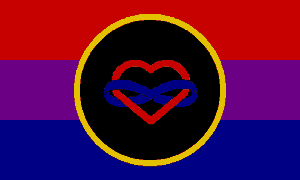
Derivatives of the flag are older than either recorded descendant. By 2002 it had generated a small family of symbols. The PAARC ribbon adapted it for the Polyamory Awareness and Acceptance Ribbon Campaign, whose site is archived from January 1998, turning the design into a badge for supporters rather than a symbol for members. The ILIC symbol took its three colours and golden pi and added an infinity symbol. And in 1999 Juliette Rouse, whom Alex West knew only as Jette, published a variation that kept Evans's colour meanings and his wording while turning his black stripe into a black circle, his gold pi into a gold ring, and adding an infinity heart at the centre. [7][8][11] Rouse's is the earliest located instance of the pi-for-infinity-heart substitution, seventeen years before Monroe's flag.
Lineage tree
Every record reachable from this one through documented parent and child relationships: 5 records across 3 generations.
- This record
- Polyamorous Pride Flag
- Children
- Polyamorous Pride Flag (2016, Monroe / RatLab Art), Polyamorous Pride Flag (2019, Emma Essex), Tricolor Polyamorous Pride Flag
- Generation 3
- Jewish Polyamory Pride Flag
Colors & Symbolism
The flag represents polyamorous identity and pride, with particular emphasis on openness, love, and solidarity with those who cannot be publicly polyamorous. Evans chose each element to convey specific values important to the polyamorous community. [1][12]
| Colour | Hex | Meaning |
|---|---|---|
| Blue | #0000FF | Openness and honesty among all partners in a polyamorous relationship. [1][12] |
| Red | #FF0000 | Love and passion. [1][12] |
| Black | #000000 | Solidarity with those who must hide their polyamorous relationships from the outside world. [1][12] |
| Gold (Pi symbol) | #FFFF00 | The value placed on emotional attachment to others, whether the relationship is friendly or romantic, as opposed to merely physical. [1] |
Hex value of the Wikimedia Commons reconstruction [13]
This flag has no official digital palette. Color values shown are approximate.
- Gold lowercase Greek letter pi
- A gold lowercase Greek pi, "as the first letter of 'polyamory,'" in the description Evans wrote for the mailing list he first shared the flag with in 1995. The gold "represents the value that we place on the emotional attachment to others, be the relationship friendly or romantic in nature, as opposed to merely primarily physical relationships." [1] Evans gave his reasons for the letter in 2016. He avoided a heart to prevent confusion with the Leather Pride Flag, "given that community was there first"; the infinity heart was not yet widely used for polyamory and was beyond what he could draw; there was "already a rich history of existing pride symbols using Greek letters," lambda being his example; the poly in polyamory is a Greek root; and pi "was readily available on computer typographic platforms even in those days." [1] The mathematical constant's infinite non-repeating value is widely read as representing infinite relationship possibilities, and LGBTQ Nation states it as one of the two reasons for the letter, but Evans's published explanations do not assign this meaning to the symbol. [14][12]
Evans was deliberate about the choice of pi over a heart, specifically to avoid visual confusion with the Leather Pride Flag. He later reflected that a lemniscate (infinity symbol) might have served the community better, but no one suggested it at the time. [1]
Evans did not record exact RGB values, and later wrote that the value was in "the color symbology, if not the actual RGB values I used when creating it." The hex values usually reproduced (#0000FF, #FF0000, #000000, #FFFF00) are those of the Wikimedia Commons reconstruction. [1][13]
Design
- Aspect Ratio
- 3:5 · standard
- Orientation
- horizontal
- Stripe Count
- 3
- Layout
- horizontal_stripes_with_emblem
- Stripes (Top → Bottom)
- Blue, Red, Black
- Center Symbol
- Gold lowercase Greek letter pi
Three equal horizontal stripes with a centered lowercase Greek letter pi.
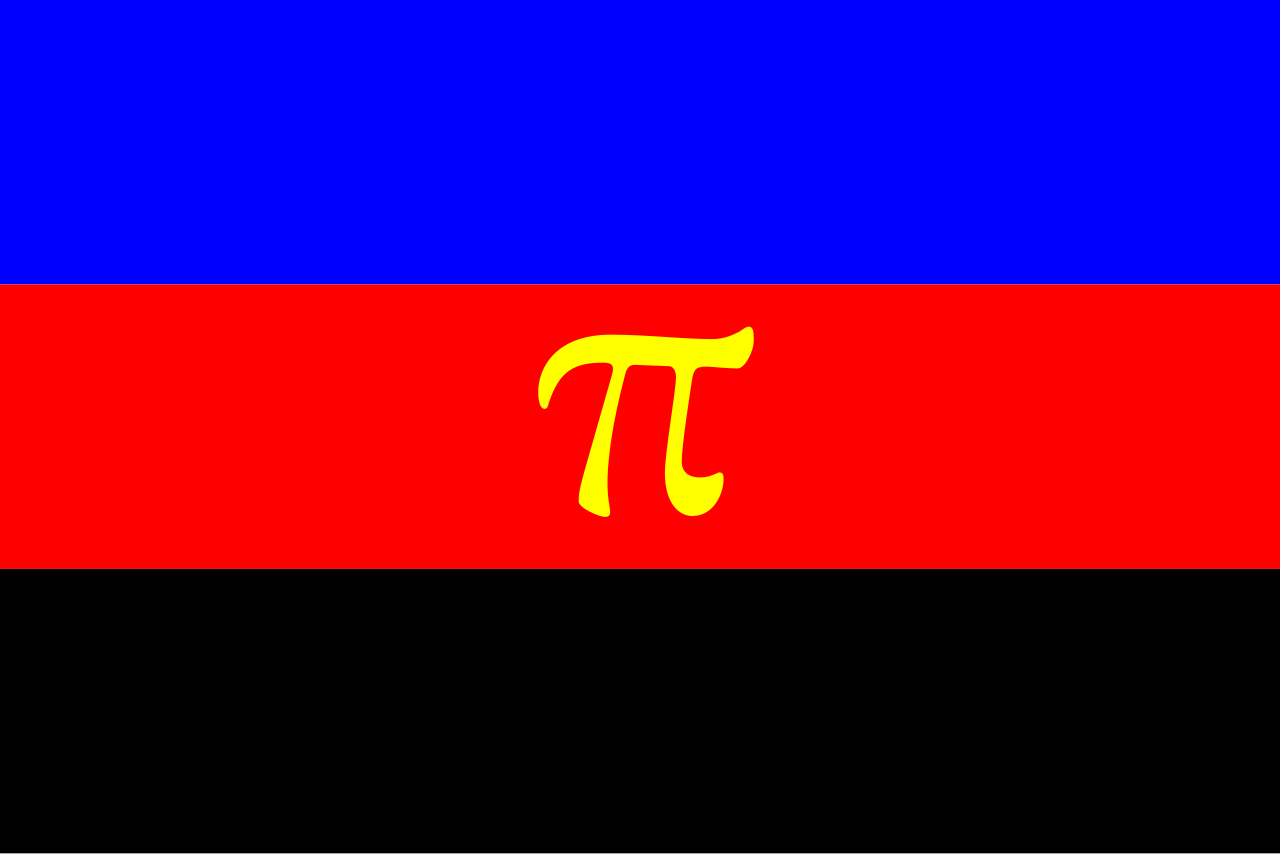

Created using Microsoft Paint on Windows 3.1. The hex values usually reproduced (#0000FF, #FF0000, #000000, #FFFF00) are those of the Wikimedia Commons reconstruction; Evans did not record exact RGB values and later wrote that the value lay in "the color symbology, if not the actual RGB values I used." [1][13] The flag as reproduced is usually not Evans's file but a redrawing: the Wikimedia Commons SVG, made in 2006 and in use on more than thirty Wikipedia language editions, had its pi replaced in April 2018 with a letterform set in EB Garamond. [13]
Three equal horizontal stripes (blue on top, red in the middle, black on the bottom) with a gold lowercase Greek letter pi (π) centered on the flag.
Usage & Adoption
- Geographic Usage
- International circulation, primarily online polyamory communities
- Online Usage
- Circulated through online polyamory communities
- Event Usage
- Pride events and polyamory meetups
- Current Status
- circulating
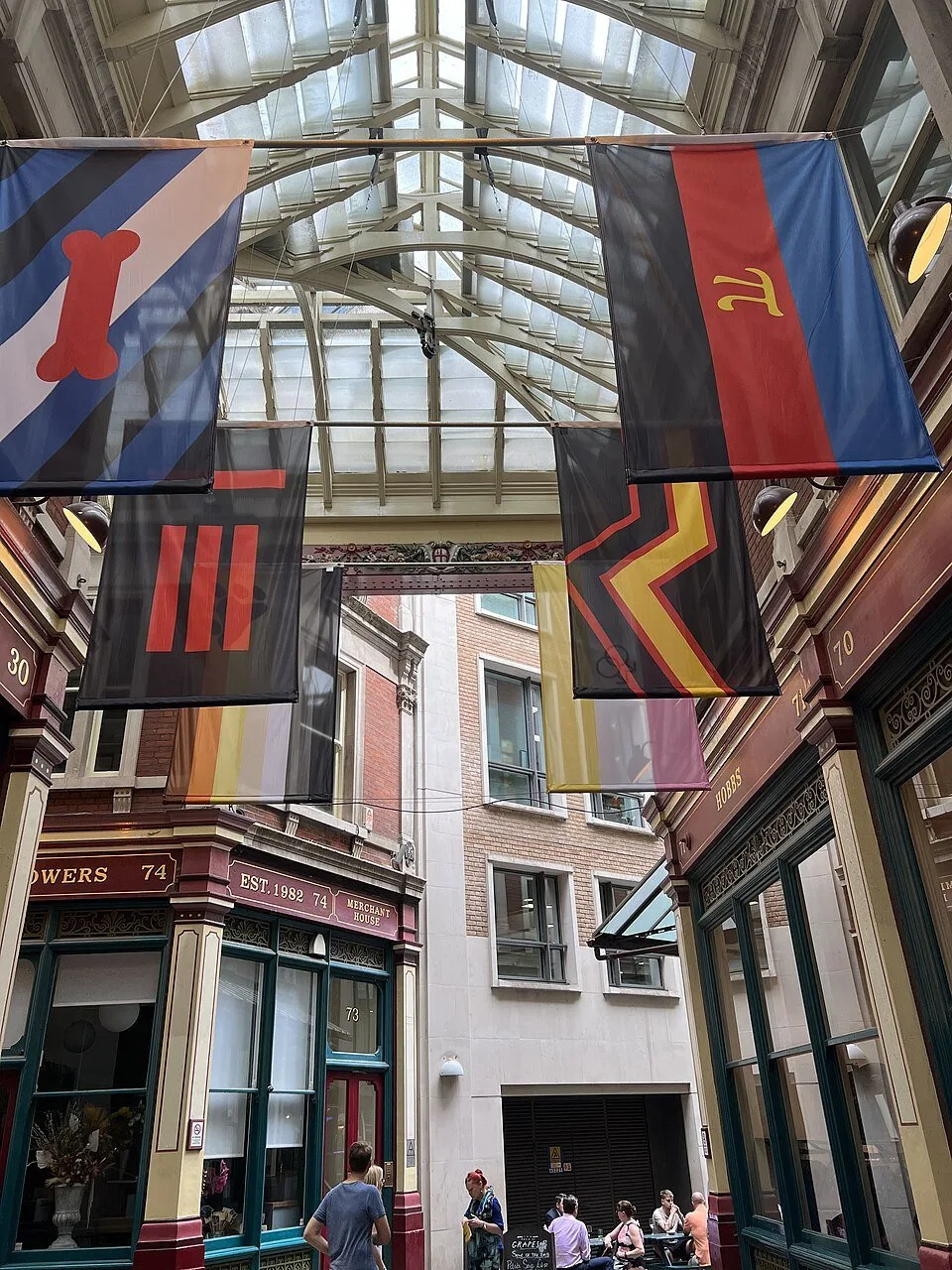
One of the most recognisable polyamory pride symbols, and the most used for want of an accepted alternative until the 2022 PolyamProud vote. [12][5] Documented worn at Christopher Street Day in Berlin in 2023, after the 2022 PolyamProud vote. [4] Reinterpreted in Guillaume Vandame's installation "Symbols" at Leadenhall Market for Sculpture in the City 2022. [15]
Image Archive
Variants and Descendants

Renderings
Context
Alternative Designs


In use
.jpg)
Discourse & Debates
- Alan M.'s critique appeared in July 2020; in June 2021 Sarah wrote to tell him she had formed PolyamProud with the Reddit user TheGreyBandit and others, "a volunteer coalition dedicated to establishing a definitive and representative visual identity for the polyamorous community"; the coalition's vote followed in November 2022. [3]
- Some community members defended the flag on the grounds that it had served the community for decades and that its imperfections were part of its history. Others argued that a community symbol should be something people are proud to display. [14][16]
- PolyamProud's own account explains the proliferation of designs as a cycle: someone dislikes the available options and makes a new one, some people adopt it and most do not, "and the 'accepted' polyam flag design (often the very first one, created by Jim Evans) remains the same." [5]
Common misidentifications
- Three readings of the pi circulate that Evans never gave: that it evokes the endless digits of pi and so endless love, that it evokes an irrational number and so irrational love, and that 3.14 refers to more than two people. PolyamProud lists all three as guesses and rejects them in favour of Evans's own reason. [6][1]
- The pi is sometimes taken for a mathematical or scientific emblem rather than an identity symbol in the tradition of the lambda. PolyamProud grants the point: "the symbol's strong connection to science and mathematics makes it a confusing choice." [6][3]
Criticisms
- The design has drawn sustained criticism. Evans catalogued the reception himself: "The flag has been called vile, no good, hideous, disappointing, ugly, and many other negative things." [1]
- Alan M. of Polyamory in the News published "The polyamory flag is a grim, confusing failure. Let's do better." on 27 July 2020: "The polyamory flag stinks. It confuses, it fails to communicate a message other than Huh?, and its colors loom angry and foreboding. 'Some math or engineering society' is what usually comes to people's minds." He quoted five reactions from r/polyamory, then with 161,000 subscribers, among them "The flag everyone is happy to see burn" and "Every time it's posted, everyone hates it, so everybody just stop using it. It's no longer our flag." [3]
- Over 30 alternative designs were proposed over the years, none gaining sufficient traction to replace it until the PolyamProud community effort produced the 2022 Howell flag. [5][6]
- Critics find the palette harsh. PolyamProud attributes this to colour vibration, an optical effect that arises when colours of similar luminance and tone sit side by side, naming the red against the blue and the gold against the red and citing Josef Albers; the result "feels aggressive and often even uncomfortable to our eyes." The same brief grants that Evans "chose its colors for their symbolic meaning rather than their aesthetic quality." [6] Evans concedes the point himself: "I still think there's value in the color symbology, if not the actual RGB values I used when creating it." [1]
- LGBTQ Nation argues that the flag's deliberate obscurity, once necessary, matters less as polyamory becomes more accepted: "there was a need for Evans to 'hide' the true purpose of the flag through unrelated symbolism due to the stigma against polyamory. Considering that polyamory is much more accepted now, it makes sense that the gold greek lowercase letter would no longer resonate." [14]
Evans deliberately chose pi over a heart to avoid confusion with the Leather Pride Flag. He later acknowledged that the lemniscate (infinity symbol) might have been more intuitive, but no one proposed it at the time. [1]
Footnotes & Citations
Sources and footnotes 26 sources
- 1. Blogs & Personal Sources Polyamory, Pride Flags, and Patterns of Feedback. Jim Evans. Rantings of a Selenium Contributor (2016-08-23). Accessed 2026-03-30
- 2. The Poly Pride Flag (Jim Evans's own page). Jim Evans. isomedia personal homepage (undated; earliest Internet Archive capture 1999-11-03). Accessed 2026-07-28 · Archived version
- 3. Blogs & Personal Sources The polyamory flag is a grim, confusing failure. Let's do better.. Alan M.. Polyamory in the News (2020-07-27 (URL slug dates to 2019-10); updated 2021-06-15 and 2022-11-23). Accessed 2026-03-30
- 4. File:CSD Berlin 2023 - Lucas Werkmeister - 07 - Polyamory Pride.jpg. Lucas Werkmeister. Wikimedia Commons (2023-07-22). Accessed 2026-07-28
- 5. The History of Polyamory Flags. Dee Morgan. PolyamProud (2022-07-31). Accessed 2026-07-28 · Archived version
The organisers’ own announcement of the 2022 vote. Its announcement date differs from the Bay Area Reporter’s.
- 6. What's Wrong with the Pi Flag?. PolyamProud. PolyamProud. Accessed 2026-03-30 · Archived version
- 7. A List of Poly Symbols . . . with a little bit of their history. Alex West. hevanet.com (last updated 2002-05-11). Accessed 2026-07-28
- 8. Polyamorous Symbols. Joreth (The InnKeeper). The Inn Between (site dated 2002; page undated). Accessed 2026-07-28
- 9. Rainbow flag (LGBTQ). Wikipedia contributors. Wikipedia (2026-06-25). Accessed 2026-07-24
- 10. File:Tricolor Polyamory Pride Flag.svg. Red Howell. Wikimedia Commons, from https://www.polyamproud.com/flag (2022-10-30). Accessed 2026-07-28
- 11. Poly Flag (Poly Artwork). Juliette Rouse. Ecohost Online (site copyright line 1999). Accessed 2026-07-28 · Archived version
- 12. Polyamory Pride Flag. Library.LGBT Pride Flag Guide (published 2021-06-11, last modified 2022-01-29). Accessed 2026-03-30 · Archived version
- 13. File:Polyamory Pride Flag.svg. Rendering by Ratatosk (2006), after Jim Evans; later edits by Fibonacci and Keymap9. Wikimedia Commons (first uploaded 2006-02-18; current version 2018-04-08). Accessed 2026-03-30
- 14. Articles & Reports Who made the polyamorous flag & why does the internet dislike it?. Unsigned house article. LGBTQ Nation (2022-03-11, updated 2022-09-01). Accessed 2026-03-30
- 15. File:'Symbols' by Guillaume Vandame, Leadenhall Market, Sculpture in the City 2022. Loz Pycock. Wikimedia Commons, from Flickr (2022-07-12). Accessed 2026-07-28
- 16. Articles & Reports What should the polyamorous flag look like?. Unsigned house article. LGBTQ Nation (2022-06-17, updated 2022-07-26). Accessed 2026-03-30
- Blogs & Personal Sources Polyamorous Flag: Colors, Pi Symbol & Meaning (unreliable). Flagwix Blog. Accessed 2026-03-30
- File:PolyamoryPrideFlag-11x22.svg. Molly Colleen Bennett Wilvich (Mollymakesthings). Wikimedia Commons (2020-08-12). Accessed 2026-07-28
- Category:Polyamory flags. Wikimedia Commons contributors. Wikimedia Commons (last edited 2025-06-01). Accessed 2026-07-28
- File:Polyamory Pride at CSD Parade Graz 04.jpg. Mangostaniko. Wikimedia Commons (2017-06-17). Accessed 2026-07-28
- LGBTQ Agenda: New polyamorous flag is revealed. Eric Burkett. Bay Area Reporter (2022-12-20, updated 2022-12-22). Accessed 2026-07-28
- Meaning of the Polyamory ribbon. Don Scroggins, quoting the PAARC campaign page. Pagan Ponderings (2010-07-12). Accessed 2026-07-28
- File:Polyflag.png. Emma Essex. Wikimedia Commons (2019-09-27). Accessed 2026-07-28 · Archived version
- Character design standards: Symbol characters for Latin 1. Microsoft Typography. Microsoft Learn (last updated 2022-06-09). Accessed 2026-07-28
- Windows 3.1. Wikipedia contributors. Wikipedia (last edited 2026-07-19). Accessed 2026-07-28
- Internet Archive capture index for bee.net/cardigan/PAARC/. Internet Archive. Wayback Machine CDX index (captures from 1998-01-24). Accessed 2026-07-28 · Archived version
Image Sources
- Rendering
- standard pi-centered version
- Juliette Rouse's variation, 1999. Evans's black stripe has become a black circle for unity, his gold pi a gold ring for the marriage between partners, and an infinity heart sits at the centre. The earliest located rework of the flag, and the earliest located instance of the pi-for-infinity-heart substitution, seventeen years before it recurred in the 2016–2022 designs. · Credit: Juliette Rouse, Ecohost Designs · Ecohost Online
- The Wikimedia Commons rendering, first drawn by the user Ratatosk in 2006 after Evans's public-domain original and in use on more than thirty Wikipedia language editions. Its pi is not Evans's: the letterform was replaced with one set in EB Garamond in April 2018. · Credit: Ratatosk, after Jim Evans; later edits by Fibonacci and Keymap9 · Wikimedia Commons
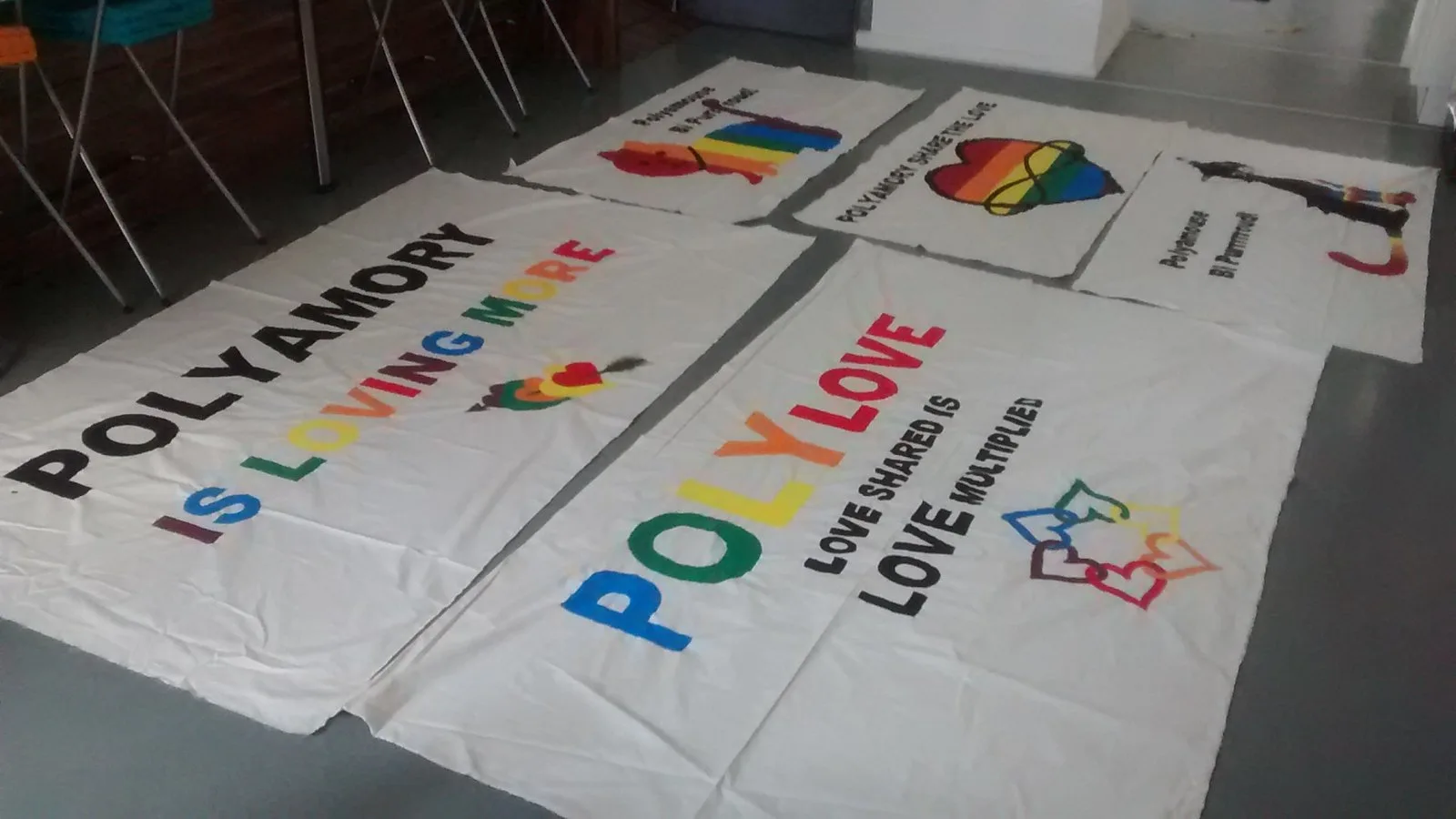
- Banners prepared for the polyamory contingent at Christopher Street Day in Graz, 17 June 2017. Wikimedia Commons files this under photographs of polyamory flags, but no pi flag appears in it; the symbol used throughout is the infinity heart. · Credit: Mangostaniko, CC0 · Wikimedia Commons
- Emma Essex's flag, 27 September 2019, released by her into the public domain. She kept Evans's colour scheme and lightened it, replacing the pi with an infinity heart; Alan M. called it his favourite of the alternatives. · Credit: Emma Essex, CC0 · Wikimedia Commons
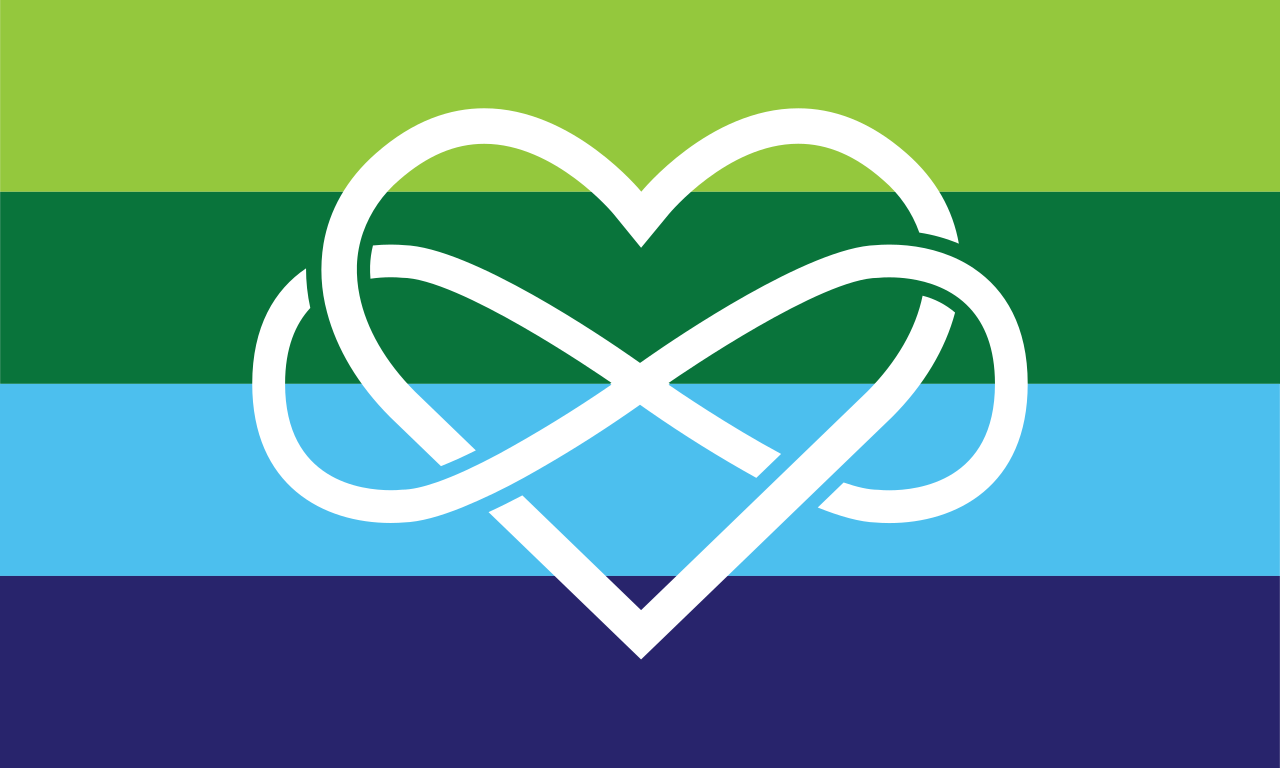
- Molly Colleen Bennett Wilvich's design of August 2020, one of the alternatives that accumulated in response to criticism of the pi flag. Its greens and blues stand for growth and kindness, balance and harmony, freedom and joy, and trust and loyalty, with a white infinity heart touching every other colour. · Credit: Molly Colleen Bennett Wilvich, CC BY-SA 4.0 · Wikimedia Commons
- Red Howell's tricolor, selected as a successor in the 2022 PolyamProud vote. It keeps Evans's red for love and attraction and blue for openness and honesty, adds gold and purple, and drops the pi. Its stated intent was "a contemporary approach to traditional vexillological elements from the original 'Pi' flag." · Credit: Red Howell, CC0 · Wikimedia Commons
- Guillaume Vandame's "Symbols" at Leadenhall Market, London, for Sculpture in the City 2022. Each banner reinterprets a community flag rather than reproducing it; the one at upper right takes this flag's colours and pi. · Credit: Loz Pycock, CC BY-SA 2.0 · Wikimedia Commons
- The flag worn as a cape at Christopher Street Day in Berlin, 22 July 2023, eight months after a community vote had chosen a replacement. The manufactured cloth departs from the usual reproduced values: the blue is lighter and the red is muted. · Credit: Lucas Werkmeister, CC BY 4.0 · Wikimedia Commons
- The original heart-and-infinity, which Alex West hosted and recorded as public domain. Evans wrote that this symbol "was not yet as widely accepted a symbol for polyamory" when he designed the flag, and that drawing it in Paint would have been beyond him. Alan M. records it displacing the parrot as the common poly symbol by about 2010. · Credit: Unattributed; Alan M. and LGBTQ Nation name Brian Crabtree as its creator · Alex West, A List of Poly Symbols