MOGAI Pride Flag
Umbrella Pride Flag ·
Attributed to Tumblr user fancyblogurl circa 2014, this MOGAI or MOGII flag places a twelve-part rainbow ring around a mirrored grayscale ring on white. [1] The original Tumblr post is lost; the design survives through a Pride-Flags DeviantArt repost published on 7 October 2015 by UTC and a later pride-color-schemes reference entry. [1][2] MOGAI was coined as an alternative umbrella acronym, although both the term and its expansion have remained contested. [3][4]

Key facts
- Designer
- fancyblogurl
- Created
- Earliest surviving publication
- Circulation
- Documented online from 2015
- Aspect Ratio
- 3:5 · standard
- Represented Identity
- MOGAI community
Also known as
- MOGII Pride Flag
Status Historical Contested
Archive categories Inclusive and Progress Pride Flags
Overview
No design statement survives. The post that would have carried it is gone, and no archived copy has been located. [5]
Between 2013 and early 2014 Tumblr users discussed alternative umbrella acronyms, and later reference research traces several intermediate forms; the MOGAI form is documented in those reconstructions by March 2014. [6] The circular flag is attributed to fancyblogurl in a Tumblr post, circa 2014, that no longer exists. Its post identifier suggests a date around August 2014, an estimate from Tumblr's sequential numbering rather than a readable publication date. [1][5]
Identity & Context
- Represented Identity
- MOGAI community
- Movement
- MOGAI identity framework
- Language Context
- The acronym is expanded inconsistently across its documentation. The coiner's FAQ gives "Marginalized Orientations, Gender Alignment, & Intersex", in the singular. [3] Christine Feraday's 2016 thesis pluralizes it as Gender Alignments; pride-color-schemes gives both Gender Alignments and Genders; the DeviantArt repost gives Marginalized Orientations, Genders, and Intersex; MOGII is expanded as Marginalized Orientations, Gender Identities, and Intersex; and IMOGA is Intersex, Marginalized Orientations, and Gender Alignment. [4][2][1][3]
MOGAI is an umbrella acronym coined through a Tumblr group discussion and finalized by a user later known as cisphobeofficial, who writes that it "sprung from a group discussion that more or less ended with me coining the term, rather than an individual effort". [3] The coiner later acknowledged that intersex people had little or no participation in the original discussion and described the "I" as tacked on as an afterthought. They supported IMOGA, an amended ordering proposed by an intersex user whose account they could no longer locate. [3]
Creators
The Creator
fancyblogurl
Attributed designer of the circular MOGAI or MOGII flag; attributed Tumblr user, original post lost
A Tumblr account credited with the circular design by the 2015 Pride-Flags repost, which links to a post that no longer exists. No archived copy of the post, no design statement, and no biographical information have been located. [1][5]
cloud
coiner of the term MOGAI (as sunsetfucker, later cisphobeofficial)
cloud coined MOGAI at the end of a months-long Tumblr discussion, revising mr-moon-the-cisphobic-panda's MORSGA to MORSGAI on 21 February 2014 and then to MOGAI by 16 March. They were 14 years old, posting as sunsetfucker; the blog later became cisphobeofficial, which describes them as being in their early twenties and using they/them pronouns. [6][3] Their FAQ is unusually frank about the acronym's weakest letter, saying the I was "tacked on as an afterthought" by a discussion that had "little to no intersex people" in it, and endorsing an intersex user's proposed amendment to IMOGA. [3] They did not design the flag.
Yes, although it sprung from a group discussion that more or less ended with me coining the term, rather than an individual effort. [3]
The original discussion, to my knowledge, had little to no intersex people, something I would definitely change if I could go back and have it all over again. As a result, the 'I' in MOGAI was tacked on as an afterthought when they should have been included all the way. [3]
Motivations
- Finding a shorter umbrella term than the lengthening LGBATQUI+ acronym, and one that could not be claimed by cisgender heterosexual people. [6]
Pride-Flags
Later DeviantArt publisher of the surviving rendering
Pride-Flags published a 5000 by 3000 rendering of the design on DeviantArt on 7 October 2015 by UTC, preserving the fancyblogurl credit and the deleted source link. The account is the surviving publisher of this rendering, not the documented designer of the flag. [1]
Attribution notes
The design is attributed to the Tumblr user fancyblogurl and dated circa 2014, an estimate rather than a read publication date. The 2015 Pride-Flags repost credits the design to the Tumblr account fancyblogurl and links to post 94306152466. The blog and post are now unavailable, and no archived copy has been located. The post identifier suggests a date around August 2014, but the exact publication date, original image, design statement, and designer biography remain unverified. [1][5] Pride-Flags is the later DeviantArt publisher of the surviving rendering, not the documented designer, and the pride-color-schemes reference entry labels the designer unknown while the earlier DeviantArt post preserves the fancyblogurl credit. [1][2]
Origin
- Digital Origin
- Tumblr
Digital origin; no verified physical location.
Geographic origin unknown; the design circulated on Tumblr. Its source post, fancyblogurl.tumblr.com/post/94306152466, is gone, and the post identifier places it at about August 2014, an estimate from Tumblr's sequential numbering rather than a documented date. [5] The earliest surviving copy is the DeviantArt repost, and the pride-color-schemes Tumblr documented the flag again in August 2016. [1][2]
Dates & Chronology
- Year Created
- Earliest surviving publication
- Circulation
- Documented online from 2015; present adoption uncertain
Pride-Flags published the earliest surviving located rendering on DeviantArt at 22:11:14 PDT on 6 October 2015, which is 7 October by UTC; the page displays the date in the viewer's timezone, and this entry uses the UTC reading. The repost preserves the fancyblogurl credit. [1] On 15 August 2016 in its displayed timezone, with an underlying timestamp of 2016-08-16T03:58:33Z, pride-color-schemes published a reference entry carrying the visual description and the only located statement of meaning. [2] In 2016 Christine Feraday discussed MOGAI and participant discomfort with the term in her MA thesis. [4] pride-color-schemes used the circular flag in later archival and flagmaking material in 2021, documenting continued reference circulation. [2] The design remains reproduced by online reference sources, but the cited evidence does not establish continuous active community adoption. [6]
Later alternatives. Rjalker currently uses a six-stripe MOGAI flag as the icon of their pride-flag Tumblr. The blog's accessible description names the stripes as teal, pale denim, green, yellow, purple, and brown. No dated original post for this design or flag-specific symbolism has been located, and it is a separate later design rather than a version of the circular flag. [7]
Lineage
The outer ring uses a rainbow color spectrum familiar from broader pride symbolism, which is a contextual visual reference rather than documented descent from the traditional Rainbow Pride Flag. [1] MOGII is a directly attested alternate acronym for this same design, carried in the DeviantArt title. [1] IMOGA is related terminology supported by the coiner, not an attested title for this flag. [3] Rjalker's six-stripe MOGAI flag is a separate later alternative of unknown date. [7] Identities coined or circulated in MOGAI-associated Tumblr communities are not descendants of this flag; where useful they remain discovery links only.
Colors & Symbolism
The only located statement of meaning, from the 2016 reference entry, describes a rainbow of colors and shades of gray representing all the different genders and orientations possible. [2]
| Colour | Hex | Note |
|---|---|---|
| Field | #FFFFFF | Measured from the 5000 by 3000 DeviantArt rendering; not a creator-issued specification. [8] |
| Outer ring, section 1 (purple) | #BC57B4 | Measured from the 5000 by 3000 DeviantArt rendering at the centre of each 30-degree section, reading clockwise from the top-right; not a creator-issued specification. [8] |
| Outer ring, section 2 (purple-blue) | #754EFB | Measured from the 5000 by 3000 DeviantArt rendering; not a creator-issued specification. [8] |
| Outer ring, section 3 (blue) | #5680E7 | Measured from the 5000 by 3000 DeviantArt rendering; not a creator-issued specification. [8] |
| Outer ring, section 4 (teal) | #30DDEF | Measured from the 5000 by 3000 DeviantArt rendering; not a creator-issued specification. [8] |
| Outer ring, section 5 (green-blue) | #58D9BA | Measured from the 5000 by 3000 DeviantArt rendering; not a creator-issued specification. [8] |
| Outer ring, section 6 (green) | #3CFE57 | Measured from the 5000 by 3000 DeviantArt rendering; not a creator-issued specification. [8] |
| Outer ring, section 7 (green-yellow) | #9FEE43 | Measured from the 5000 by 3000 DeviantArt rendering; not a creator-issued specification. [8] |
| Outer ring, section 8 (yellow) | #FFF729 | Measured from the 5000 by 3000 DeviantArt rendering; not a creator-issued specification. [8] |
| Outer ring, section 9 (yellow-orange) | #FECE33 | Measured from the 5000 by 3000 DeviantArt rendering; not a creator-issued specification. [8] |
| Outer ring, section 10 (orange) | #FBA23E | Measured from the 5000 by 3000 DeviantArt rendering; not a creator-issued specification. [8] |
| Outer ring, section 11 (red-orange) | #F87B4A | Measured from the 5000 by 3000 DeviantArt rendering; not a creator-issued specification. [8] |
| Outer ring, section 12 (red) | #F65156 | Measured from the 5000 by 3000 DeviantArt rendering; not a creator-issued specification. [8] |
| Inner ring, black | #000000 | Measured from the 5000 by 3000 DeviantArt rendering; not a creator-issued specification. The inner ring's twelve sections carry seven values mirrored about this one. [8] |
| Inner ring, grey 2 | #242424 | Measured from the 5000 by 3000 DeviantArt rendering; not a creator-issued specification. [8] |
| Inner ring, grey 3 | #494949 | Measured from the 5000 by 3000 DeviantArt rendering; not a creator-issued specification. [8] |
| Inner ring, grey 4 | #6E6E6E | Measured from the 5000 by 3000 DeviantArt rendering; not a creator-issued specification. [8] |
| Inner ring, grey 5 | #929292 | Measured from the 5000 by 3000 DeviantArt rendering; not a creator-issued specification. [8] |
| Inner ring, grey 6 | #B6B6B6 | Measured from the 5000 by 3000 DeviantArt rendering; not a creator-issued specification. [8] |
| Inner ring, lightest grey | #DBDBDB | Measured from the 5000 by 3000 DeviantArt rendering, at the section opposite the black; not a creator-issued specification. [8] |
This flag has no official digital palette. Color values shown are approximate.
Whether fancyblogurl's post explained the sections is unknown, since the post is gone. [5] The located statement names genders and orientations and does not separately interpret the acronym's intersex component. [2]
All values are measured from the 5000 by 3000 rendering published by Pride-Flags on DeviantArt and held in this archive's gallery. They are not creator-issued specifications, and no color statement from the lost original post has been located. [8][5]
Design
- Aspect Ratio
- 3:5 · standard
- Orientation
- other
- Layout
- symbol_on_field
- Center Symbol
- Concentric rings (outer: 12 rainbow sections, inner: 12 grayscale sections)
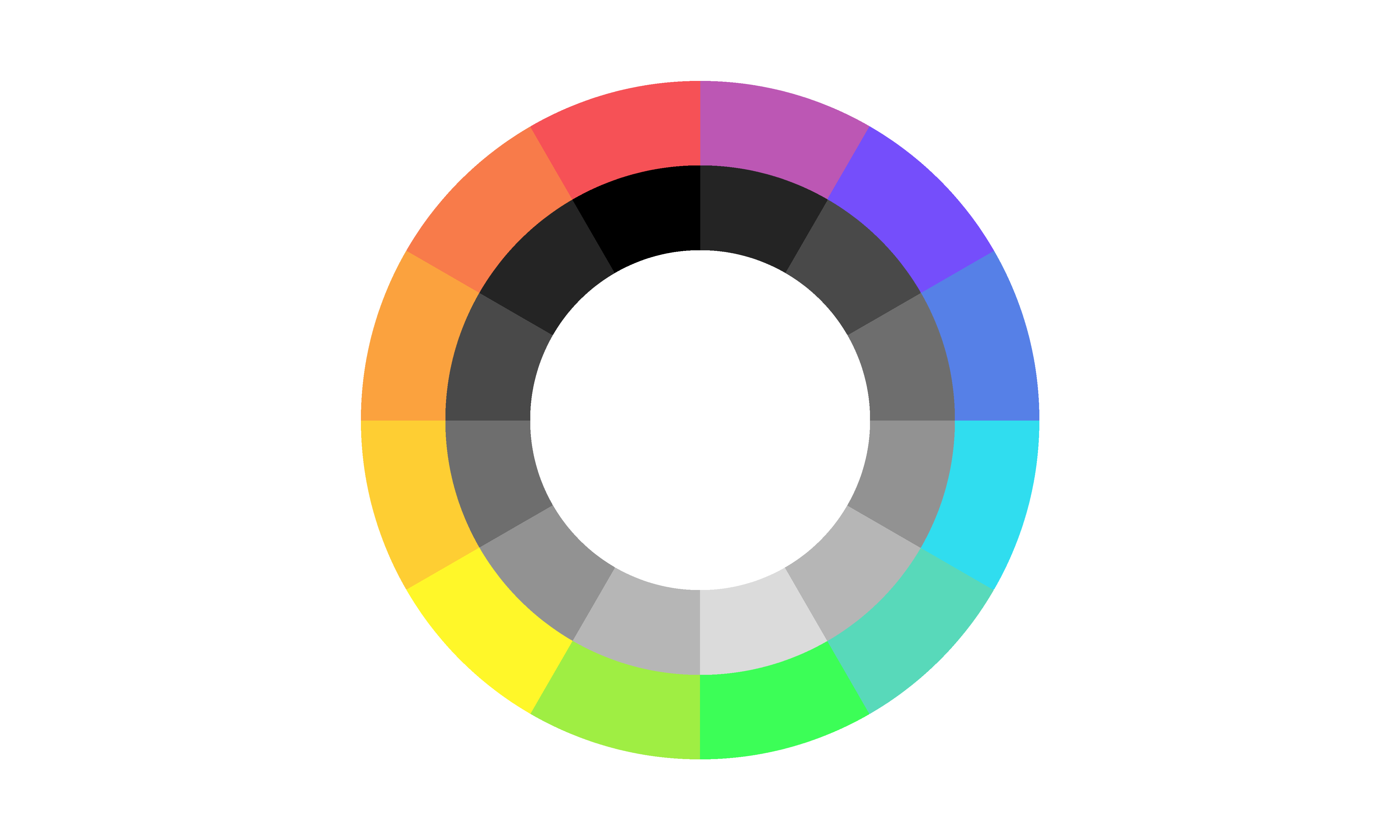
Measured on the 5000 by 3000 rendering published by Pride-Flags on DeviantArt: a white opening out to a radius of about 607 pixels, the grayscale ring from 607 to 910, and the rainbow ring from 910 to 1212, leaving white beyond. The two ring bands are within a pixel of equal width, about 303 and 302, and the emblem spans about 2424 pixels against the flag's 3000-pixel height. Each ring is divided into twelve 30-degree sections. [8] The design is unusual among pride flags in using a circular emblem on a plain field rather than stripes.
White field with a centered concentric ring emblem. The archive's rendering is redrawn from measurements and color samples taken from the 5000 by 3000 DeviantArt rendering. [8]
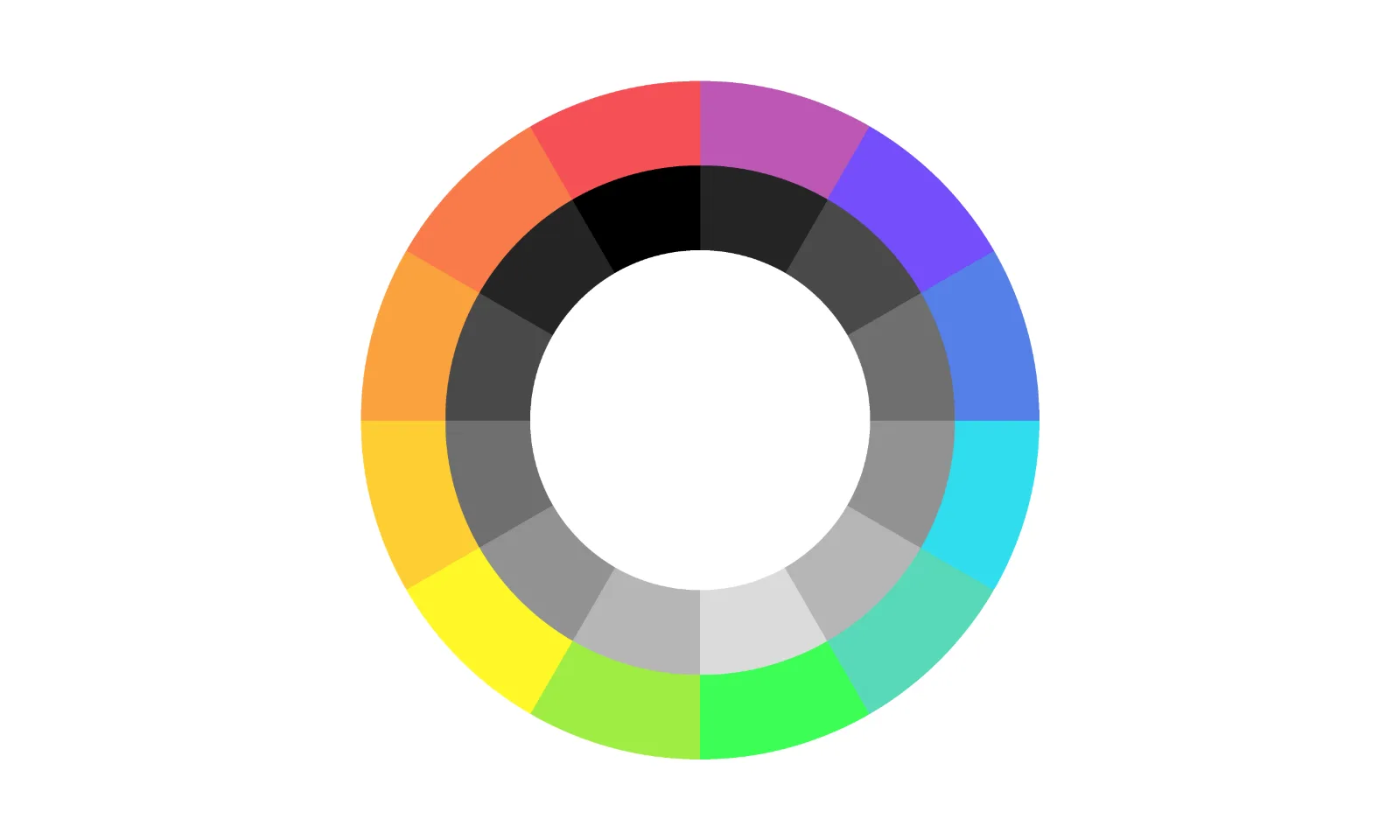
A white 3:5 field with a centered emblem of two concentric rings, each divided into twelve sections. The outer ring runs through a full rainbow, described in the 2016 documentation as "starting at the top-right, and going clockwise: purple, purple-blue, blue, teal, green-blue, green, green-yellow, yellow, yellow-orange, orange, red-orange, red". The inner ring is a grayscale gradient of seven distinct values mirrored around the circle, with black in the upper-left and the lightest gray opposite it. [2][8]
Usage & Adoption
- Online Usage
- DeviantArt, where Pride-Flags published the surviving rendering in 2015 [1], Tumblr, through the 2016 pride-color-schemes reference entry and later archival material [2], LGBTQIA+ identity-reference pages [6]
- Current Status
- Historical; terminology contested
Online circulation is documented through the 2015 DeviantArt repost, the 2016 pride-color-schemes entry, later archival material, and identity-reference pages. The cited sources do not establish a physical debut, continuous adoption, or the scale of current community use. [1][2][6]
Image Archive
Earliest Surviving Publication
Archive Reconstruction
Discourse & Debates
- Feraday set the objections against the alternatives rather than treating MOGAI alone as the problem, noting that MOGAI, LGBTQ+, and Queer each represent an idea of community that is not necessarily welcoming to all people, and that all three also offer belonging. [4]
Criticisms
- Christine Feraday's 2016 thesis records participant discomfort with MOGAI. She had initially considered it a recent and inclusive term, but changed her recruitment language to "non-cisgender and/or non-straight" and received more responses afterward. Some respondents worried that cisgender heterosexual people might claim marginalized orientations through kink or polyamory. [4]
- Feraday also records that Tumblr neo-identities drew criticism from inside as well as outside non-cisgender and non-straight communities. [4]
The coiner's FAQ gives the expansion in the singular, "Marginalized Orientations, Gender Alignment, & Intersex", and describes the term as the outcome of a group discussion rather than an individual effort. [3] Later sources pluralize or substitute: Gender Alignments in Feraday's thesis, both Gender Alignments and Genders on pride-color-schemes, and Genders on the DeviantArt repost. MOGII expands as Marginalized Orientations, Gender Identities, and Intersex. [4][2][1]
Editorial note
The flag is held here as a documentary record of the period in which the term was actively contested. Its presence is not an endorsement of MOGAI as a current identifier.
Footnotes & Citations
Sources and footnotes 8 sources
- 1. Image file page MOGAI / MOGII (Pride-Flags DeviantArt repost). Pride-Flags (publisher); design attributed to fancyblogurl. DeviantArt (2015-10-07). Accessed 2026-08-16
- 2. Archived Sources MOGAI/MOGII (pride-color-schemes reference entry). pride-color-schemes. Tumblr (2016-08-15). Accessed 2026-08-16
- 3. Primary statement MOGAI FAQ. cisphobeofficial (cloud). Tumblr. Accessed 2026-08-16
- 4. Academic For lack of a better word: neo-identities in non-cisgender, non-straight communities on Tumblr. Christine Feraday. MA thesis, Ryerson University and York University (Communication and Culture); repository copy held by Toronto Metropolitan University (2016). Accessed 2026-08-16
- 5. Social media MOGAI flag design post (attributed original; page unavailable). fancyblogurl. Tumblr (c. 2014-08). Accessed Original source link preserved by the 2015 repost; page unavailable when checked 2026-08-16
- 6. Encyclopedias & Reference MOGAI. LGBTQIA+ Wiki. Accessed 2026-08-16
- 7. Social media Original pride flags by Rjalker. Rjalker. Tumblr. Accessed 2026-08-16
- 8. Image file page MOGAI / MOGII rendering published by Pride-Flags, 5000 by 3000. Published by Pride-Flags. DeviantArt (2015-10-07). Accessed 2026-08-16 · Archived version
Image Sources
- Rendering
- circular design attributed to fancyblogurl
- Encycloflaggia reconstruction of the circular MOGAI or MOGII flag attributed to fancyblogurl · Credit: Design attributed to fancyblogurl; reconstruction by Encycloflaggia · Encycloflaggia · reconstruction
- The 5000 by 3000 rendering published by Pride-Flags on DeviantArt · Credit: Published by Pride-Flags; design attributed to fancyblogurl · DeviantArt · verifiedRights CC BY 3.0 as displayed on the DeviantArt page
- The 5000 by 3000 rendering published by Pride-Flags on DeviantArt on 7 October 2015 by UTC. The earliest surviving located copy of the design, preserving the fancyblogurl credit and the deleted source link. Measured ring radii 607, 910 and 1212. [1][8] · Credit: Published by Pride-Flags; design attributed to fancyblogurl · DeviantArt · CC BY 3.0 as displayed on the DeviantArt page, covering this uploaded file
- Encycloflaggia reconstruction of the circular MOGAI or MOGII flag attributed to fancyblogurl. Drawn from measurements of the 2015 DeviantArt rendering. [8] · Credit: Design attributed to fancyblogurl; reconstruction by Encycloflaggia · Encycloflaggia reconstruction · Archive-produced derivative; the underlying design has no located license