Apothisexual Pride Flag (2015, pride-color-schemes)
Identity Pride Flag ·
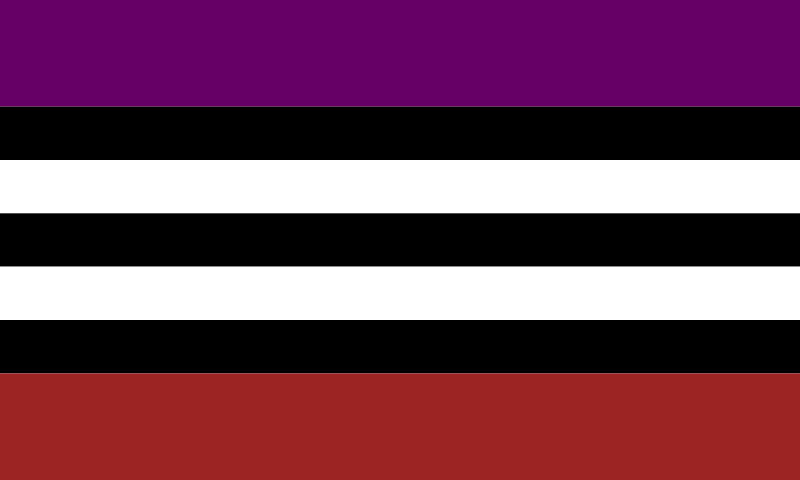
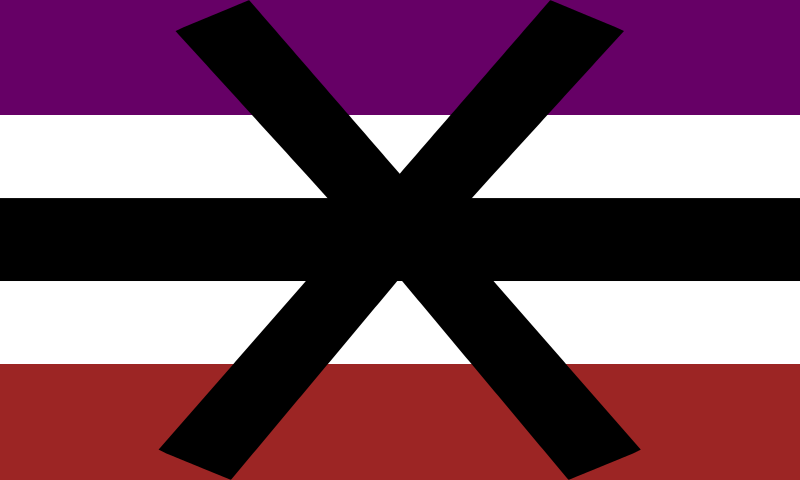
A seven-band apothisexual flag for sex-repulsed asexuality, its purple and dark red outer bands twice the depth of the five alternating black and white bands between them. The full-size file went up on DeviantArt on 22 August 2015 [1] and the pride-color-schemes archive documented it on 26 June 2016 as its own design, crediting a separate five-band version bearing a large black X to an unnamed contributor and recording the colour meanings as unknown. [2]
Key facts
- Designer
- pride-color-schemes
- Created
- First documented publication
- In use
- 2015–present
- Aspect Ratio
- 3:5 · standard
- Stripes
- 7
- Represented Identity
- apothisexual
Also known as
- Apothi Flag
- Apothi-ace Flag
Status Variant
Archive categories Sexual & Romantic Orientation Pride Flags
Overview
To distinguish sex-repulsed asexual experience from asexuality as a whole. Asexual people vary widely in their relationship to sex, from sex-favourable through sex-indifferent to sex-repulsed, and the asexual flag does not encode that variation. [2]
The flag belongs to the mid-2010s expansion of asexual-spectrum vocabulary, which produced a cluster of sub-labels including cupiosexual, aegosexual, lithromantic, fraysexual and apothisexual, each marking an experience the broader asexual flag does not distinguish. The pride-color-schemes archive defines the prefix as "An orientation defined by repulsion. Whether or not they feel a type of attraction is irrelevant to them due to their repulsion towards the idea of being in that kind of relationship." [2]
Identity & Context
- Represented Identity
- apothisexual
- Subcommunity
- asexual spectrum (sex-repulsed)
Creators
The Creator
pride-color-schemes
Designer, seven-band design
pride-color-schemes is a Tumblr blog and matching DeviantArt gallery, run under the account name Pride-Flags, which published several thousand identity pride flags during the mid-2010s MOGAI vocabulary expansion. Its FAQ is written by a moderator using the name Mod Hermy, described there as "the only active uploader on the DA", with Mod Tath and Mod Ez credited as other moderators and support links pointing to accounts under the name Kiloueka. Most of the gallery is other people's work cleaned up and reissued at 5000 by 3000 pixels: "the majority of the work done here is simply cleaning up existing flags in high quality to be accessible and usable by the community." Designs the project made itself are marked in the post description, which is how this flag is credited. [3]
Anything made by us will be clearly marked in the post description. [3]
Motivations
- To give apothisexual identity, sex-repulsed asexuality, a symbol of its own alongside the broader asexual flag. [2]
autisutehk
Credited with coining the apothi- prefix
autisutehk is a Tumblr handle credited with coining the apothi- prefix. The pride-color-schemes post hedges the credit, "Term coined by: autisutehk (maybe)", and links a mogai-lexicon post that no longer resolves. [2] AUREA's aromantic terms glossary gives the same handle for the parallel term apothiromantic without a hedge. [4] No biographical information has been located.
Attribution notes
The pride-color-schemes post of 26 June 2016 sets out two apothisexual designs with two different credits. The five-band flag carrying the black X is "Designed by: Anonymous", linked to a post on the community blog pride-flags-for-us; the seven-band flag is "Designed by: Me". The archive's FAQ states the convention behind that wording: "Anything made by us will be clearly marked in the post description." [2][3]
The two DeviantArt file pages, posted ten months earlier and still carrying the same description today, leave both credits open, reading "Coined by: ?" and "Designed by: ?". The fuller credit exists only on Tumblr. [5][1]
The term is credited more tentatively than the design. The archive writes "Term coined by: autisutehk (maybe)" and links a mogai-lexicon post that no longer resolves; the parenthesis is the archive's own. [2] AUREA's aromantic glossary credits the parallel term apothiromantic to the same handle without that hedge. [4]
Origin
- Place Type
- online
- Digital Origin
- Yes
Digital origin only. No geographic location is associated with this flag's creation.
Both designs were published to the Pride-Flags DeviantArt gallery within six seconds of each other at 19:24 Pacific on 21 August 2015, which is 22 August in UTC and the date the site displays. The pride-color-schemes Tumblr write-up followed on 26 June 2016. [2][5][1]
Dates & Chronology
- Year Created
- First documented publication
- Period in Use
- 2015–present
Documented circulation is online: the archive's own DeviantArt gallery and Tumblr post, and community reference wikis that reproduce the seven-band design. [2][6][7] The DeviantArt page for the seven-band file records 3,496 views and 26 downloads. [1]
Two designs were published together and have circulated together ever since. The five-band flag runs purple, white, black, white and dark red under a large black X, with the purple and dark red bands slightly deeper than the three between them; the archive credits it to an unnamed contributor by way of the community blog pride-flags-for-us. The seven-band flag is the archive's own. [2][5][1]
The files predate the write-up by ten months. Both were uploaded on 22 August 2015 UTC; the Tumblr post that documents and credits them is dated 26 June 2016, and links each design to its DeviantArt file for the full-size copy. [2][5][1]
Lineage
- Indirect influences
- Asexual Pride Flag
Apothisexual is a sub-label of the asexual umbrella, sitting alongside graysexual, demisexual, fraysexual, cupiosexual and aegosexual as a more specific articulation of one part of asexual experience. The flag shares the asexual palette's purple, white and black but does not recolour the asexual flag the way the graysexual flag does, so the relationship is recorded as influence rather than descent. No source states the connection; it is a reading of the palette.
Colors & Symbolism
No meanings were published. The pride-color-schemes post of 26 June 2016 ends its entry for both designs with the line "Color meanings: Unknown". [2]
| Colour | Hex |
|---|---|
| Purple | #660066 |
| Black | #000000 |
| White | #FFFFFF |
| Dark Red | #9C2524 |
Sampled from the 5000 by 3000 original. [1]
Readings do circulate. The mogai-library entry for apothisexuality also records that no colour meanings were given, and the per-stripe meanings reproduced from it in later databases (purple for asexuality, white for sexuality, black for repulsion, red for romance) are marked there as that blog's admin speculating rather than as the designer's intention. They are an interpretation, not the flag's published symbolism. [8]
No palette was published with either design, so these are sampled values, taken from the 5000 by 3000 file the archive links for the full-size copy. The five-band design uses the same four colours. [5][1]
Design
- Aspect Ratio
- 3:5 · standard
- Orientation
- horizontal
- Stripe Count
- 7
- Layout
- horizontal_stripes
- Stripes (Top → Bottom)
- Purple, Black, White, Black, White, Black, Dark Red
Seven bands, not seven equal bands. The archive's own image description reads "a flag with seven stripes. The outer two stripes are twice as wide as the inner stripes." [2] Measured on the 5000 by 3000 original, the height divides into ninths: purple takes the top two ninths, dark red the bottom two, and the five inner bands one ninth each, giving 2:1:1:1:1:1:2. [1]
Seven horizontal bands in a 2:1:1:1:1:1:2 division of the height. No emblem or overlay. No aspect ratio was published with the design; the file is 5000 by 3000 pixels, which is the archive's standard canvas rather than a specification for this flag. [1]
Seven horizontal bands in a 2:1:1:1:1:1:2 division of the height: purple #660066, black #000000, white #FFFFFF, black, white, black, dark red #9C2524. [1]
Usage & Adoption
- Current Status
- Documented variant; circulation documented online
Documented in online reference material. No photographed physical use has been located.
Image Archive
The two 2015 designs
Discourse & Debates
- Whether sex-repulsion warrants a distinct identity label and flag, or is better described as a feature of individual asexual experience rather than a sub-orientation.
- Whether the per-stripe readings that circulate for this flag should be treated as its meanings, given that the design was published with none and the blog they come from marks them as one admin's guess. [8]
Common misidentifications
- Confused with the asexual pride flag because of the shared purple, black and white. The apothisexual flag adds a dark red band and a different band count.
- The two apothisexual designs are sometimes treated as one flag. They have separate designers and separate files, and only the five-band version carries the black X. [2]
- Apothi is sometimes confused with apothi-aroace, a separate combined identity with its own flag.
Apothi- is used across apothisexual and apothiromantic, and the apothi-aroace combination has its own flag. [2][4]
Footnotes & Citations
Sources and footnotes 8 sources
- 1. Image file page Apothisexual (2). Pride-Flags. DeviantArt (2015-08-22). Accessed 2026-08-16
The seven-band design the archive claims as its own. Original file 5000 by 3000 pixels; published 21 August 2015 at 19:24 Pacific. Licence field: none.
- 2. Blogs & Personal Sources Apothisexual. pride-color-schemes. pride-color-schemes (Tumblr) (2016-06-26). Accessed 2026-08-16
Sets out both designs with separate designer credits, the image descriptions quoted in this entry, and the line "Color meanings: Unknown".
- 3. Blogs & Personal Sources FAQ. Mod Hermy, with Mod Tath and Mod Ez. pride-color-schemes (Tumblr). Accessed 2026-08-16
States the project's crediting practice and its terms of reuse.
- 4. Reference All Aromantic Terms. AUREA. Aromantic-spectrum Union for Recognition, Education and Advocacy. Accessed 2026-08-16
Credits the parallel term apothiromantic to Autisutehk.
- 5. Image file page Apothisexual (1). Pride-Flags. DeviantArt (2015-08-22). Accessed 2026-08-16
The five-band design carrying the black X. Original file 5000 by 3000 pixels; published 21 August 2015 at 19:24 Pacific. Licence field: none.
- 6. Encyclopedias & Reference Apothisexual. LGBTQIA+ Wiki. Accessed 2026-04-07
Community wiki, unsigned and citing no sources for its flag history.
- 7. Encyclopedias & Reference Apothisexual. MOGAI Wiki (Miraheze). Accessed 2026-04-07
Community wiki, unsigned and citing no sources for its flag history.
- 8. Blogs & Personal Sources Apothisexuality. mogai-library. mogai-library (Tumblr) (2015-04-23). Accessed 2026-04-07
Records that no colour meanings were given and marks the per-stripe readings as the blog admin's own suggestion.
Image Sources
- Rendering
- Seven-band design (2015)
- The seven-band apothisexual design, published to DeviantArt on 22 August 2015 and credited to itself by the pride-color-schemes archive in its write-up of 26 June 2016. Archive rendering, with the band depths and the four colours measured on the designer's 5000 by 3000 file. · Credit: Design: pride-color-schemes, published as Pride-Flags. Rendering: Encycloflaggia, measured from the original file. · DeviantArt (Pride-Flags) · reconstructionRights No licence was issued with the design; the DeviantArt licence field on the source file reads none. The archive's stated reuse position is quoted in this entry's rights section.
- The five-band apothisexual design, published to DeviantArt six seconds before the seven-band flag on 22 August 2015 and credited by the pride-color-schemes archive to an unnamed contributor by way of the blog pride-flags-for-us. Archive rendering, with the band depths, the colours and the X's outline measured on the original 5000 by 3000 file. · Credit: Design: unnamed contributor, credited as Anonymous by pride-color-schemes. Rendering: Encycloflaggia, measured from the original file. · DeviantArt (Pride-Flags) · reconstructionRights The designer is unnamed and no rights statement from them has been located. The DeviantArt licence field on the source file reads none.