Chav Pride Flag
Subculture Pride Flag
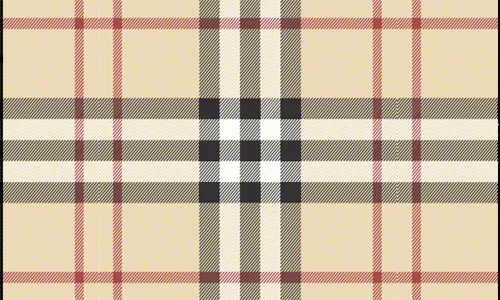
A camel-ground check in the Burberry pattern, listed by one flag guide as the Chav Fetish Pride Flag and reported there as first seen at London Pride in 2008, without a photograph, a designer or a source. [1] The flag is grounded in British, particularly English, chav and scally culture, though where it was designed is undocumented. File comparison indicates the artwork circulating online is strongly consistent with a 2012 Wikimedia Commons rendering of the check repeated horizontally, which postdates the reported sighting and so documents the reconstruction rather than the flag. [2] The Oxford English Dictionary marks chav derogatory and traces its earliest evidence to a 1998 Usenet posting; [3] whether gay adoption of the identity is reclamation or something more damaging is disputed in Sociology. [4][5]
Key facts
- Designer
- Unknown
- Reported first sighting
- Documented circulation
- Listed in one online flag guide
- Aspect Ratio
- 3:5
- Ratio Notes
- The ratio of the current 500 by 300 pixel reconstruction, in the archive’s height to length convention. The proportions of any physical flag reportedly flown in 2008 are undocumented.
- Stripes
- 0
- Origin
- United Kingdom
Also known as
- Chav flag
- Chav Fetish Pride Flag
Archive categories Subculture Pride Flags · Regional and Language-Specific Pride Flags
Identity & Context
- National Context
- United Kingdom
Chav is a British term for a young working-class person. The Oxford English Dictionary admitted it in 2003 and labels it "Brit. slang (derogatory)", glossing it as a young person "characterized by brash and loutish behaviour and the wearing of designer-style clothes (esp. sportswear); usually with connotations of a low social status", and deriving it probably from the Romani chhavo, an unmarried Romani male or male Romani child. [6] The OED records the first use in the British national press as a 2002 article in The Observer. The word is one of several for the same figure, varying by region: kev, pikey and rudeboy in the south-east of England, ned in Scotland, charver in the north-east, and scally, which has a longer history, particularly in Liverpool. [4]
A gay fetish culture built on that figure is separately documented. The Bishopsgate Institute holds a Scally Lads Fetish Archive within its UK Leather and Fetish Archive, and describes the fetish as centring, "largely comprising gay men", on the style and demeanour of the subculture "known as chav or, in Northern England, scally", with an emphasis on sportswear, tracksuits and trainers. Its account records that "chavs and scallies were demonised" before "gay scally lads embrace the subculture in sexual encounters", names Rudeboiz and Triga Films as pioneers of the pornography from the early 2000s and Fitladz among the club nights, and gives the European counterparts as proll in Germany and kiffeur in France. The archive holds interview transcripts with scally lads and a Goldsmiths MA dissertation by Joseph Bobowicz on the subculture's queer appropriation. [7]
Creators
Creator unknown
No identification located
No designer has been identified. The one guide that lists the flag names nobody, and no other account of its making has been found. [1]
Contribute information about who designed this flag.
Attribution
- Primary Designer
- Unknown
Origin
- Country
- United Kingdom
- Origin Type
- conceptual/cultural
- Physical Origin Status
- Place of design undocumented
United Kingdom, conceptual and cultural origin. The flag refers to the British, particularly English, chav and scally subculture; GayFetishGoth describes chavs, or charvers, as “a subculture specific to English youth culture”. [1] No source establishes where the design was created, so the record carries the country and no locality. A later flag guide reports that it was first seen at London Gay Pride in 2008. [1]
Dates & Chronology
- Reported first sighting
- Documented circulation
- Listed in one online flag guide; no other circulation documented
- Creation Bounds
- No date of design is documented. The only date attached to the flag anywhere is GayFetishGoth’s report that it “was first seen at London Gay Pride in 2008”, published without a photograph, a contemporary citation, a designer or a source. [1] That is a later secondary report of a sighting, not a documented date of creation, and no independent corroboration has been located.
Reported first sighting: London Pride, 2008, stated by a later flag guide and not yet independently corroborated. GayFetishGoth, which lists the design as the Chav Fetish Pride Flag, states that it “recreates the Burberry tartan pattern, a brand commonly associated with chav style, and was first seen at London Gay Pride in 2008”. [1] The guide names no designer, gives no date of design, publishes no photograph of the reported sighting and cites no source for it. London is therefore the site of a reported sighting, not an established place of design.
Lineage
Pride-flag lineage: none established. No predecessor flag, and no derivation declared by a creator, has been documented for this design.
Digital-artwork provenance is a separate question, and has an answer. Encycloflaggia’s own file comparison indicates that the 500 by 300 pixel artwork is strongly consistent with Rehua’s square Wikimedia Commons rendering of the check, created 17 June 2012, repeated horizontally. [2] Rendering that file at 300 pixels and tiling it reproduces the published image with a normalised cross-correlation of 0.96 and a structural similarity of 0.92 once compression noise is suppressed; the base colour matches to one unit in one channel, #ECD9B6 against #ECDAB6. The earlier Commons drawing of 2006, tested as a control, reaches only 0.57 and 0.57 on the same measures, so it is an antecedent of the pattern rather than the source of this artwork. [8]
The side extensions are repeated, not mirrored. Diagonal hatching runs the same way in the left extension, the centre and the right extension, measured by directional autocorrelation at three scales; a reflection would reverse it. The reflection symmetry the image does show sits at its own centre and is a property of the check itself, which is symmetrical, rather than evidence of a mirroring operation.
Rehua’s file was created in 2012, four years after the reported 2008 sighting. This finding therefore documents the online reconstruction that circulates now. It establishes nothing about how a physical flag reportedly seen in 2008 was made, and no claim about that flag’s construction is made here.
Colors & Symbolism
No statement of meaning by a designer has been found, and no creator has been identified who could have made one. The only account of the design, GayFetishGoth’s, explains the field as a recreation of the Burberry tartan associated with chav style; it assigns no meaning to individual colours or elements. [1]
No colour values are documented for this design, and none have been sampled from the artwork to stand in for them.
Design
- Aspect Ratio
- 3:5
- Ratio Notes
- The ratio of the current 500 by 300 pixel reconstruction, in the archive’s height to length convention. The proportions of any physical flag reportedly flown in 2008 are undocumented.
- Orientation
- horizontal
- Stripe Count
- 0
- Layout
- all-over check, no stripes
- Additional Symbols
- camel ground, black check lines, white check lines, red check lines
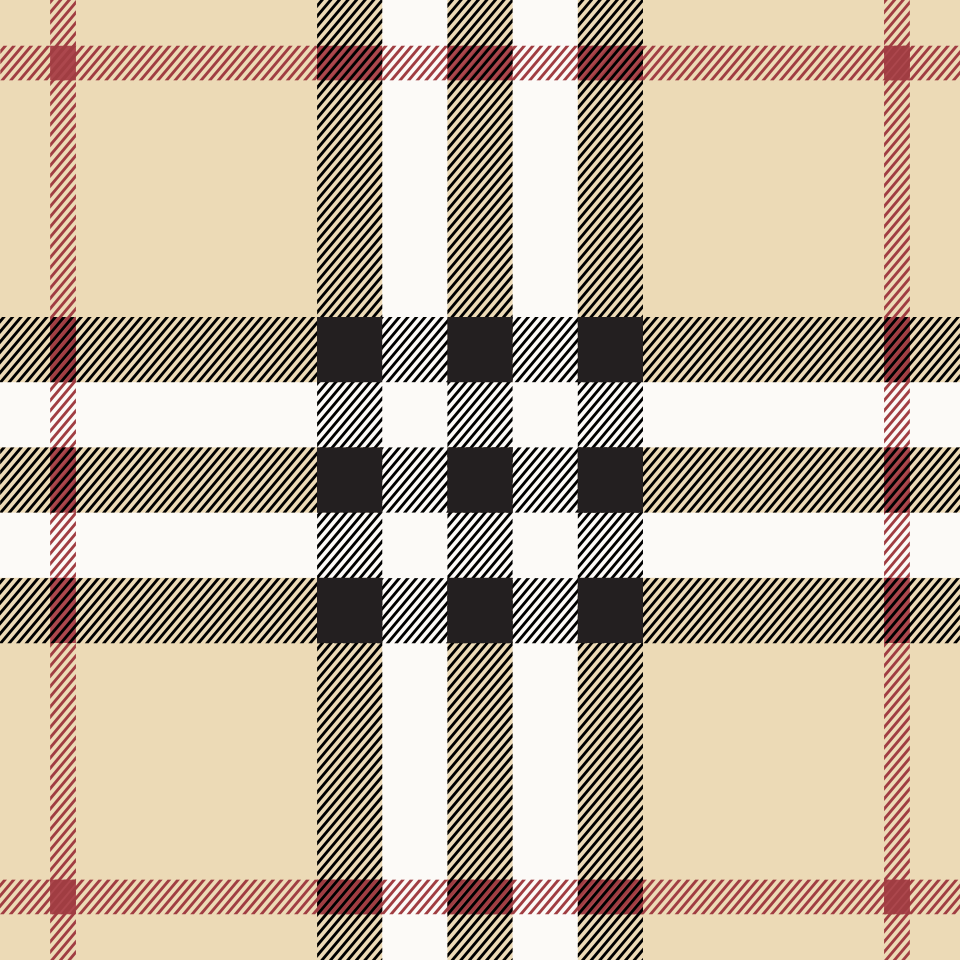

There are no stripes: the field is an all-over tartan-style check on a camel ground, with paired black lines, a white line and a thin red line crossing in both directions, drawn with a diagonal hatch inside the darker bars. The pattern is that of the Burberry check, a registered trade mark. GayFetishGoth describes the flag as recreating “the Burberry tartan pattern, a brand commonly associated with chav style”; that association is the guide’s, and no creator-authored statement of meaning has been located. [1] Christopher Little records that Burberry decided to largely remove its trademark check from sale between 2001 and 2014, the first such withdrawal since the company’s founding in 1856, and attributes the decision to the extent of the chav association’s negative media coverage. [6]
Image Archive
The check


Discourse & Debates
Controversies
Whether gay adoption of chav identity is reclamation or something more damaging is a documented disagreement in the sociological literature. Andrew Fraser named the phenomenon "chavinism" in Attitude in January 2005. [5] Writing in Sociology in 2008, Paul Johnson argued that the industry marketing chav culture to gay men works within a symbolic economy that positions the chav "as a subject lacking any intrinsic worth", and that it is "precisely this lack which is converted into symbolic capital to be bought and sold"; he concluded that such representation creates "a form of symbolic violence". [4] Joanna Brewis and Gavin Jack replied in the same journal in 2010 that the implications of this consumer culture are ambiguous, and took the exchange toward what gay chavinism might mean for "hegemonic homosexuality". [5] Both articles concern the marketing of chav identity to gay men generally rather than any flag.
Brewis and Jack refer to a "self-identification rule", citing the journalist Julie Burchill, who celebrated her chav roots in a Sky One documentary screened in February 2005, as a notable exception to it. [5]
No statement by anyone who made or flew this flag has been located, so how its users understand the word is undocumented.
Footnotes & Citations
Sources and footnotes 12 sources
- 1. Reference Sexuality and Fetish Pride Flags History and Meaning. GayFetishGoth. GayFetishGoth. Accessed 2026-08-03
The only source specific to this flag. Reports that it “was first seen at London Gay Pride in 2008” and that it recreates the Burberry tartan. Publishes no photograph, no designer, no date of design and no source for the sighting. Supports what it reports, and does not independently establish the 2008 event.
- 2. Image file page File:Burberry pattern.svg. Rehua. Wikimedia Commons (2012-06-17). Accessed 2026-08-11
Rehua’s 335 by 335 pixel rendering, created 17 June 2012, CC BY-SA 3.0, with a trade mark notice. Supports the file’s date, author, dimensions and licence, and is the apparent visual source of the artwork on this page.
- 3. Reference chav, n.. Oxford English Dictionary. Oxford University Press. Accessed 2026-08-12
- 4. Academic 'Rude Boys': The Homosexual Eroticization of Class. Paul Johnson. Sociology, vol. 42 no. 1, pp. 65-82 (2008-02). Accessed 2026-08-11
- 5. Academic Consuming Chavs: The Ambiguous Politics of Gay Chavinism. Joanna Brewis and Gavin Jack. Sociology, vol. 44 no. 2, pp. 251-268 (2010-04). Accessed 2026-08-11
- 6. Academic The Chav Youth Subculture and Its Representation in Academia as Anomalous Phenomenon. Christopher Little. M/C Journal, vol. 23 no. 5 (2020). Accessed 2026-08-11
- 7. Archived Sources Scally Lads Fetish Archive. Bishopsgate Institute. Bishopsgate Institute, UK Leather and Fetish Archive. Accessed 2026-08-11
- 8. Image file page File:Burberry check.png. Wikimedia Commons contributors. Wikimedia Commons (2006). Accessed 2026-08-12
The earlier 293 by 293 pixel Commons drawing, uploaded 2006. Tested as a control in the file comparison and found not to be the source of this page’s artwork.
- 9. Image file page File:Burberry nova check.jpg. Kok Leng, Maurice Yeo. Wikimedia Commons (2006-10-01). Accessed 2026-08-11
- 10. Image file page File:Tipiche stampe tartan di Burberry.jpg. Teo Pollastrini. Wikimedia Commons (2021-01-30). Accessed 2026-08-11
- 11. Image file page chav.png, 500 by 300 pixels. GayFetishGoth. GayFetishGoth. Accessed 2026-08-12
The proximate published asset, from which the archive copy was made. sha256 5f63362b53ebad374fbdcac33594eb0e76e1d39a66ee0b309df2cb0be97c4b68.
- Books Chavs: The Demonization of the Working Class. Owen Jones. Verso (2011). Accessed 2026-08-03 · Archived version


Image Sources
- Rendering
- Digital reconstruction published by GayFetishGoth, 500 by 300 pixels
- Credit: Pattern by Rehua, Wikimedia Commons; published as a flag by GayFetishGoth · CC BY-SA 3.0, modified by horizontal repetition, resizing and format conversionDigital reconstruction, not a photograph. Trademark considerations remain separate. [2][11]
- Credit: Rehua, Wikimedia Commons · CC BY-SA 3.0
- Credit: Kok Leng, Maurice Yeo, via Wikimedia Commons · CC BY 2.0
- Credit: Teo Pollastrini, Wikimedia Commons · CC BY-SA 4.0
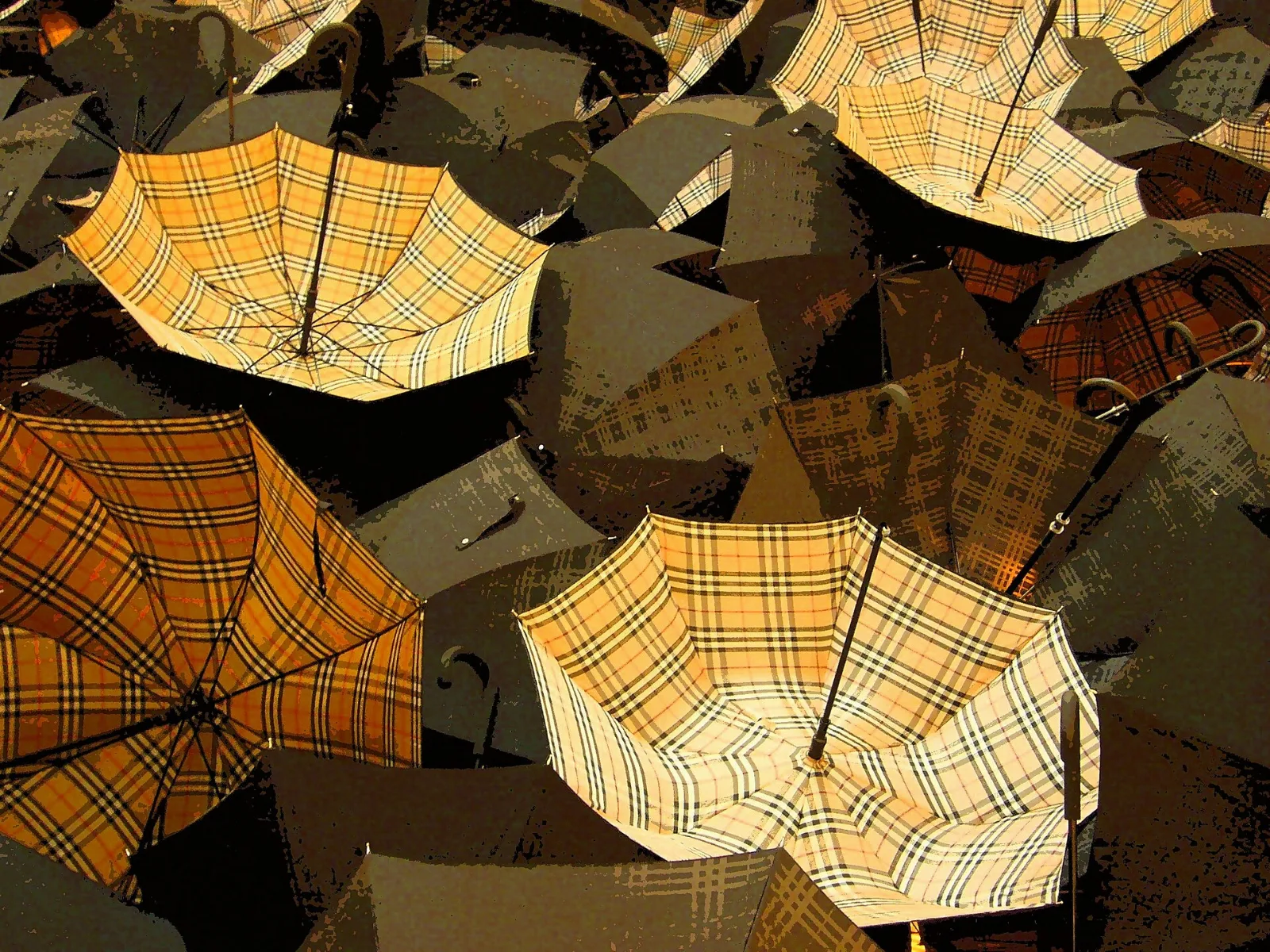
- Burberry-check umbrellas in the Burberry store at The Paragon, Orchard Road, Singapore, photographed on 1 October 2006. The check on manufactured goods, five years into the period in which Burberry was withdrawing it from sale. [9] · Credit: Kok Leng, Maurice Yeo · Wikimedia Commons, from Flickr
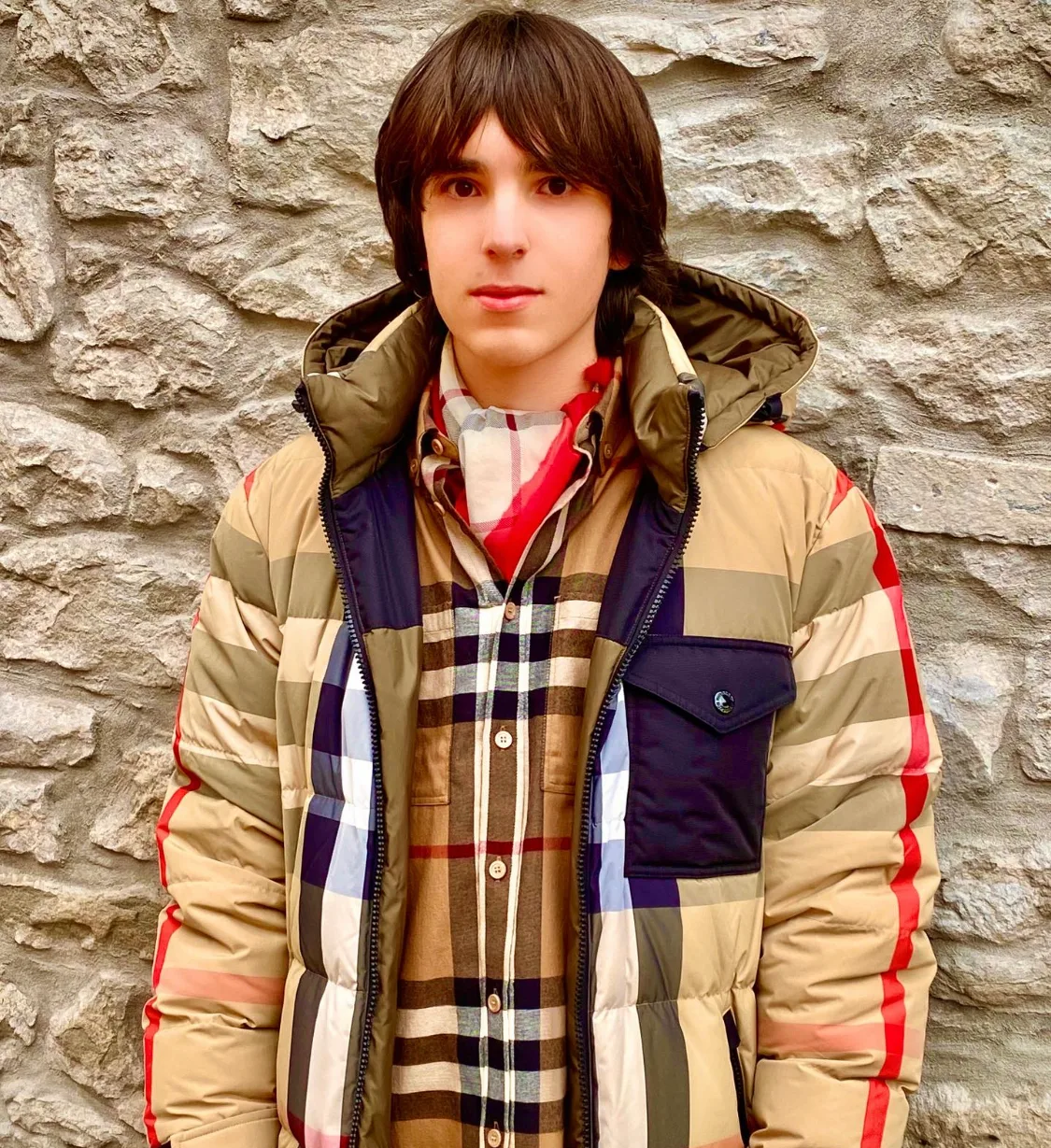
- Burberry tartan prints, photographed 30 January 2021. [10] · Credit: Teo Pollastrini · Wikimedia Commons, 22 February 2021